"I know no safe depository of the ultimate powers of the society but the people themselves, and if we think them not enlightened enough to exercise their control with a wholesome discretion, the remedy is not to take it from them, but to inform their discretion by education. This is the true corrective of abuses of constitutional power." - Thomas Jefferson


"THESE ARE THE TIMES THAT TRY MEN"S SOULS"...AGAIN... TIME FOR PARTICIPATORY DEMOCRACY?

We as Americans all remember being taught when we were young about our nation's founders, the patriots who stood up to the tyranny of the crown of England, the drafters of the declaration of independence, the constitution, and the bill of rights, the documents that became the framework for a system of governance that they believed would maintain a balance of power within a truly representative government, that would preserve the basic rights and liberties of the people, let their voice be heard, and provide to them a government, as Lincoln later put it, "of the people, by the people, and for the people."

What we may not be so quick to recall, however, is that there was much debate between the founding fathers as to what model our system of government should follow. Those such as Thomas Jefferson, Thomas Paine, and Patrick Henry on one side favored a pure and direct democracy with the legislative power vested in the very hands of the people, while others such as James Madison, John Adams and George Washington held that a representative democracy would better serve the people than a true democracy because they believed it would protect the individual liberties of the minority from the will of the majority. Alexander Hamilton even went so far as to support the creation of a monarchy. In the end, those favoring representative democracy won the day and that is the system they put in place in the hopes of creating a "more perfect union."


Now we must ask ourselves, what would the founding fathers think if they were resurrected today to see what has become of their vision? One can only assume that they would begin to search for modern day patriots to meet them once again at the liberty tree in order to plan a new struggle for freedom and self governance. Although we continue to praise and honor those who founded our nation and sought to create a truly just form of government for it, do we really stop to reflect on whether we as a nation have in fact succeeded in preserving what they fought so hard to create?

Today, in contrast to our revolutionary ancestors, we as citizens of the United States generally observe politics from afar and the vast majority of us may participate in the political process only to the extent that we go to the polls once a year to vote. Over the decades and centuries we have allowed the erosion of the ideals of the founding fathers and the corruption of the principles which they enshrined in those so carefully conceived documents. We have been left with essentially no real power to influence our "democratically" elected officials. We may write an occasional letter to our senator or representative that generates a form letter in response and a statistical data entry that may or may not be weighed against the influence of some powerful corporate lobby. We may be permitted to participate in a march or demonstration of thousands or even millions, something our patriots of old would have marvelled at, only to be dismissed as a 'focus group' with no bearing on policy decisions.

How then is the government held accountable to the voice of the people? Are the people meant to speak only at the polls when given a choice between a select few candidates that may be equally corrupt? No, as Jefferson and his allies rightly believed, the people should be heard much more than that.

In spite of their good intentions, the system of representative democracy that the founding fathers opted for has been systematically undermined and has ultimately failed in preserving the well being of the people of this nation. Most of us accept this reality as being beyond our control and continue to observe, comment, and complain without aspiring to achieving any real change. Our local leaders and activists in our communities, and even those local elected officials who may have the best of intentions are for the most part powerless to make real positive change happen in our neighborhoods, towns and villages when there is so much corruption from above.

We have become so accustomed to this failed system of representative democracy that it may not occur to us that there are other alternative forms of democracy. In various places around the world participatory or direct democracy has been instituted both in concert with representative democracy, and as a replacement for it. It is a form of democracy that is designed to take directly into account your views, and the views of your neighbors, and to politically empower you to make real positive change possible in your communities. Initiative, referendum & recall, community councils, and grassroots organizing are but a few ways in which direct/participatory democracy is achieving great success around the world.


This site will attempt to explore in depth the concept of participatory democracy and how this grass-roots based form of governance could help bring us back in line with the principles this country was founded upon if it were allowed to take root here. In the hope that one day we can become a nation working together as a united people practicing true democracy as true equals, we open this forum…

CLICK ON YOUR STATE FOR CURRENT BALLOT MEASURES - COURTESY OF BALLOTPEDIA

INITIATIVE & REFERENDUM STATE BY STATE (Click on State):

WashingtonOregonCaliforniaAlaskaHawaiiIdahoNevadaArizonaMontanaWyomingUtahColoradoNew MexicoNorth DakotaSouth DakotaNebraskaKansasOklahomaTexasMinnesotaIowaMissouriArkansasLouisianaWisconsinIllinoisIndianaMichiganOhioMississippiAlabamaGeorgiaSouth CarolinaNorth CarolinaFloridaTennesseeKentuckyVirginia West VirginiaPennsylvaniaNew YorkMaineVermontNew HampshireRhode IslandConnecticutNew JerseyDelawareDistrict of ColumbiaMassachusetts
Ballotpedia.org
LATEST ENTRIES:
Showing posts with label CALIFORNIA. Show all posts

Sunday, November 30, 2008

CALIFORNIA: WEALTHY INTERESTS ALTER INITIATIVE PROCESS

Wealthy interests alter Calif's initiative process

By STEVE LAWRENCE – Oct 29, 2008

Source: http://ap.google.com/article/ALeqM5j2VeEkncwhV-7wabJ49pS5Zok41AD9441E600

SACRAMENTO, Calif. (AP) — When Hiram Johnson championed an initiative system for California nearly a century ago, he sold it as a grassroots way to "arm the people to protect themselves."

California's 23rd governor foresaw citizen campaigns putting propositions on the ballot when the Legislature failed to address a pressing need.

But 97 years after Californians voted to allow themselves to put measures on the ballot, Johnson's experiment in direct democracy has changed dramatically.

He certainly could not have envisioned the multimillion-dollar campaigns for several measures on California's Nov. 4 ballot, some of which critics say will benefit their wealthy sponsors at the expense of California taxpayers.

Paid petition circulators, not armies of volunteers, typically gather initiative signatures these days. Corporations, wealthy individuals, labor unions, Indian tribes and other monied interests frequently spend millions to battle over the proposals.

The Center for Governmental Studies, a Los Angeles think tank, reported in May that there had not been a successful initiative signature-gathering drive conducted almost exclusively by volunteers in California since 1982.

This year, volunteers collected most of the signatures to put Proposition 2 on the ballot, said spokeswoman Robin Swanson. The measure, one of 12 statewide propositions on California's ballot, would set enclosure standards for farm animals.

Former Assembly Speaker Robert Hertzberg, a Los Angeles Democrat who formed a commission in 2000 to consider ways to reform the initiative process, said the system has been undermined by big-money campaigns.

"The whole thinking behind the initiative was it comes from the people, not the few people that have a checkbook," he said.

To its critics, one proposition on the ballot this year could be the perfect example of the flawed initiative process.

Proposition 10 was placed on the ballot by oilman T. Boone Pickens, a Texas billionaire, whose natural gas company stands to gain financially if it's approved.

The proposal would set up a rebate program for alternative-fuel vehicles and authorize the state to borrow $5 billion to fund it — at a time when the state is struggling with multibillion dollar budget deficits.

Half the money would be used to provide rebates of up to $50,000 to consumers who buy vehicles that run on natural gas and other non-petroleum fuels. Critics say that would mostly benefit companies that have large vehicle fleets, not average consumers.

There also would be $340 million to fund rebates for buying fuel-saving vehicles such as the Toyota Prius and money for research and development of alternative energy technologies.

"This is going to do a lot to help consumers in California who want to buy cars that run on something other than gasoline," said Marty Wilson, a consultant to the Yes-on-10 campaign. He also said Proposition 10 would help clean the air and reduce the state's dependence on foreign oil.

But opponents suggest the measure is mainly about promoting natural gas-powered vehicles and enriching one firm: Clean Energy Fuels Corp., a Seal Beach company started by Pickens.

Clean Energy, which bills itself as the "largest provider of natural gas for transportation in North America," has given more than 80 percent of the $22.5 million raised so far to pass the proposal. Two other natural gas companies have contributed most of the rest.

"This is the most naked money grab that I have ever seen in terms of using the ballot, using the voters to advance a business proposition," said Richard Holober, executive director of the Consumer Federation of California.

Proposition 10 isn't the only California ballot measure that's attracting million-dollar donations this year. Nearly half of the more than $175 million raised so far for November initiative campaigns has come from individuals, corporations or groups that gave at least $1 million.

Several studies over the years have recommended changes in the initiative system, but bills to alter it tend to die in committee or on the governor's desk.

Gov. Arnold Schwarzenegger vetoed legislation in 2006 that would have prohibited initiative campaigns from paying petition circulators on a per-signature basis, a step the bill's supporters said would remove an incentive for circulators to mislead potential signers.

Schwarzenegger also rejected a bill in 2005 that would have required initiative petitions to disclose if they were being circulated by volunteers or paid workers and to list the five biggest contributors to the initiative campaign.

Schwarzenegger said both measures would have made it harder to qualify initiatives, something he opposes.

The Center for Governmental Studies' report earlier this year recommended 17 changes, including giving initiative proponents up to a year to gather signatures, a step it said would aid volunteer campaigns. Currently, the limit is 150 days.

It also suggested trying to impose a $100,000 limit on donations to initiative campaigns, although that could run afoul of a 1981 U.S. Supreme Court ruling that shot down a $250 donation limit adopted by the city of Berkeley.

Having a lot of money won't guarantee approval, but sometimes the public sees only one side of an initiative debate — "the side that has the money," said Robert Stern, the center's president.

"Bottom line, money talks," he said. "At some point, it really does corrupt the system."

Wednesday, October 29, 2008

CALIFORNIA: DISSECTING INITIATIVES, AND THE NEED FOR REFORM

Two articles about the current measures on the ballot in California that illustrate the need for reform of the initiative & referendum process in that state as well as many other states in order to make the process less driven by big money and more accessable to the people. - EDITOR


A long way from the grassroots


John Diaz
Sunday, October 12, 2008


There is no big secret to the formula for manipulating California's initiative process. Find a billionaire benefactor with the ideological motivation or crass self-interest to spend the $1-million plus to get something on the ballot with mercenary signature gatherers. Stretch as far as required to link it to the issue of the ages (this is for the children, Prop. 3) or the cause of the day (this is about energy independence and renewable resources, Props. 7 and 10). If it's a tough sell on the facts, give it a sympathetic face and name such as "Marsy's Law" (Prop. 9, victims' rights and parole) or "Sarah's Law" (Prop. 4, parental notification on abortion). Prepare to spend a bundle on soft-focus television advertising and hope voters don't notice the fine print or the independent analyses of good-government groups or newspaper editorial boards.

Ten of the 12 statewide measures on the Nov. 4 ballot came through the initiative process, which was created nearly a century ago to offset the grip of Southern Pacific Railroad on the California Legislature. Today, the initiative process is no longer the antidote to special interests and the moneyed class; it is their vehicle of choice to attempt to get their way without having to endure the scrutiny and compromise of the legislative process.

Five initiatives have been buoyed by a single wealthy contributor. Most audaciously, T. Boone Pickens, the Texas oilman, bankrolled Prop. 10, which asks Californians to borrow billions to fuel natural gas vehicles. Pickens happens to be the founder of Clean Energy Fuels Corp., which - you guessed it - supplies natural gas to fleets of vehicles. Other initiative backers appear driven more by philosophy than profit. George Soros, the New York financier and liberal activist, is the bucks behind Prop. 5, which would increase drug treatment as an alternative to prison. Peter Sperling, a devout environmentalist and son of University of Phoenix founder, is supplying the funding for Prop. 7, which would increase the state's commitment to renewable energy. Major environmental groups, however, oppose it as unrealistic and sloppily drafted.

Then there are Props. 6 and 9, the tough on (selected) crime trust-fund babies of Henry T. Nicholas III, an Orange County billionaire tech executive who has been indicted by a federal grand jury in connection with securities fraud and drug-related offenses. But Nicholas, who has funded other anti-crime campaigns in the past, has nothing to fear from his Prop. 6: It's aimed at toughening penalties on gangs, illegal immigrants and criminals trying to get into Section 8 housing - not CEOs gone bad.

It's time to get past the illusion of the initiative process as a grassroots domain. As much attention as Hollywood actor Brad Pitt received for his $100,000 contribution against Proposition 8 - the constitutional ban on same-sex marriage - recent campaign disclosure reports showed that conservative activist Maggie Gallagher donated $1.45 million to Yes on 8.

Having sat through many hours of meetings with the proponents and opponents of these propositions, I say: When in doubt, vote no. Most of these measures - such as Prop. 2, which would require farmers to put chickens in more spacious cages - do not belong on the ballot. They should be resolved in the Legislature, where competing interests can be heard and balanced. Voters should reject all non-capital-investment proposals that commit the state to annual spending without offering a funding source: Prop. 5 (drug treatment, $465 million), Prop. 6 (tougher sentencing, $900-plus million) and Prop. 9 (victims rights and parole, "hundreds of millions," according to the Legislative Analyst).

Only one measure on the Nov. 4 ballot truly fits Gov. Hiram Johnson's early 1900s vision of "direct democracy" as a way to bypass a corrupt and power-mad Legislature: Prop. 11, which would strip lawmakers of the ability to draw their own district boundaries. Trust me: Legislators are not going to voluntarily cede that duty to an independent commission. Ever.

But the question is: Will bleary-eyed voters have the attention spans to get to Prop. 11? In addition to the 12 statewide measures, San Franciscans will be staring at 22 local propositions, on everything from decriminalizing prostitution to allowing the city to take over electricity service from PG&E to naming the sewage treatment plant after George W. Bush.

I'm waiting anxiously for the initiative reforms proposed by the Los Angeles-based Center for Governmental Studies: Limit contributions, increase transparency and offer an opportunity for proposals that gain the required signatures to go to the Legislature for a final shot before going to the ballot for an all-or-nothing decision.

All they need is billionaire benefactor. Unfortunately, good-government initiatives don't do much to feed the ego or line the pocketbook.

John Diaz is The Chronicle's editorial page editor. You can e-mail him atjdiaz@sfchronicle.com.


______________________________________________________________

Most of the ballot propositions should be defeated

Thinking it through, By RICHARD REEB

Source: http://www.desertdispatch.com/opinion/ballot_4478___article.html/california_defeated.html

California’s voters will be inundated in the remaining days of the campaign with flyers, telephone calls and e-mails urging them to vote “yes” or “no” on the 12 ballot propositions to be decided on Nov. 4. Even though some organization claims to have endorsed or rejected a measure, that neither tells us very much about it nor provides very much help with understanding what we’re voting on.

But such communications are perfectly understandable for various reasons. First, there are a dozen measures for our consideration, which range in length from one sentence (Proposition 8: Affirming natural marriage) to 21 pages (Proposition 4: Adolescent abortion waiting period). It took eight pages for the legislative analyst to explain Proposition 5 (Nonviolent Drug Offenses), which is 17 pages long, and six pages to explain Proposition 7 (Renewable Energy Generation), which is seven pages long. That’s a lot to absorb for the millions of us who are not legislators.

Second, besides being numerous and lengthy, these propositions are inherently complicated. This is so not only because they are necessarily written in legalese, with which most voters are unfamiliar; they also include multiple provisions. That’s often the nature of laws but more accurately the nature of the bureaucratic laws that are the curse of the modern administrative state. Plus, these measures are sometimes the product of a process in which various interests obtain provisions to suit them as the price of their support for the entire measure.

Third, we are presented with an all-or-nothing decision that forces us to accept or reject the measure in toto even though there are sections that should be left out or included. We lack the flexibility of legislators who can amend to strike or add provisions that detract from or improve the bill.

But, since 1910, when the Progressive movement brought us direct democracy in this State, voting on these propositions has been part of our electoral responsibilities. The very feature that gave rise to this reform, namely, legislative dereliction, has not been overcome. Indeed, politicians seeking to avoid making hard decisions like it when the matter is thrown to the voters, for that lets them off the hook.

In spite of all these difficulties, direct initiatives (measures initiated by citizens outside the legislature) have often corrected bad public policy. The most famous example, of course, is Proposition 13, the property-tax-cutting measure approved by the voters in 1978. Besides such limits on taxing and spending, strong law-enforcement measures that cannot make it through our Democrat-dominated legislature can be enacted directly by the voters. Propositions 6 (Police and law enforcement funding, 13 pages) and 9 (Victims’ rights, four pages) fall into that category.

All bond measures have to be approved by the voters. These include Proposition 1 (High speed rail), 3 (Children’s hospitals), 10 (Alternative fuel vehicles) and 12 (Veteran housing loans). And all constitutional amendments must also be approved, such as Propositions 1, 4, 8, 9 and (once again) a measure (11) to take the power to draw legislative district lines from the legislature and assign it to a special commission.

There are two energy-related statutes on the ballot. These include the aforementioned Proposition 7, as well as Proposition 10. They are among 10 initiatives, half of which are constitutional amendments and half of which are statutes. Also in the latter group is Proposition 2, Standards for confining farm animals.

The first part of the 143-page booklet includes summaries, analyses and arguments pro and con. Well over half of the remainder contains the full text of the measures, including existing, revised and deleted language. Winston Churchill once said, “The devil is in the details,” and he wasn’t kidding. The reading is truly forbidding, especially when it is in small type, single spaced, double columns. More power to anyone who attempts, much less finishes, that project.

Still, we must decide. I think “yes” votes are in order for Proposition 4, mandating that adolescent girls inform a family member of their impending abortion; 6, guaranteeing funding for local law enforcement; 8, protecting male-female marriages; 9, affirming victims’ rights in the justice system; and 11, opening up legislative elections to real competition.

“No” votes should be cast for all bond measures (1, 3, 12), which undermine California’s currently precarious credit; alternative energy schemes (7, 10), which subsidize uneconomical and unproven technology; and misguided feel-good reforms that comfort animals and drive up the cost of production (2) or coddle drug peddlers in the name of “rehabilitation” (5).

ABOUT THE WRITER:


Richard Reeb taught political science, philosophy and journalism at Barstow College from 1970 to 2003. He is the author of “ Taking Journalism Seriously: ‘Objectivity’ as a Partisan Cause” (University Press of America, 1999). He can be contacted at rhreeb@verizon.net.

Monday, October 6, 2008

SUGGESTIONS FOR A NEW CALIFORNIAN CONSTITUTION

The following article calls for a constitutional convention to update the constitution of the state of California. This would be a worthwhile effort if the objective is to strengthen and reform the direct democratic institutions enshrined in the constitution rather than an opportunity for opponents to weaken them and try to trun back the clock on California's tradition of Initiative & Referendum. - Editor

It's time to rethink California's defective constitution

By Larry N. Gerston

Article Launched: 08/15/2008 01:31:57 AM PDT

The latest California state budget flap reminds us that our constitution no longer works. The governing process in California is broken - not temporarily disabled or momentarily off track, but broken - and the only way to fix it is with a constitutional convention.
For some time, people have sensed a system gone awry, and they've tinkered to make things function.

The Progressives brought "direct democracy" a century ago to take power away from interest groups, yet interest groups have come to dominate the initiative and referendum processes. The electorate made the Legislature a full-time body in 1966, so instead of avoiding big decisions for 90 days every other year, it avoids big decisions year-round.

Some people thought we could improve the quality of legislators by creating term limits in 1988, which has only given more power to bureaucrats and lobbyists. We've passed more than 500 adjustments since our constitution's adoption in 1879 (compared with 27 changes in the U.S. Constitution), but these piecemeal efforts have failed to make California more governable.

When you think of how California has changed, it's understandable. Massive transportation corridors have replaced wagon trails, huge water conduits have taken the place of individual wells, and towns have blended into urban behemoths sometimes more than 100 miles long. Education, once a privilege for the few, is required for all.

We need a constitutional convention to look at California with 21st century eyes. In attendance should be a large group of people, perhaps 200 or 300, who should create a comprehensive document for state governance, and then present it to the voters.

The stakeholders should include representatives from businesses, organized labor, farmers and environmentalists, taxpayer groups, civil libertarians, some elected officials, and yes, a few (not too many!) academics. The constitutional convention should hold hearings across the state for ideas.

Here are a few ideas that should be on the table:

• State finance. What kinds of taxes should be collected and for what purposes? Which interests should get tax breaks and why? How easy or hard should it be for citizens to determine their own taxation?

• Checks and balances. What's the appropriate threshold for passing legislation and responding to a governor's veto? (Hint: No governor has had a veto overturned in more than 30 years.)

• Organization. Now that legislative districts are organized by population, is it wiser to move to a unicameral or one-house Legislature with smaller districts?

• State/local relationships. What public policy areas should be assumed by the state, and which should be assumed by local governments? And how can we help the two levels work together?

• Direct democracy. What's a reasonable threshold for qualifying an initiative for the ballot? And should the Legislature consider the topic before it goes to voters?

There are many more issues to consider. The point is simply this: California's patchwork quilt of reforms has frayed beyond repair. Our elected officials may come to office with noble ideas, but the system discourages them from governing. The public suffers from their political impotence.

Organizing a constitutional convention will be costly and time-consuming. There will be conflict and finger wagging. But if we bring enough thoughtful people to the table, we should be able to create a vast improvement over the present product. Let the debates begin.


LARRY N. GERSTON teaches political science at San Jose State University. His "California Politics and Government: A Practical Approach" (with Terry Christensen) will be published in its 10th edition in January.

Wednesday, October 1, 2008

CALIFORNIA: CITIZEN'S MANAGED GROWTH INITIATIVE

The example in the following article from Grass Valley, California illustrates how direct democracy can have a huge impact by empowering voters to make their own decisions about the future direction of the communities in which they live. - Editor


Democracy, Managed Growth & You: Taking Responsibility for Grass Valley’s Future

Thursday, August 21, 2008
Source:
http://www.theunion.com/article/20080821/OPINION/2883/1056/SPORTS&parentprofile=-1

The citizens’ “Managed Growth Initiative” requires the City to follow its General Plan’s vision of how Grass Valley should grow. The Initiative and its proposals reflect a deeply democratic process. Abraham Lincoln eloquently propounded the democratic ideal at stake here: We are a “government of the people, by the people, for the people.” Correspondingly, California’s Constitution forthrightly declares: “All political power is inherent in the people.” [1] And: “The people have the right to instruct their representatives.”[2]

Requiring voter approval for changes to fundamental, constitutional guidance is common: amendments to both California’s Constitution and Grass Valley’s Charter must be approved by the electorate.[3] Significantly, California courts consider a general plan a community’s “constitution for future development,”[4] thereby specifying the relationship between a plan and zoning ordinances to implement it.

Similarly, the “Managed Growth Initiative” incorporates the current General Plan’s core – the Land Use Element and Map – into law, and requires the City’s zoning to be consistent with it. This is normal for un-chartered towns.[5] Further, amendments to that core (just six over the last nine years[6]) must be approved by Grass Valley’s voters.

Council-members find this awkward. At a May 27 presentation of the Initiative to the City, Councilman Miller opined: “The reason we have representative government, …is because the people elect representatives who share the same values and visions that they do, and so that’s why we sit up here, that’s why people place trust in us[7] – so you’re, basically, in this arena of City government, you want to make it a pure democracy, and you want it – rather – eliminate the representative government portion of it.”[8]

On the contrary, the American experiment relies on both representative and direct democracy to guide it. For example, in 1911, Republican Progressives introduced a swath of Constitutional Amendments consolidating popular sovereignty in reaction to the Railroads’ powerful and corrosive stranglehold on California’s representative democracy. Results included procedures of initiative, referendum and recall, permitting citizens to, among other things, directly propose and challenge legislative actions.[9] This provides an enduring corrective to concentrations of power, profits, and patronage that would corrupt Lincoln’s democratic ideal.

Why the “Managed Growth Initiative”? The proponents’ attorney replied to the city council, explaining: “An interesting aspect of [unchecked] representative government [permits] a handful of those who have the vast economic resources or political power, [to] influence those who are sitting in the positions where you are…. California expressly reserves the right of the voters to correct those types of abuses of power. That is what this initiative makes sure will happen with regard to the future of this city, that…changes to its general plan reflect the values of the people, not…of five people.”[10]

Importantly, Grass Valley’s Charter recognizes that: “The legislative power of the City of Grass Valley shall be vested in the people through the initiative and referendum and the council.”[11] In keeping with California’s Constitutional requirement, the City’s Charter explicitly states: “There are hereby reserved to the electors of the city the powers of the initiative and referendum and of the recall of municipal elective officers.”[12]

Although citizens can express their displeasure with elected officials by voting them out, four years can be a long wait. Furthermore, while recall is a valuable corrective, it demands huge energy and is very disruptive. Far simpler and more efficient is to craft clear rules that direct elected officials toward the community’s publicly established goals. Fundamental rules intended to express a community’s central values and aspirations are too important to be left to officials’ sole discretion or to their “flexible”[13] interpretation.

Yet, for several years the City has flirted with, even encouraged,[14] huge residential projects in the Special Development Areas that vastly exceed the growth anticipated by the General Plan.[15] Also, the City has consistently resisted wide-spread evidence – from public meetings[16] and polls[17] – showing that its citizens do not want rapid growth and big projects. Perversely, it ignores its -own study’s conclusion that the General Plan’s planned growth is more fiscally sound and sustainable than big developers’ proposals.[18] Self-interestedly, it opposes any attempt – even the Mayor’s developer-supported initiative[19] – to constrain its unfettered discretion to change or reinterpret the General Plan.

Clearly, representative stewardship in Grass Valley needs citizen oversight.[20]

The “Managed Growth Initiative” is simple and transparent. By incorporating the General Plan’s core into law, the City becomes legally bound to follow it. While the City will still develop and propose amendments, a generation of ballot-box scrutiny ensures that Grass Valley’s land-use governance really is of, by, and for the people: its citizens.

Howie Muir
Western Nevada County

Saturday, September 27, 2008

CALIFORNIA: ONLINE PROPOSITIONS


Propositions to the people, online

9:47 AM, September 17, 2008
Source:http://latimesblogs.latimes.com/lanow/2008/09/it-is-a-politic.html

It's is a political truism that big donors and special interests (hello, both sides of Indian gambling Propositions 94-97!) drive California's ballot initiative process. But now, taking a Web page from social networking sites like Facebook and Linkedin, Republican political consultant Mike Madrid has launched a site he says will make it easier for the masses to reclaim direct democracy.

The site, Californiapropositions.org , lets people to organize online by forming their own issue and campaign groups and find like-minded groups, just as they do on other social networking sites. But biggest benefits, Madrid says, will be in the two parts of the proposition process that cost the most -- raising cash and getting valid signatures.

An initiative requires 433,971 signatures to qualify for the ballot. (Or 694,354, if it’s a constitutional amendment.) It costs about $2 million to hire specially trained signature gatherers, the ones who annoy you as you enter Rite Aid, trying to remember which prescription you need to get refilled. But Madrid’s site gets around all that by allowing anyone who wants to download and print out a petition, gather a handful of signatures and send the petition in.

Because they are free from finance limits, past initiative campaigns have usually relied on big gifts to run their operations, which means trade groups, unions and rich people get great political clout over how initiatives are written. Madrid also says the site will make it easier to reach thousands of small donors who can give $10 or $20, doing what the Barack Obama campaign has done. He notes that the campaign for a high-speed rail line -- not exactly the sexiest political issue -- has nearly 38,000 members on Facebook.

“I’m a huge proponent of the proposition-industrial complex,” he says. “Most people think it’s a cancer on the body politic. I think it does was it was designed to do, only it hasn’t been as accessible to the masses as it was originally intended.” The main downside of his approach, he predicts: It will make recall campaigns of politicians even more frequent.

-- Jordan Rau

Monday, August 11, 2008

L.A. NEIGHBORHOOD COUNCILS: COUNCIL MEMBERS MUST BE INCLUDED IN POLICY DECISIONS

The following post is another in a series of articles we have posted about the evolution of the Neighborhood Council system in the city of Los Angeles. This experiment in participatory democracy seems typical of many in that at first it is often hard for those involved to shed the habits of past governing models and truly entrust the people with decision making power. This article rightfully calls for more popular involvement in overall policy decisions on the functioning of the councils. - Editor


Time for the Commission to Get Out of the Dark

By Greg Nelson

Source:
http://www.citywatchla.com/content/view/1360/

I’ve been making a mistake by stating that our neighborhood council system is based upon a belief by its founders that the goal is to encourage the spread of “participatory democracy.”

I have come to realize that this term leaves open an opportunity for a very broad interpretation by those who resist change in the culture of City Hall. The elitists who can’t bring themselves to accept that better decisions can result from the public’s involvement in government. It saddens me to read the policy that the Board of Neighborhood Commissioners enacted that describes how it will adopt policies.

The commission forms committees of its members that discuss specific issues in private, present them at a commission meeting, and give the public usually a couple of weeks to send in their written comments or trek to its meeting and speak for three minutes, which never occurs at the start of the meeting.

The flaws in this approach are that (1) it is “business as usual”, (2) it is critically important to be part of the drafting process, and (3) the comments, written or verbal, are routinely ignored. There is no exchange of information and ideas. The expertise of the neighborhood council members, which often exceeds that of commissioners, is shunned.

A more recent example occurred last week.

The Department of Neighborhood Empowerment, the other agency created to lead the culture change, released a nine-page report on proposed and newly enacted changes to the Neighborhood Council Funding System. The report explained that there would be a 90-day public comment period.

This report and the process are laced with still more flaws.

Neighborhood councils and the public were not part of the drafting of the report. The collective wisdom of the councils could have nixed some bad ideas, noted that some proposed solutions were already in place, and suggested better answers.

But it is extremely difficult for neighborhood council members and the public to provide meaningful comments, regardless of the length of the public comment period, without being provided an explanation of the problem that everyone is trying to solve.

For instance, is it a systemic problem, or one of those far-to-common bureaucratic over-reactions to an isolated problem?

We know that the report was triggered by the fact that at least one neighborhood council president misused some of his council’s funds. We don’t know whether better oversight by those in charge should have caught the problem early on.

We aren’t told how the department will be able to provide the promised greater level of scrutiny when it admittedly doesn’t have enough people to properly monitor the program now, and when half of the program’s staff positions will soon be vacant during a time when the city’s hiring freeze may make it impossible to fill the vacancies.

More correctly, it needs to be said that our neighborhood council system is about promoting “deliberative democracy.”

When City Hall’s community planners hold public meetings with everyone sitting in a circle to discuss the reshaping of a community plan, they are all practicing a form of deliberative democracy. All views are respected, and value is added to the product that will be presented for a final decision.

When BONC and DONE design rules while shut away from the public, they are saying that they find little value in the public’s involvement. They are ignoring the core value that created them. And they are doing nothing to encourage other city agencies to embrace the deliberative democracy concept.

It’s not too late. During the next 90 days, town hall meetings could be held with interested neighborhood council leaders and treasurers. It all needs to begin with the DONE publicly defining the problem.

But it may not happen at all unless neighborhood councils stand up for the reason they were created.

(Greg Nelson participated in the birth and development of the LA Neighborhood Council system and served as the General Manager of the Department of Neighborhood Empowerment. Nelson now provides news and issues analysis to CityWatch.) You can reach Greg Nelson at gregn213@cox.netThis email address is being protected from spam bots, you need Javascript enabled to view it ◘

CityWatch
Vol 6 Issue 52
Pub: June 27, 2008

Monday, July 14, 2008

CALIFORNIA: EIGHT PROPOSITIONS MAKE IT TO NOVEMBER BALLOT

This article illustrates one of the ways that direct democracy currently functions in the State of California: through the initiative process. Since not all states have direct democratic institutions, California is certainly an example from which other states should learn. They are able to tackle difficult and pertinent issues like street violence and clean energy that require the input of diverse individuals rather than relying solely on the whims of a select group of elected officials . However, for this type of system to function efficiently and effectively, it must be ensured that the electorate is properly educated about the issues at hand and that the petition process is accessable to everyone. Too often the process is exclusive to those interests who have vast financial resources with which to gather the required signatures. This editor would like to know more about who is participating in these petition drives and who is unknowingly being affected by these policies. What kind of outreach programs and public relations do these groups use to incorporate various actors? As has been said here before, cooperation with local communities make for more well-rounded consideration of the issues and a truer democratic process. - Editor

Eight propositions make it to November ballot

By JOHN C. OSBORN , The Eureka Reporter
Published: Jun 3 2008, 11:43 PM


Source: http://www.eurekareporter.com/article/080603-eight-propositions-make-it-to-november-ballot

Eight propositions will make their way to the Nov. 4 general election ballot, with topics ranging from abortion to the sentencing of non-violent offenders.

Only about half the states in the U.S. have ways in which the public can create law through direct democracy practices. Proponents of initiatives must gather a certain number of signatures before moving to the ballot for all to vote on.

Individuals, businesses and organizations can start initiative campaigns that amend California’s constitution or create a new law.

According to the California State Department Web site, 25 initiatives and referenda are in circulation, 17 failed, three are pending signature verification and two are having the signatures counted.

The final day for initiatives to be considered for the ballot is June 26.

The eight that made it to the ballot vary in scope and topic.

Below is a brief summary of what each proposition would do if passed in November based on information from the California State Department:

California Marriage Protection Act

As the California Supreme Court ruled on May 15 to overturn a ban on same-sex couples voted into law back in 2000, an organization is trying to amend California’s Constitution to overrule the court’s decision.

The proposition, if it is approved in November, would allow only recognize marriages between a man and a woman. It would also overturn the Supreme Court’s decision.

California is the second state in the U.S. to recognize same-sex marriages — Massachusetts was the first.

A total of 694,354 signatures were needed to put this on the ballot — proponents collected 1,120,801.

Non-violent Offender Rehabilitation Act of 2008

This proposition would attempt to modify sentencing, parole and probation guidelines for non-violent offenders, as well as focus on treatment and rehabilitation for nonviolent drug offenders.

It would increase funding toward individualized treatment and rehabilitation programs for both non-violent drug offenders and parolees.

At the same time, this proposition would reduce criminal penalties for those offenses by offering a different form of probation focused on treatment.

The court would have their ability to incarcerate parole and probation violators limited.

It would also shorten the amount of parole time for most drug offense, including sales, and non-violent property crimes.

The Legislative Analyst and Director of Finance expects that it would cost the state no more than $1 billion annually to expand drug and rehab programs. At the same time, no more than $1 billion annually would be saved in reduced prison and parole operation costs.

They also expect a one-time savings of no more than $2.5 billion in prison facility costs. The cost to run these expanded treatment facilities is unknown.

A total of 433,971 signatures were needed to put this on the ballot — proponents collected 761,183.

Safe Neighborhood Act: Stop Gang, Gun, and Street Crime

On the flip side of the previous proposition, this one would increase criminal penalties for several crimes and allow hearsay evidence in certain instances.

Funding would be allocated to combat crime and gangs, and toward prisons and parole operations.

Several crimes that would see increases include using and selling methamphetamine and carrying a loaded or concealed firearm for certain felons.

Bail would be eliminated for illegal immigrants charged with gang-related or violent crimes.

It would also change the law to allow certain hearsay statements as evidence if witnesses are unavailable.

The Legislative Analyst and Director of Finance expect costs to state to exceed $500 million annually for increased criminal justice programs and for prison and parole operations.

There would also be a one-time cost that could exceed $500 million toward prison facilities and costs to courts, county jails and local criminal justice agencies.

A total of 433,971 signatures were needed to put this on the ballot — proponents collected 789,668.

Child and Teen Safety and Stop Predators Act: Sarah’s Law

This constitutional amendment would prohibit abortion of unemancipated minors until 48 hours after their parents, or guardians are notified.

There would be exceptions if the minor has a waiver from a parent or it is a medial necessity.

Minors would also be able to prove to a court that they are mature enough to have the abortion without their parents’ permission, or that it is in their best interest to do so.

Physicians would have to report all abortions of minors. Also allows physicians to be sued for monetary damages if they violate this amendment.

A minor also has to consent to the abortion, though in some cases they don’t have to.

The Legislative Analyst and Director of Finance expects an unknown state cost of several million annually for health and social service programs and court costs.

A total of 694,354 signatures were needed to put this on the ballot — proponents collected 1,228,217.

Safe, Reliable High-Speed Passenger Train Bond Act for the 21st Century

The California Senate originally voted for this bond measure to go before a public vote for the November 2004 election. It was moved several times since.

The bond measure would allocate $9.95 billion, in conjunction with federal funds, to plan and construct a high-speed train system.

A line connecting the Bay Area with Los Angeles would serve as the beginnings of a 700-mile system that would eventually connect all major population centers in California, going as far north Sacramento.

Trains would go at speeds of at least 200 mph on this network.

The Solar and Clean Energy Act of 2008

This proposition would require all utility companies have 50 percent of their energy coming from renewable sources by 2025.

The requirements would be phased in: 40 percent by 2010, 45 percent by 2020 and 50 percent by 2025.

An account would be created in order to buy property and rights of way for renewable energy.

There would be fast track approval of energy plants creating renewable energy.

This would also impose fines on utility companies that don’t comply with the regulations.

The Legislative Analyst and Director of Finance expects it would cost the state up to $3.4 annually to regulate the rules, though it would be paid by fee revenues.

There are unknown costs resulting in increased costs and reduced revenues that may lead to increased electricity rates in the short term.

Costs could be offset, and revenues increased in the long term, if this measure increases the development of renewable energy.

A total of 433,971 signatures were needed to put this on the ballot — proponents collected 736,145.

The California Prevention of Farm Animal Cruelty Act

This proposition would try to alleviate animal suffering by requiring specified farm animals spend the majority of their day in a place with enough space to fully extend their limbs or wings and turn around, among other things.

The animals specified include calves raised for veal, egg-laying hens and pregnant pigs.

The proposition would make it a misdemeanor to not do this, with the possibility of fines not exceeding $1,000 and/or imprisonment in jail up to 180 days.

The Legislative Analyst and Director of Finance expects minor financial impact based on local and state law enforcement and prosecution, which may be offset by increased fine revenue.

A total of 433,971 signatures were needed to put this on the ballot — proponents collected 782,507 with only 536,605 determined to be valid.

Children’s Hospital Bond Act of 2008

This bond measure would authorize $980 million to fund the construction projects and furnishing children’s hospitals.

The measure requires that 80 percent of funds go toward hospitals that focus on children aliments such as leukemia and diabetes.

The other 20 percent would go toward University of California general acute care hospitals.

The Legislative Analyst and Director of Finance expects that the bond will cost the general fund about $2 billion over 30 years to pay off, with payments of around $67 million annually.

A total of 433,971 signatures were needed to put this on the ballot — proponents collected 684,892 with only 469,967 determined to be valid.

Tuesday, July 1, 2008

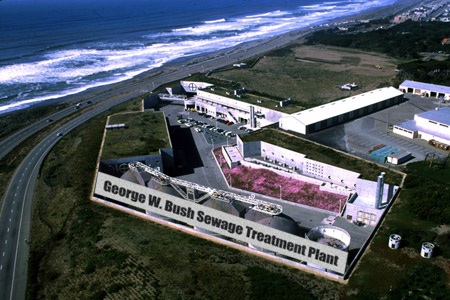
DIRECT DEMOCRACY MAY NAME SEWAGE PLANT AFTER PRESIDENT GEORGE W. BUSH

While this article demonstrates the workings of petitioning and initiative and referendum in California and raises some legitimate points as to the frivolity of this campaign, it is really worth reading for the quotes from Howard Epstein, Chairman of the San Francisco Republican Party. San Francisco is on the frontier of progressive action and organizing, yet I find it ironic that this story is what the mainstream media have found interesting to report about it. Drawing upon San Francisco's progressives and activists, what other initiatives or petitions could instead be taken up using the same format that might have more real impact on the daily life of San Franciscans? In an effort to study and report in more depth on the topic, more on San Fran will be coming soon. -Editor


Satire at the ballot box to 'honor' Bush


Marisa Lagos, Chronicle Staff Writer
Tuesday, June 24, 2008

Source:
http://www.sfgate.com/cgi-bin/article.cgi?f=/c/a/2008/06/23/MNPQ11A3T7.DTL

(06-23) 18:49 PDT -- If you've attended an event or festival in San Francisco lately - or even just hung out at a city park - you've probably seen them.

Admittedly, they're hard to miss. Someone in the group is usually toting a large American flag, and another is often carrying a boom box blaring patriotic music. Sometimes one of them dresses up as Uncle Sam.

They're the Presidential Memorial Commission of San Francisco, but don't let the serious name fool you. The group's intentions are in the gutter: They want to rename the Oceanside Water Pollution Control Plant the George W. Bush Sewage Plant come January, when the next president is sworn in.

During the inauguration, the group also wants supporters to participate in a "synchronized flush"- a way to send a gift to the renamed plant, which supporters say, would be a "fitting monument to this president's work."

It sounds like a harmless joke, or maybe a college civics lesson gone awry. But the handful of friends who dreamed this up over beers one night say they have already collected 8,500 signatures in support of the plan - 1,300 more than the minimum needed to put the question to city voters in November. When they submit the signatures in July, election workers will have to verify that at least 7,168 are from registered city voters for the measure to qualify for the ballot.

"It's a very simple yes or no question, and there's no real fiscal impact- just the cost of relettering the sign in front of the plant," said organizer Brian McConnell. "This is the way the democratic process is supposed to work, even though it's a silly idea in some people's eyes."

Silly might be an understatement. Howard Epstein, chair of the San Francisco Republican Party, called the measure an abuse of the system and "loony bin direct democracy." He vowed to "use all means" to defeat the measure if it qualifies for the ballot. That includes those very expensive glossy mailers, he said.

"There's no use other than to make these nutcases feel good," Epstein said. "It's typical San Francisco crazies."

Still, most people approached on a recent Sunday seemed open to the idea, even if they all didn't stop to sign the petition.

Bright Winn, a San Francisco plumber, enthusiastically gave his signature to the cause.

"(Bush) has always done well for the affluent of America, and anyone that does well for the affluent should be named for the effluent," he said.

The idea behind the renaming runs the gamut from the humorous ("Clean up the mess caused by Bush!" one supporter shouted ) to the sarcastic ("No other president in American history has accomplished so much in such a short time," the group's Web site reads) to the philosophical.

Satire, McConnell said, is one of the great American traditions.

"Fifty years from now in a civics class, students will learn about the Lincoln Memorial, that other presidents are on Mount Rushmore - and George W. Bush got a sewage plant," he said. "It will prompt people to ask why, and they can discuss the Iraq war, and everything that led to it. People want to forget bad moments of history, and this is our way of making sure that doesn't happen."

To be fair, there are already other tributes to President Bush, including a Stockton elementary school and, of course, the presidential library planned in Dallas.

Organizers of the petition drive believe the measure will pass, noting that 2006's Proposition J calling for the impeachment of Bush and Vice President Dick Cheney passed with 58 percent of the vote.

The biggest opposition in this Democratic stronghold, McConnell said, is people who oppose naming anything after the 43rd president.

Officials at the San Francisco Public Utilities Commission, which owns the plant, say they get the humorous intent. But they note that the plant is an award-winning facility that keeps the city's streets and the ocean clean.

"If you are looking for a place to make a negative statement about the Bush administration's impact on the environment, this would be the last place to do it," agency spokesman Tony Winnicker said.

Find out more
For more information about the Presidential Memorial Commission of San Francisco: presidentialmemorial.wordpress.com.

E-mail Marisa Lagos at mlagos@sfchronicle.com.

This article appeared on page A - 1 of the San Francisco Chronicle

Friday, May 30, 2008

GAY MARRIAGE IN CALIFORNIA: SHOULD DIRECT DEMOCRACY TRUMP A JUDICIAL RULING?

An interesting piece on the controversy over an initiative proposed for the state ballot by opponents of same sex marriage that could potentially overturn a Clifornia Supreme Court ruling that has granted same sex couples equal rights under marriage. - Editor


The California Supreme Court's Gay Marriage Opinion:
The People of California Have the Power to Undo It By a Ballot Initiative Amending the State Constitution, But How Far Should That Power Extend?

By VIKRAM DAVID AMAR
----
Thursday, May. 22, 2008

Source:
http://writ.news.findlaw.com/amar/20080522.html

In a highly-publicized ruling last week, the California Supreme Court required the State to offer marriage to gay and lesbian couples on the same terms as those enjoyed by opposite-sex couples. That decision will undoubtedly prompt volumes of analysis and commentary. In this column, I will offer a few preliminary perspectives and thoughts on the aftermath the ruling might generate.

The People of California Can Negate the Court's Decision, But Should That Power Be Considered Routine or Somewhat Disturbing?

First, as has been noted by my fellow FindLaw columnist Michael Dorf and others, the California high court ruling might be trumped by the voters of California as early as this November. Opponents of gay marriage have gathered and submitted signatures to qualify an initiative measure (the "California Marriage Protection Act" or "CMPA") for the State ballot this fall that would, if enacted, amend the California constitution to provide that "[o]nly marriage between a man and a woman is valid or recognized" in the State. Because last week's decision by the California Justices was rendered on the basis of the California constitution alone (and not the federal Constitution), everyone seems to agree that the people of California can, by a simple majority vote in November, act to foreclose same-sex marriage in the Golden State.

From one perspective, this possibility of overturning a judicial result by direct democracy seems obvious and unremarkable: Since the people of California have ultimate power to decide what they want their own state constitution to say and do, they can – if they choose -- remove any state constitutional protection for same-sex couples that may currently exist.

But viewed from a different angle, the people's power to undo last week's ruling via statewide simple-majority popular vote seems more troubling. After all, one of the rationales relied on by the California Supreme court in invalidating California's statutory ban on same-sex marriage was the notion that government discrimination on the basis of sexual orientation should be viewed skeptically, because gays and lesbians are groups that have been historically victimized by invidious and prejudicial treatment that bears no relationship to their ability to perform in or contribute to society. This history of irrational prejudice, the court said, was "the most important factor in deciding whether" laws that treat gays and lesbians differently from straight persons should be constitutionally suspect.

But if the very reason why discrimination against gays and lesbians is constitutionally wrong is that the political majority has tended in the past to treat them unfairly, isn't it odd that the same political majority can, with a simple initiative vote in November, impose its will on them yet again?

The short answer to this question is this: Maybe it is odd, but constitutional law is odd in that way. By definition, whatever the California people want the California constitution to be, it will be. In this regard, I might disagree a bit with Professor Dorf's assertion that "California constitutional law [does not] embrace the view that minority rights turn on the majority's willingness to recognize those rights." In a very real sense, California constitutional law – and all constitutional law, for that matter – does embrace that exact view. As my brother and (sometimes)FindLaw colleague, Akhil Amar, has put the point: "In the end, individual [and minority group] rights in our system are, and should be, the products of ultimately majoritarian processes."

The CMPA campaign should be a reminder, too, that what is legally and constitutionally permissible should not be confused with what is morally right. While constitutions may be the "supreme" law that people put down on paper and enact and enforce, they may not be – and often are not – the supreme embodiment of that which is just. Ultimately, even constitutions operate in a larger context of right and wrong.

The California Supreme Court Based Its Ruling Only on the California Constitution, Yet the U.S. Constitution Will Come Back Into Play if CMPA Passes in November

State constitutions operate not just in the larger context of morality and justice, but also in the larger context of the U.S. Constitution. And that fact raises some interesting questions about the interplay between California and federal law. In particular, what effect does the federal Constitution have on last week's ruling, or November's initiative outcome?

As to last week's ruling, the federal Constitution is beside the point. As noted earlier, the California justices ruled under state law only, and there is certainly nothing in the federal Constitution that prevents state law from recognizing same-sex marriage. Although the U.S. Supreme Court has not indicated it is yet ready to recognize a federal constitutional right to gay marriage (a point to which I shall return later in the column), states are free to do what they want in this area by way of affirmatively equalizing marriage rights.

Possible enactment of the CMPA in November raises more complicated federal questions, however. Suppose the initiative passes. Going forward, California would no longer issue marriage licenses to same-sex couples. But what about those same-sex marriages that are sanctioned by California this summer and fall, before the initiative is approved? Will those same-sex marriages continue to be respected?

That depends on a few things. First, it isn't clear (to me at least) that the CMPA by its own terms will, if enacted, affect already-existing California same-sex marriages. Initiatives in California are presumed to apply only prospectively unless they themselves provide for retroactive application. There is no explicit wording in the CMPA concerning its applicability to already-existing marriages.

Yet some gay marriage opponents may assert that the CMPA's ban on recognizing or treating as valid same-sex marriages (remember, the CMPA says "only [opposite sex] marriage. . . is valid or recognized") will prevent the State from continuing to recognize or treat as valid any same-sex marriages for any state law purpose going forward.

It's not clear today what "continuing" in-state validity or recognition would really mean (since California's domestic partnership laws conferred tangible benefits on registered same-sex couples even before last week's ruling on whether the label "marriage" should be extended.) But to the extent that it matters whether couples who marry this summer continue to be able to use the term "marriage," federal constitutional law may prohibit the retroactive application of the CMPA.

Under the due process clause of the U.S. Constitution's Fourteenth Amendment, states are limited in their ability to upset settled expectations about important property and liberty interests. And for the California constitution to tell same-sex couples that they are free to marry (as it currently does), and then tell them (after the constitution is altered in November) that their decision to marry is no longer honored by the State may unfairly disturb their reliance interest, and upset their reasonable expectations.

At the very least, the possibility of a violation of the Fourteenth Amendment should leave California courts (which will interpret the CMPA) inclined to read it narrowly and to deny it any retroactive effect. Such a narrow reading will avoid the need to resolve the federal constitutional problems with retroactive application, and courts often say that avoiding questions like those by reading state law narrowly is a good thing – since courts should not decide important constitutional questions unless reaching such questions is absolutely necessary.

What Are the Chances that a Federal Constitutional Right to Same-Sex Marriage Will Be Found?

Finally, what, if anything, does last week's ruling tell us about a federal constitutional right to same-sex marriage? Many commentators will say, "Nothing at all," because the meaning of the federal Constitution is distinct from the meaning of state constitutions. It is true that federal law and state law have separate lives. But it is also true that they often influence each other.

It is very common for state courts to interpret their state constitutions to mean exactly what the federal Constitution means. Granted, it is less common for federal courts to look to state law to determine what the federal Constitution means (as the Supreme Court made clear in its ruling earlier this term in Virginia v. Moore, by rejecting the incorporation of state law into the meaning of "unreasonable" searches and seizures under the Fourth Amendment). However, and importantly, there are a few areas where the meaning of state law does help determine the meaning of the federal Constitution.

One such area is so-called "cruel and unusual" punishment under the Eighth Amendment. There, what counts as "cruel and unusual" under the federal Constitution depends on what states are doing and not doing.

Another area, at least for many Supreme Court Justices, is substantive due process. What counts as a federally-protected "fundamental right" depends on what states have done, and what they are continuing to do. While Massachusetts and California are still the outliers in the national gay-marriage picture, those two States do comprise almost one seventh of the American people. And it won't take many more (populous) states following their lead to create a trend that might count in the eyes of Justice Anthony Kennedy and the other key Justices whose views on the meaning of fundamental federal rights dictate outcomes in the Supreme Court.


Vikram David Amar is a professor of law at the University of California, Davis School of Law. He is a 1988 graduate of the Yale Law School, and a former clerk to Justice Harry Blackmun. He is a co-author, along with William Cohen and Jonathan Varat, of a major constitutional law casebook, and a co-author of several volumes of the Wright & Miller treatise on federal practice and procedure. Before teaching, Professor Amar spent a few years at the firm of Gibson, Dunn & Crutcher.

Tuesday, April 22, 2008

ACTIVIST GROUP RECOGNIZED FOR CITY COUNCIL POLICY REFORM

It is great that the people of Berkley are so active in their City Council and it seems that participation has helped them work through the "hot button" issues that have been up for debate. This article also points out some of the challenges facing those who want to participate, such as finding and using an adequate meeting space. It must be one that is accessible to all people and able to fit all the people that wish to take part.

Language is another question of participation that is not addressed in the following article. When people who speak and understand languages other than English wish to participate, it is necessary to provide interpretation. This is not as daunting a task as it seems because many people are bilingual or multilingual and for their own experience or desire to participate, they would be willing to help out. At grassroots conferences around the country this is evident, so it can surely carry on to the City Council level. Breaking down language barriers provides better understanding of other individuals and groups and is key to making successful participatory democracy. - Editor

Activist Group Recognized for City Council Policy Reform

Contributing WriterThursday, April 3, 2008

The Berkeley City Council has acquired a nationwide reputation for addressing hot-button issues, but some Berkeley residents say that until recently, they were restricted from speaking out during City Council meetings.

Last Friday, a local activist group was awarded for its role in improving the level of public participation during City Council meetings.

SuperBOLD, or Super Berkeleyans Organizing for Library Defense-a Berkeley citizens' rights advocate group, received the James Madison Freedom of Information Award from the Society of Professional Journalists for its role in promoting public participation during City Council meetings.
The award "recognize(s) Bay Area organizations and individuals who have made significant contributions to the advancement of freedom of expression," according to its Web site.

Two years ago, SuperBOLD met with attorneys from the First Amendment Project, a non-profit law firm, to file letters against the City Council, threatening a lawsuit unless they changed their public speaking procedures during council meetings.

Before the City Council's reforms, ten members of the public were chosen by lottery to speak during council meetings. Those who lost the lottery were not allowed to speak, said Councilmember Kriss Worthington.

Worthington said that the letters prompted the council to spend several months reforming the system. The current reforms were enacted earlier this year.

"Under the new system, even if you have one person waiting to speak, if they're patient, they'll have a chance to speak," he said.

According to SuperBOLD committee member Gene Bernardi, the award will help the group attain public awareness and support.

"It's giving us a lot more attention to the issue, and I think that will hopefully bring more people into the fold to help," she said.

Although she said she believes public participation has improved, Bernardi said that more help is needed to improve the City Council. She said that the city must increase the size of its council chambers to adequately involve the public during well-attended council meetings.

"Some people were standing in the cold and in the mud," she said. "It's not participatory democracy if you can't hear what's going on."

Worthington says the council chambers can hold roughly 100 people, and over 1,000 have attended council meetings before.

"I think (Bernardi) has a legitimate complaint," he said. "Most people can't sit in the audience and watch (the council meetings). I think council meetings should be moved to a wheelchair accessible space and a larger space, so that more people can be there and watch."

Worthington added that SuperBOLD is expected to attend a council meeting on April 22 to propose the "Sunshine Ordinance," which aims to make city information more easily accessible to the public.