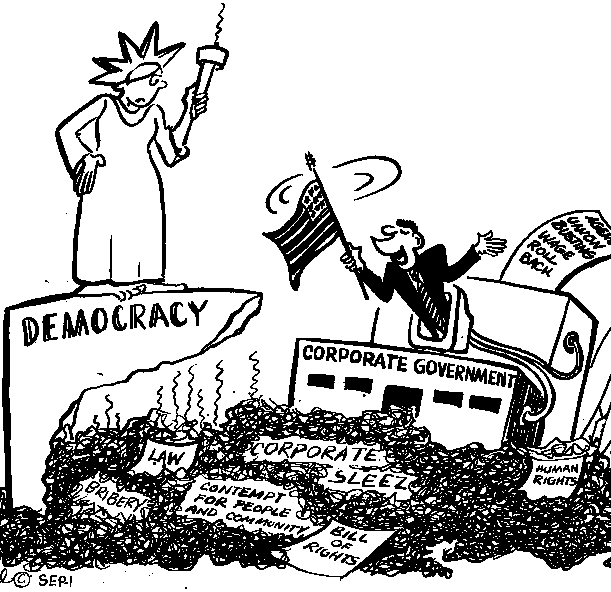
"I know no safe depository of the ultimate powers of the society but the people themselves, and if we think them not enlightened enough to exercise their control with a wholesome discretion, the remedy is not to take it from them, but to inform their discretion by education. This is the true corrective of abuses of constitutional power." - Thomas Jefferson


"THESE ARE THE TIMES THAT TRY MEN"S SOULS"...AGAIN... TIME FOR PARTICIPATORY DEMOCRACY?

We as Americans all remember being taught when we were young about our nation's founders, the patriots who stood up to the tyranny of the crown of England, the drafters of the declaration of independence, the constitution, and the bill of rights, the documents that became the framework for a system of governance that they believed would maintain a balance of power within a truly representative government, that would preserve the basic rights and liberties of the people, let their voice be heard, and provide to them a government, as Lincoln later put it, "of the people, by the people, and for the people."

What we may not be so quick to recall, however, is that there was much debate between the founding fathers as to what model our system of government should follow. Those such as Thomas Jefferson, Thomas Paine, and Patrick Henry on one side favored a pure and direct democracy with the legislative power vested in the very hands of the people, while others such as James Madison, John Adams and George Washington held that a representative democracy would better serve the people than a true democracy because they believed it would protect the individual liberties of the minority from the will of the majority. Alexander Hamilton even went so far as to support the creation of a monarchy. In the end, those favoring representative democracy won the day and that is the system they put in place in the hopes of creating a "more perfect union."


Now we must ask ourselves, what would the founding fathers think if they were resurrected today to see what has become of their vision? One can only assume that they would begin to search for modern day patriots to meet them once again at the liberty tree in order to plan a new struggle for freedom and self governance. Although we continue to praise and honor those who founded our nation and sought to create a truly just form of government for it, do we really stop to reflect on whether we as a nation have in fact succeeded in preserving what they fought so hard to create?

Today, in contrast to our revolutionary ancestors, we as citizens of the United States generally observe politics from afar and the vast majority of us may participate in the political process only to the extent that we go to the polls once a year to vote. Over the decades and centuries we have allowed the erosion of the ideals of the founding fathers and the corruption of the principles which they enshrined in those so carefully conceived documents. We have been left with essentially no real power to influence our "democratically" elected officials. We may write an occasional letter to our senator or representative that generates a form letter in response and a statistical data entry that may or may not be weighed against the influence of some powerful corporate lobby. We may be permitted to participate in a march or demonstration of thousands or even millions, something our patriots of old would have marvelled at, only to be dismissed as a 'focus group' with no bearing on policy decisions.

How then is the government held accountable to the voice of the people? Are the people meant to speak only at the polls when given a choice between a select few candidates that may be equally corrupt? No, as Jefferson and his allies rightly believed, the people should be heard much more than that.

In spite of their good intentions, the system of representative democracy that the founding fathers opted for has been systematically undermined and has ultimately failed in preserving the well being of the people of this nation. Most of us accept this reality as being beyond our control and continue to observe, comment, and complain without aspiring to achieving any real change. Our local leaders and activists in our communities, and even those local elected officials who may have the best of intentions are for the most part powerless to make real positive change happen in our neighborhoods, towns and villages when there is so much corruption from above.

We have become so accustomed to this failed system of representative democracy that it may not occur to us that there are other alternative forms of democracy. In various places around the world participatory or direct democracy has been instituted both in concert with representative democracy, and as a replacement for it. It is a form of democracy that is designed to take directly into account your views, and the views of your neighbors, and to politically empower you to make real positive change possible in your communities. Initiative, referendum & recall, community councils, and grassroots organizing are but a few ways in which direct/participatory democracy is achieving great success around the world.


This site will attempt to explore in depth the concept of participatory democracy and how this grass-roots based form of governance could help bring us back in line with the principles this country was founded upon if it were allowed to take root here. In the hope that one day we can become a nation working together as a united people practicing true democracy as true equals, we open this forum…

CLICK ON YOUR STATE FOR CURRENT BALLOT MEASURES - COURTESY OF BALLOTPEDIA

INITIATIVE & REFERENDUM STATE BY STATE (Click on State):

WashingtonOregonCaliforniaAlaskaHawaiiIdahoNevadaArizonaMontanaWyomingUtahColoradoNew MexicoNorth DakotaSouth DakotaNebraskaKansasOklahomaTexasMinnesotaIowaMissouriArkansasLouisianaWisconsinIllinoisIndianaMichiganOhioMississippiAlabamaGeorgiaSouth CarolinaNorth CarolinaFloridaTennesseeKentuckyVirginia West VirginiaPennsylvaniaNew YorkMaineVermontNew HampshireRhode IslandConnecticutNew JerseyDelawareDistrict of ColumbiaMassachusetts
Ballotpedia.org
LATEST ENTRIES:

Tuesday, September 16, 2008

CONNECTICUT: MOVEMENT AFOOT FOR INITIATIVE & REFERENDUM


Connecticut does not have initiative & referendum, however the Constitution of the state of Connecticut provides for citizens to convene a Constitutional Convention to revise or amend the constitution by voting for a ballot provision that appears every 20 years. Direct democracy advocates are taking advantage of this rare opportunity in the hopes of bringing initiative & referendum o the state through constitutional amendment. We wish them success In the endeavor - Editor


State Voters Can Give Themselves Stronger Voice

MATTHEW M. DALY AND JOHN J. WOODCOCK III
September 10, 2008


Source: http://www.courant.com/news/opinion/op_ed/hc-daly0910.artsep10,0,7404644.story

Nov. 4 will be a seminal day. We the people will be able to gain a stronger voice by voting yes on a ballot question, "Shall the state Constitution Convention be convened to revise or amend the state Constitution?" This question appears every 20 years as provided for in our state constitution.

The coalition supporting the yes vote has proposed a constitutional amendment to provide for direct initiative rights for Connecticut citizens. Today, 31 states have direct democracy laws, which include initiatives, referendums and recall. Sadly, Connecticut is one of only 19 states to not have these citizen empowerment laws.

The first state to allow popular referendums was South Dakota in 1898. The last was Mississippi in 1992. The evidence to date suggests that the Constitution State would benefit greatly from having this mechanism at our disposal.

John Matsusaka, a professor of finance and business economics at the University of Southern California, recently wrote a book called, "For the Many or the Few." Examining over a century of tax and spending data from all 50 states and 4,700 cities, he found some intriguing differences between states that allow citizen-initiated referendums and those that do not.

For example, Matsusaka found that states with the initiative mechanism had significantly lower taxes and spending. From 1960 to 1990, per capita spending was about $83 lower in an initiative state than a non-initiative state — or a $332 savings for the average family of four. He also found that 70 percent to 80 percent of voters are glad to have initiative and referendums in their state.

Another benefit of allowing citizen-sponsored referendums seems to be a greater interest in politics as a whole. Indeed, recent studies by Mark Smith, a political scientist at the University of Washington, show that when there is an initiative on the ballot during mid-term elections, voter turnout climbs.

Many of the Founding Fathers had an intuitive faith in the initiative process. George Washington was very clear when he stated, "With Initiative and Referenda there will be no need for further Constitution Conventions. People will be able to revise the Constitution when necessary. The basis of our political systems is the right of people to make and alter their Constitutions of government."

The initiative-referendum mechanism could further arm Connecticut voters by providing them with an opportunity to speak loudly and clearly on issues such as property tax caps, the repeal of the state income tax, a three-strikes law, medical marijuana and term limits, to name a few. The proponents of the campaign are Democrats, Republicans, independents, liberals, moderates and conservatives. Their goal, in addition to citizen empowerment rights, is to help facilitate what brings us together rather than constantly focusing on what tears us apart.

We believe that Connecticut voters would regret not following the wisdom of yesteryear's founders and today's scholars. Looking to November, we should consider listening to that wisdom and vote yes for a Constitution Convention.

Matthew M. Daly is chairman of the Constitution Convention Campaign. John J. Woodcock III, a lawyer, is an adjunct political science professor at Central Connecticut State University and a former Democratic state representative.

Monday, September 15, 2008

REPRESENTATIVE DEMOCRACY


Sunday, September 14, 2008

"POPULIST UPRISING" DEMANDS PARTICIPATION


This article demonstrates the demands of many American people to have more of an influence in questions of politics, economy, and social disintegration. From the right to the left, people everywhere are finding new ways to participate and they are actually making a difference. -Editor


Seeing Red, Feeling Blue in Purple America

by David Sirota
Dispatches from the Nation's Populist Uprising

By all measures, those of us Americans not in the top 1 percent of income earners are under enormous economic pressure and most of us feel powerless to influence those who act in our name. Public attitudes toward Washington are reaching record levels of animosity. A Scripps Howard News Service poll in 2006 found a majority of Americans saying they “personally are more angry” at the government than they used to be. And there’s a growing backlash against the hostile takeover of our government by Big Money interests.

It’s the natural reaction from a country that is watching its pocket get picked. Wages are stagnating, health-care costs are skyrocketing, pensions are being looted, personal debt climbs—all as corporate profits keep rising, politicians pass more tax breaks for the superwealthy, and CEOs pay themselves tens of millions of dollars a year.

“There’s class warfare, all right,” billionaire Warren Buffet recently told the New York Times. “It’s my class, the rich class, that’s making war, and we’re winning.”

But that may not be true for much longer.

_________________________________________________

In a year of travel to report for my new book, The Uprising: An Unauthorized Tour of the Populist Revolt Scaring Wall Street and Washington, I found those who are fighting back: shareholders running resolutions against corporate boards, third parties shattering the two-party duopoly, legislators kicking down lobbyists in state capitals, bloggers orchestrating primary challenges to entrenched lawmakers, or—on the darker side—armed, enraged suburbanites forming vigilante bands at our southern border. What connects these disparate uprisings is both the sense that America is out of control, and an anger at the government for creating the crises we now face.

In Helena, Montana, I watched Kirk Hammerquist testify before the state legislature in opposition to a tax measure designed to give more breaks to wealthy, out-of-state property owners. Hammerquist owns a construction company in Kalispell, and has got the whole cowboy look going—jeans, boots, and a mustache.

“I was driving down last night on an ice skating rink,” he says, recounting his journey through the snowstorm that just hit. “And I said, ‘why the heck am I doing this?’

“This state is really becoming a playground of the wealthy—we know it, we can’t deny it,” he says. “And don’t get me wrong, I have nothing against wealthy people—I’m trying my hardest to be one. … But to sit there and work on a three- to five-million-dollar home for an owner that is going to be there for a couple of months in the summer … and to think the guy that’s working with me [putting] all this pride and sweat into that house is going to get less [of a tax refund] than that person who is going to come play here for a few months—I tell ya, it made me drive all night. I speak for a lot of people, the guys that work with their hands. I had to come down and represent them.”

This is a populist uprising—a “politics that champions issues that have a broad base of popular support but receive short shrift from the political elite… It explains why today’s uprising defies the clichéd red and blue states that flash across our television screens every night.”

In Seattle, I talked to the founder of an unlikely high-tech labor union about the way a fundamental sense of unfairness is driving a growing number of high-tech workers to put aside the libertarianism that has in the past led them to vote Republican and dislike unions, as issues like wages and health care pull them in a populist direction. They are reacting to working conditions that keep them on a permanent “temporary” employment status. They have watched as 221,000 American tech jobs were eliminated by offshore outsourcing between 2000 and 2004. As one Microsoft employee told me, every tech worker now fears coming in to work to find their entire division outsourced to India.

In New York, I met with the grassroots organizers and campaign volunteers of the Working Families Party, which has used the state’s fusion voting laws to bring together voters across the political spectrum under the banner of higher wages, fair taxes, affordable housing, civil rights, and campaign finance reform—issues too often ignored in modern politics.

This is a populist uprising—a “politics that champions issues that have a broad base of popular support but receive short shrift from the political elite,” as the Atlantic Monthly’s Ross Douthat says. “This explains why you can have left-populists and right-populists,” he adds. And it explains why today’s uprising defies the clichéd red and blue states that flash across our television screens every night.

Those in the uprising are sick and tired of a political system that ignores them. Without inspiration, whatever uprising sympathies people may have are easily quashed under a sense of helplessness. But as the stories in my book show, when that inspiration exists, the uprising intensifies.

More than any time in recent history, people are ready to take action in response to the emergency that is the state of the world today.

Fear, Frustration, and Simple Answers
The Minutemen are gun-toting guys who patrol border areas looking for people trying to sneak into the United States from Mexico. They’ve been labeled everything from patriots, to vigilantes, to racists. Though they see different enemies and are plagued by paranoia, they too exhibit the pure, unadulterated frustration prevalent throughout the rest of the uprising.

As the world has gotten increasingly complex over the last thirty years, America’s public discussion about the world has gotten simpler. Issues like foreign policy, globalization, and immigration have added all sorts of gray shades to the political landscape. But with so much complexity and so many conduits of propaganda, the only messages that break through are the most crisp sound bites and the most simple explanations.

For someone like Rick, who spent 20 years developing a landscaping business in southern California, this has created a terrifying fog—one that eliminates any sense of security or control. He sees complex demographic shifts make whites a minority in his town. He watches global economic forces stress his business. He got involved with the Minutemen because he got sick and tired of trying to battle it out with other businesses that employ low-wage illegal immigrants.

“They don’t gotta pay workman’s compensation, no liability insurance,” he says. “I just can’t compete with them.”

But he, like all of us, has become addicted to simple answers—so addicted, in fact, that he barely notices when those answers conflict with each other.

When we talk about the environment, he says, “This country is being destroyed from within by its own government.” He says environmental regulations “are running business out of this country faster than you’ll ever know.” Yet he complains that smog is destroying Los Angeles.

When we talk about his time at Douglas, the California defense contractor now owned by Boeing, he says the company moved many of its operations from Long Beach to China.

“We’re losing our jobs, and these are good-paying union jobs,” laments the same guy who was just ripping on unions.

Right after saying it’s time to arrest corporate executives who hire illegal immigrants, he’s railing on “these politicians who’re banging on large industry, saying big business is bad.”

Joining the Minutemen is his way of taking some action in response to the emergency that is the state of the world today.

Right-wing politics has thrived by using fear and resentment to divide socioeconomic classes along racial, cultural, and geographic lines. The big problem for working-class whites, Ronald Reagan basically said, was black “welfare queens” stealing their tax dollars and inner-city gangs threatening mayhem. The big problem for yuppie Midwesterners, George W. Bush says, is middle-class East Coasters who want to legislate secular hedonism and take away their guns. The themes and the villains change, but the story line stays the same: a set of people in the economic class just below you is taking your stuff and threatening your way of life—and if those people are dealt with harshly, your troubles are over.

Joining the Minutemen allows participants to immediately behold the illusion of results in a society whose problems are so seemingly immense and immovable that activism can feel like a waste of time. It also locks them into warfare against their natural socioeconomic allies.

The Working Families Party
But in most places the uprising takes a positive form. In the bustling streets beneath New York’s skyscrapers, and in upstate towns far away from Manhattan, the Working Families Party (WFP) has become the uprising model with the most potential to convert all the populist anger and frustration into functioning political and legislative authority.

When I was reporting on the WFP, the party was channeling that anger into Craig Johnson’s state senate challenge in heavily Republican Nassau County, a key race in a strategy to create the first Democratic-majority senate in New York state’s recent history. When I visited the Johnson headquarters, it had the energy of a presidential campaign, and was the entire rainbow of races, colors, and ages. Though a Sunday, the office was packed with people running around making phone calls, preparing for door-knocking runs, and doing all the unglamorous tasks of local organizing. They were there because the WFP promises to champion their issues—and it delivers.

That scene is the WFP at its core: a somewhat chaotic, somewhat ragtag squad of political ground troops in the uprising. Need a crowd for a rally? Call the WFP. Need an expert field staff to help increase turnout in a contested election? Call the WFP. You ask Democratic politicians in New York what the WFP truly brings them, and they’ll all say one thing: people.

The WFP has created a space on every New York ballot for working people to organize around. It does this by taking advantage of New York’s election laws, which allow a minor party to cross-endorse another party’s candidate and effectively “fuse” with that party on the ballot.

On New York general election ballots in 2006, for instance, you could vote for Hillary Clinton on the Democratic Party line or the Working Families Party line, and either way your vote counted for Clinton.

Fusion’s benefits revolve around its ability to bring together culturally disparate constituencies under a unifying economic agenda, without risking a self-defeating spoiler phenomenon where a stand-alone third party candidate like Nader or Perot throws an election to the very candidates they most oppose.

A century ago, the culturally conservative, sometimes anti-immigrant Populist Party (or People’s Party) would often use its ballot line to cross-endorse Democratic candidates. The Democratic Party tended to be more urban-based and immigrant-dominated. But both parties were progressive on core economic issues like jobs and wages. Fusion voting helped make class solidarity more important than cultural division at the ballot box.

In a presidential election, a farmer could support progressive economic issues by voting for a Democratic candidate on the Populist line and not feel like he was betraying his feelings on, say, temperance. Meanwhile, an urban immigrant could vote for the same candidate on the Democratic line and not feel like he was endorsing the anti-immigrant views of rural America. By fusing their votes, they were more likely to get people elected who would serve their shared interest.

Fast forward to 1998, when New Party organizers—including Dan Cantor—joined with New York’s big labor unions and grassroots groups to try to use New York’s fusion laws to secure a ballot line for a new third party—one with a very narrow platform focusing on higher wages, fair taxes, affordable housing, civil rights, and campaign finance reform. The calculation was that the narrower and more populist the agenda, the more sharply the Working Families Party could define itself in voters’ minds, and the more clout it could have on its chosen issues.

“We want to stand for issues that often don’t get heard over the din of money,” Cantor told Long Island’s largest newspaper. Newsday reported that Cantor said he wanted residents to hear the name “Working Families Party” and remember: “That’s the party that thinks wages should be higher.”

The party began delivering the votes. In 2000, 102,000 WFP members voted for Hillary Clinton, including a significant number from demographics where support for Clinton was otherwise low. In 2001, the WFP provided the margin of victory for a Democrat in a tight race for a seat in the Republican-controlled Suffolk County legislature.

These and other victories have led to the WFP establishing a unique public image. A 2005 Pace University poll showed that the single most influential endorsement in New York City mayoral elections is the WFP’s—more important than the state’s major newspapers, current or former officeholders, or other advocacy groups.

The WFP’s work for Craig Johnson paid off. WFP canvassers knocked on 45,000 doors and roughly half of the 3,600 votes that provided Johnson his margin of victory were cast on the WFP’s ballot line. The New York press credited the WFP with playing a decisive role in the election.

The Future
The belief that people—not dictators, not elites, not a group of gurus—should be empowered to organize and decide their destiny for themselves seems so simple, and yet is far and away the most radical idea in human history. “Denial of the opportunity for participation is the denial of human dignity and democracy,” legendary organizer Saul Alinsky wrote.

Putting that principle into action requires genuine courage and selflessness, because participants in the uprising must make their own personal power a lower priority than popular control.

The activism and energy frothing today is disconnected and atomized. The odds against connecting it all into a true populist movement are daunting, but these stories and the others in my book show the opportunity. If more people become part of this uprising, we will not only transcend the partisan divide that gridlocks our politics, but reshape the very concept of what is possible.

Dan Cantor told me, “We have to go to people where they are on the issues they care about.” For the first time in many years, they are ready to put aside partisanship and work for shared goals. The question is whether or not we seize this fleeting moment and make it one of exponential change.
_______________________________________

David Sirota wrote this article as part of
Purple America, the Fall 2008 issue of YES! Magazine. David is a political organizer, nationally syndicated columnist, a senior fellow at the Campaign for America’s Future, and founder of the Progressive States Network, both nonpartisan research institutions.www.davidsirota.com

This article was adapted from The Uprising: An Unauthorized Tour of the Populist Revolt Scaring Wall Street and Washington. Copyright © 2008 by David Sirota. Published by Crown Publishers, a division of Random House, Inc.Buy The Uprising.

Saturday, September 13, 2008

DEMOCRACY vs. CORPORATE GOVERNMENT

Friday, September 12, 2008

THE 'MICHIGAN GOVERNMENT NOW!' BALLOT PROPOSAL AND THE DIRECT DEMOCRACY OF WILLIAM JENNINGS BRYAN

The following article, aside from explaining how a recent exercise in direct democracy in Michigan was squelched by a court ruling, also gives insight into the historical movement for direct democracy led by William Jennngs Bryan around the turn of the century. - Editor


Despite breadth, Reform Michigan Government Now! ballot proposal isn't too difficult to comprehend

PUBLISHED: Sunday, August 31, 2008
BY GLENN GILBERT
Of The Oakland Press

Source:
http://www.theoaklandpress.com/stories/083108/opi_20080831539.shtml

It's too bad Michigan taxpayers apparently won't have a chance to vote on the Reform Michigan Government Now! proposal to change the way business is conducted in our state capital.

Critics claim that the group's proposal was a stealth effort to change the way redistricting occurred in Michigan so as to benefit Democrats. It would have been a great experiment in direct democracy.

At the turn of the century, there was a politician by the name of William Jennings Bryan. He was called the Great Commoner because he claimed to represent that era's person on the street --or in those days, it was just as likely to be the person on the farm.

He must have been popular, because three times the Democratic Party nominated him for president: in 1896, in 1900 and again in 1908. He was a forerunner of the later Progressive movement and pioneered reforms such as the referendum, recall and initiative.

It is through such devices that people in our form of governance can take matters into their own hands when their elected representatives fail.

Our system is designed as representative democracy, not direct democracy. Yet Bryan's slogan was "let the people rule," and he believed the public fully capable of making critical decisions.

"To Bryan, truth and virtue were determined by the popular will," wrote Ray Ginger. "He resented the experts in government as much as he resented the plutocrats in business. He insisted that ordinary people are fully competent 'to sit in judgment on every question which has arisen or which will arise, no matter how long our government will endure.' And so Bryan advocated all measures that would extend direct democracy in government: the initiative, the referendum, direct primaries."

In barring the reform proposal from the ballot -- despite the fact that some 400,000 Michiganians signed petitions to put it there -- the three judges of the Michigan Court of Appeals stressed that "we do not act to prevent the citizen from voting on a proposal simply because that proposal is allegedly too complex or confusing. Nor do we seek to substitute our own preferences as to governmental form, structure or functioning for those of the electorate."

But you have to wonder. Among other things, the proposal, billed as an amendment to the state constitution, would have reduced the number of appellate judges and cut the salaries of those who remain --among other things.

Be that as it may, the reason the court gave for striking down the proposal was that judges said it constituted a general revision of the constitution because it dealt with more than one subject. They pointed out that the proposal affected four articles of the constitution, seeking to modify 24 sections and add four others.

But as Andrew Nickelhoff, attorney for Reform Michigan Government Now! pointed out, there is no such specific language in the constitution restricting the amendment process.

Oddly, the Michigan Chamber of Commerce, one of the organizations seeking to invalidate reform group's petitions, itself proposed a ballot plan last year seeking to change multiple sections and articles of the constitution.

"Talk to the person on the street," said the reform group's spokeswoman, Dianne Byrum. She said they appeared to understand the proposal as they jumped at the chance to sign the petition.

If true, would the people have been smart enough to figure that out?

What do you think? The proposal as it would have appeared is printed alongside today's column.

Do you understand it? How would you have voted: yes or no?

Let us know -- and why.

Glenn Gilbert is executive editor of The Oakland Press. Contact him (248) 745-4587 or glenn.gilbert@oakpress.com.

Thursday, September 11, 2008

ILLINOIS: LIEUTENANT GOVERNOR PAT QUINN IS A LONG TIME DIRECT DEMOCRACY ADVOCATE

The following article provides some backround information about Illinois lieutenant governor Pat Quinn's advocacy of direct/participatory democracy and initiative & referendum. We salute his efforts in this regard and call for more elected officials to join him in calling for the expansion of direct democracy at all levels of government. - Editor

Quinn: Climate of friction in Assembly obstructs taxpayer rights

by Rob Heidrick
Aug 26, 2008


Source: http://news.medill.northwestern.edu/chicago/news.aspx?id=97987

When he talks about his track record of striking nerves in Springfield, Pat Quinn comes off as more than slightly amused.

Illinois’ lieutenant governor of five years, Quinn has become increasingly vocal in calling out the General Assembly, the Cook County Board and his own boss, Gov. Rod Blagojevich, for what he perceives as intrusions into taxpayer rights.

Most recently he took issue with the Assembly’s plan to give themselves pay raises as Cook County taxes steadily creep upward.

“A lot of people today feel that the office holders too often ignore the public point of view,” Quinn says. “Indeed there may be some that are even contemptuous of the public point of view.”

Last week Quinn picketed one of the governor’s speeches, urging the public to sign a petition dissuading lawmakers from allowing the automatic 7.5 percent pay raise to take effect. Blagojevich dodged the crowd by entering the building through a back door, and Senate President Emil Jones refused to shake Quinn’s outstretched hand as he brushed past him.

“When he walked in, he said, ‘What’s your name?’ to me,” Quinn says. “Not very complimentary, I guess.”

Despite the cold reception, the stunt worked. The lieutenant governor collected more than 17,000 signatures in 48 hours, putting enough pressure on the Assembly to call a vote and cancel the raises.

Quinn takes pride in his ability to move the masses, referring to his grassroots campaigns as the unstoppable force to Springfield’s immovable object. He has built his political career around his support of initiatives, public referendums and recall of public officials, all of which he regards as vital components of participatory government.

“I believe in direct democracy,” Quinn says. “It’s a good safety valve to have when things go askew in government.”

Quinn has fought for his concept of direct democracy since the '70s, when he led a series of petition drives asking legislators to reform the state tax system and grant Illinois citizens the power to vote directly in referendums. His best-known effort to enact such referendums, the Illinois Initiative, received widespread public support before failing in the state Supreme Court in the late '70s.

The ultimate line of defense, in Quinn’s opinion, would be an amended state constitution that gives Illinois residents a louder voice in the political process and limits the government’s ability to overburden taxpayers. “The people are the boss,” Quinn said at a recent conference while proposing an amendment to strengthen the power of the state’s Compensation Review Board.

Quinn says taxpayers should have the power to vote directly on constitutional amendments, which will only become possible if there is sufficient support for a constitutional convention in November’s election.

A constitutional convention, or “con con,” as it’s called by insiders, is a meeting of specially elected delegates who propose and vote on new amendments to the state constitution—which could include new regulations on campaign ethics, school funding, pay raises or a number of other possibilities. The proposals would then be sent back to Illinois voters, who would approve or reject each amendment in an up or down vote.

Convention delegates, as Quinn is quick to point out, do not have to be career politicians, nor do they have to be affiliated with any political party. This distinction, the lieutenant governor says, makes them more independent of the Springfield mentality and thus more capable of representing the true perspective of the citizens of Illinois. Many delegates attending a 1970 con con had had no prior political experience, and many never returned to politics after the meetings concluded, according to Quinn.

“They were there to do a job,” Quinn says. “And I think that attitude is why a convention is superior to just relying on the same old people in Springfield that we have today.”

Quinn’s ongoing quest to amend the constitution has given him a sort of notoriety among his peers—some see him as a man staunchly devoted to ensuring a formal guarantee of taxpayers’ rights, while others regard his actions as a threat to the stability of the state’s most important document.

“There’s just not agreement that a constitutional convention would be productive or constructive, given the political climate that we currently have,” says Jeff Mays, president of the Illinois Business Roundtable and member of the Alliance to Protect the Illinois Constitution.

Mays and the alliance believe that there are other avenues to bring about the types of reforms Quinn is pursuing. Most importantly, Mays says, politicians themselves have to stand for public election, holding them directly accountable to their constituents.

“This is a constitution you’re talking about changing. It’s not just a statutory compendium. So maybe it should take a little more time,” Mays says. “I would not want to expose our constitution to the current political winds that are blowing right now.”

Quinn says his odds of success are relatively slim, but he believes he’s got enough public support to pass the con con vote.

“There’s no question that we’re the underdog,” says Quinn, referring to a $3 million advertising campaign soon to be rolled out by the anti-con con coalition.

“The opponents of a con con, to me, they’ve got to trust democracy. They basically make an argument that the status quo is acceptable. And I think that’s where their weakest position is.”

The well-documented climate of “friction and gridlock” between every branch of Illinois government must subside, Quinn says, before the issue of amending the constitution can even be reached.

Wednesday, September 10, 2008

NAOMI KLEIN AND TOM HAYDEN ON ACTIVISM

This video describes the way that two important North American activists have struggled and succeeded in bringing about change in our society. As leading figures in various social movements, the two discuss pivotal moments in history that provoked them to take action, as well as the obstacles that face activists today. Activism is one of the fundamental building blocks of participatory democracy because there can be no participatory democracy without a well informed and politically active electorate. Naomi Klein and Tom Hayden leave viewers feeling hopeful for change through further participation by people who are inspired to act rather than retreat in to cynicism and apathy in the face of the monumental problems facing our society today. -Editor

CLICK HERE TO VIEW THE VIDEO

Source: http://www.yesmagazine.org/article.asp?id=2800&utm_source=sep08&utm_medium=email&utm_campaign=41_Naomi

Naomi Klein & Tom Hayden by Naomi Klein and Tom Hayden

This series, co-produced by The Nation magazine and Brave New Foundation, brings together inspiring activists from different movements and generations, to discuss their ideas, ideals, and approaches to changing the world.

Naomi Klein and Tom Hayden converse on This Brave Nation.
bravenation.com
This Brave Nation :: Naomi Klein & Tom Hayden

Author, Activist and Former California State Senator Tom Hayden talks in depth with the author of No Logo and The Shock Doctrine, Naomi Klein, about the state of the fourth branch of government: journalists.

Both Hayden and Klein became serious journalists in college, and it was during that time that both experienced their defining moment.

When Tom Hayden interviewed Dr. Martin Luther King Jr at the 1960 DNC in Los Angeles, he asked questions while imagining the headline, “Tom Hayden Interviews MLK,” but by the time he wrote the article he knew there were more important things in the world than personal glory.

Naomi Klein rebelled from her liberal, feminist mother until Mark Lepine gunned down fourteen women in what became known as the Montreal Massacre. It was then she realized people were dying for the beliefs her mother fought for, and that realization awakened the activist within her.
After both events, Hayden and Klein dedicated their lives to telling the truth about the world, and doing everything in their power to not use subjects like “they,” but use “we” instead. It is that distinction that defines their journalism to this day.

Monday, September 8, 2008

SARAH PALIN AND DIRECT DEMOCRACY IN ALASKA


The Palin Pick, and Alaska's Direct Democracy

Joe Mathews -
August 29, 2008 - 1:00pm

Source:
http://www.newamerica.net/blog/blockbuster-democracy/2008/palin-pick-and-alaskas-direct-democracy-6643

Get ready, America, for a lesson in one of our country's strangest states. What makes Alaska so different? It's not just the cold and the empty landscape. (CORRECTED 9/4): Alaska is one of a few states to have had direct democracy since its founding. Arizona has had the initiative and referendum since statehood, and Oklahoma since shortly after it joined the union.

So it's fair to say that Alaska has been shaped more profoundly by direct democracy than almost any other state in the union. As every bit of Gov. Sarah Palin's life is scrutinized, you'll hear lots of odd things for which direct democracy is part of the answer. (Here's my strongest prediction about this choice: once Americans learn how Alaska works, Leno and Letterman will start making jokes -- and it'll be years before they stop). For example, she'll have to admit -- as she has done in the past -- that she smoked marijuna. But she'll have an explanation that may surprise people. Marijuana was LEGAL in Alaska until 1990, and not just for medicinal purposes. Thank the voters for the right. The voters also took the right away.

You'll also hear about her love of hunting and fishing, and her husband's work as a commercial fisherman and in the oil fields. You'll hear a lot from environmentalists about state management of public land. Alaska law in all these matters has been profoundly shaped by the ballot. And you also should expect to see her attacked by good government types as "not a real reformer" for her decision not to back a ballot initiative establishing public finance in Alaska. The measure was defeated in Tuesday's primary elections there.

For an overview of Alaska's initiative and referenda history, check out the state page on ballotpedia.

Friday, September 5, 2008

MISSISSIPPI: SMALL TOWN CITIZENS ILLUSTRATE THE VALUE OF POLITICAL PARTICIPATION

The following story from Mississippi illustrates how, when direct democratic means are absent in the system, citizen participation in the form of pressure upon local officials can have an impact. Until all of our communities are permitted to decide important local issues through direct democracy and initiative & referendum, all available avenues for less formal participation must be enthusiastically pursued. - Editor


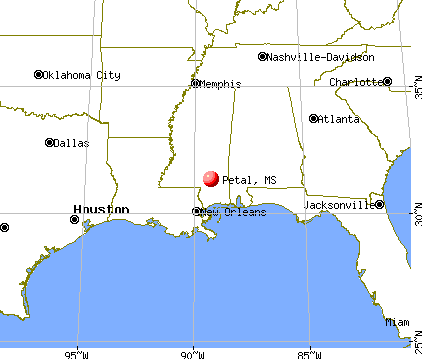
Petal residents help make changes

From staff report • August 8, 2008

Source:
http://www.hattiesburgamerican.com/apps/pbcs.dll/article?AID=/20080808/OPINION01/808080356

A comment that Petal Alderwoman Liesa Weaver made during Tuesday's board meeting attracted our attention. The board was discussing a zoning change for an 18-acre site off Hillcrest Loop from residential to planned urban development, which would have opened the area to a mixture of apartments, business, town homes and estate homes.

The board voted 4-1 to deny the zoning change to the relief of several residents of the area concerned that their peaceful neighborhood would be changed for the worse.

"I feel threatened by crime and noise, but from an intrinsic point, I want my peace of mind and safety," said resident Richard Storey.

Weaver was among the board members voting to deny the rezoning.

"If all of you had not come up here and been calling me this week, I would be voting for this," she told residents attending the meeting to see what would happen. "I listen to the people in this community."

It's a perfect example of participatory democracy. The leaders listen to all sides of an issue and then vote for what they believe is the best course. The fact that the residents got involved in this issue speaks well of them.

We wish more people would take an active interest in their local, state and national government. Especially on the local level, individuals can make a difference.

This isn't to say that Alderman James Moore, who cast the lone dissenting vote, was wrong. He said he thought the zoning change meshed with the city's Smart Growth plans. He obviously listened to the residents and took what he thought was the best course.

We think in too many towns and counties, those who are governed allow their leaders to make decisions that in the long term cause irreparable harm to communities.

Thursday, September 4, 2008

THE ROLE OF THE MEDIA IN A PARTICIPATORY DEMOCRACY


Stop Big Media . . . Before It Stops Itself

Why is Sam Zell the new whipping boy for crusaders who think corporate media still sucks?

By Michael Miner
August 7, 2008

Source:
http://www.chicagoreader.com/features/stories/hottype/080807/

I admire a gallant crusade as much as the next guy, but StopBigMedia.com has the ring of an army raised to fight the last war. Why should anyone in Chicago take up arms against big media when big media’s already falling apart on its own?

“Dear Friend,” began the e-mail blast StopBigMedia.com sent out in July. “When members of Congress from your state return home this summer, they need to hear why stopping further media consolidation must be a top priority. By acting now, you can ensure that there are thousands of petitions ready to be delivered when your U.S. representative sets foot back in your district for the summer congressional recess.”

StopBigMedia.com wants the House to do in the fall what the Senate did in May: vote to overturn a 2007 Federal Communications Commission action ending the ban on common ownership of broadcast outlets and newspapers in a single market. The campaign calls the FCC’s new policy “nothing more than a massive giveaway to Big Media.”

And who’s the new Big Media bogeyman? Despite the vastness of the News Corporation and its recent consumption of the Wall Street Journal, Rupert Murdoch seems to have ceded the position to Chicago’s own Sam Zell. Zell’s new, he’s fresh, he’s a loose cannon, and he sounds dangerous.

StopBigMedia.com is run by Free Press, a Washington-based “national, nonpartisan organization working to reform the media.” Rooting around its Web sites, StopBigMedia.com and freepress.net, I came across a video link to a speech Bill Moyers gave at the National Conference for Media Reform, presented by Free Press in June in Minneapolis. It was, as Free Press executive director Josh Silver puts it, “vintage Moyers.” And Moyers couldn’t resist going off on Zell.

“I believe more fervently than ever that as journalism goes, so goes democracy,” said Moyers. “Yet as mergers and buyouts change both old and new media, bringing a frenzied focus on cost cutting while fattening the pockets of both the new owners and their investors, we are seeing journalism degraded through the layoffs and buyouts of legions of reporters and editors. . . . The new owner of the Tribune Company, real estate mogul Sam Zell, recently toured his new property, the Los Angeles Times newsroom, telling his new employees the challenge is, ‘How do we get somebody 126 years old to get it up?’ Well, said Zell, ‘I’m your Viagra.’”

Given the flaccid state of the Tribune Company, I thought as I watched the video, a little Viagra might be just the thing. Maybe Moyers’s listeners had the same thought. They tittered lightly—he would have to work harder for his laugh.

“I’m not making this up,” he added. Adequately cued, the crowd chortled.

“He told his journalists that he didn’t have an editorial agenda or a perspective ‘about newspapers’ roles as civic institutions,’” Moyers continued. “‘I’m a businessman,’ he said. ‘All that matters in the end is the bottom line.’ Just this week Zell told Wall Street analysts that to save money he intends to eliminate 500 pages of news a week across all of the company’s 12 papers. That could mean eliminating some 82 pages a week just from the Los Angeles Times. What will he use to replace reporters and editors? He says, to the Wall Street analysts, ‘I’ll use maps, graphics, lists, rankings, and stats.’ It sounds to me as if Sam has confused Viagra with Lunesta.”

What is it about Zell? I asked Josh Silver. “He insults journalists and journalism at virtually every whistle stop on his tour,” Silver replied, referring to Zell’s visits to Tribune Company properties. “He says it’s not about democracy—it’s about profits. The American public and policy makers have to decide whether journalism is produced purely for the reaping of profit or if it’s a central component to a functioning participatory democracy.

“And based on the answer to that question,” Silver went on, “you make policy accordingly. There is no such thing as a deregulated media policy system. The only question is, will the media be regulated for the largest media corporations or regulated on behalf of the American public. That’s what all of our anticonsolidation efforts are about.”

If Zell would shut up, critics like Silver and Moyers might notice that he makes a lousy poster boy for big media. He took the Tribune Company private and made its employees nominal co-owners. He’s not acquiring properties—he’s selling them off. America has always had it both ways about that choice Silver thinks the nation needs to make: journalism for profit or journalism for democracy. Zell has loudly and rudely told his staffs that from where he sits the second is predicated on the first, and turning a profit is something he knows a little more about than they do.

But I don’t want to suggest Free Press can’t see beyond Sam Zell. In his welcoming address at the Minneapolis conference, Silver hailed the “movement” and said it stands “on the brink of the greatest opportunity in generations to break the corporate media stranglehold on democracy.” He explained, “The future will go down one of two paths. The first is the righteous path. It’s of openness—a new media world that treats all content equally. . . . The second path is a closed Internet—an Internet that looks like radio, TV, or cable, an Internet where giant phone and cable companies decide what’s on, how much it costs, and how fast it downloads, an Internet that is no longer a vibrant town square for all of us but a cash cow for a few.”

And so “we dedicate ourselves here today to the proposition that our fight for a democratic, open Internet and independent media will end the historic pattern of monopoly that suffocates freedom, dissent, and creativity.”

Those are Silver’s concerns, and though I might put them a little less grandiosely, I share them. The Free Press Web sites are a handy gateway to media analysis, some of it more soberly phrased. On freepress.net I came upon a link to a transcript of a July 29 panel discussion on Democracy Now! on the sorry state of the newspaper industry. This time Zell got a sliver of sympathy. Bernard Lunzer, president of the Newspaper Guild, said there’s “a lot of fear, almost a sense of panic,” at American papers as stocks tumble and staffs are slashed. Part of the problem is that the companies were “addicted” to huge profit margins, Lunzer said, but he allowed that in Zell’s case and some others “they paid too much, they’re overleveraged, there’s too much debt.”

Lunzer said he understands that newspapers must reinvent themselves. “There has to be innovation,” he said. “We’ve been willing to bargain concessions where necessary, but we think the biggest mistake is that the owners and the publishers have not been talking to the frontline workers about that kind of innovation. So, what we’re trying to do, where we have to do concessions, we want to trade that for real involvement, real committees that are able to work on a better business model, on the future of the product. We still believe that there’s a place for quality journalism, that people will want it.”

(To which Lee Abrams, who’s Zell’s “innovation” czar, might reply: We believe that too and we’ve formed those committees. We’re not only asking the frontline workers for innovative ideas, we’re begging them.)

Lunzer hopes Zell, who’s already sold Newsday, will unload more papers to get them out from under that crushing debt. “We’re hearing that Tribune Company is going to save journalism through all these cuts,” he said. “That’s not what we’re seeing. That’s not what we’re feeling. We’re feeling that basically it’s just a self-fulfilling cycle of a downward spiral.”

Josh Silver focuses on mainstream media because that’s where both the money and the serious journalism still are. “The overwhelming majority of stories are broken by professional journalists, not by bloggers or armchair amateurs,” he told me. But the Internet is irresistible, and Moyers in his speech warned that the “clock is ticking.” He said, “Advertisers have already aggressively seized the new online world to go back into the programming business themselves, creating what’s called ‘branded content.’ Imagine the Camel News Caravan revived, but this time as a sponsored YouTube channel. Can you imagine advertisers going for stories with key words such as ‘health care reform,’ ‘environmental degradation,’ ‘Iraqi casualties.’ . . . I don’t think so. So what will happen to news in the future, as the already tattered boundary between journalism and advertising is dispensed with entirely, and as content, programming, commerce, and online communities are rolled into one profitably attractive package?”

But how alarmed should we be by this? Why shouldn’t advertisers exploit key words? They’ve always directed their ad dollars at the programs and publications that best deliver the specific audiences they covet. What degree of specificity turns that into a sin?

We need to pick and choose among our worrywarts. I’m more in tune with Chris Hedges, a former New York Times reporter and another of the Democracy Now! panelists. Hedges said dourly that “the large newspapers are dying, and the Internet is not going to replace them.” He said Times stock has dropped and it’s gone through its own rounds of layoffs and buyouts, and although “part of it is ownership, part of it is just the antiquated nature of newsprint as a conveyor of information.”

Hedges repeated himself for emphasis. “It’s not totally about ownership; it is about the medium itself. The average reader of the paper copy of the New York Times spends 45 minutes reading the paper. The average viewer of the New York Times Web site spends about 7 minutes. The Internet is not designed for a literate society. We are moving into a postliterate society.”

Tuesday, September 2, 2008

THE PARTY CRASHERS: DIRECT DEMOCRACY IN THE STREETS

In the context of the current Republican National Convention, the following article highlights the importance of direct action and peaceful protest where the system of governance lacks direct democracy. The U.S. system of representative democracy is such a system, and until that system is reformed to allow the political will of the people to be manifested through more directly democractic means, direct action in the streets will continue to be an essential means of allowing the voice of the people to be heard by their representatives. - Editor


The Party Crashers

By Michael Gould-Wartofsky
The Nation Magazine
August 19, 2008


Source: http://news.infoshop.org/article.php?story=20080820143334877

At some point during the upcoming Republican National Convention, delegates will look out the windows of the Xcel Energy Center, or down from swank hotels and grand old after-parties, and there, past the security fences and the legions of taser-toting police and private security guards, they will see the other America spilling into the streets of St. Paul, Minnesota.

That is, if the Republicans even make it that far. From September 1-4, the RNC will be besieged by a panoply of protesters--including antiwar activists, Iraq War veterans, Hurricane Katrina survivors, immigrant workers, labor unionists, anarchists, environmentalists, feminists and queers. At the frontlines will be America's young dissidents who will walk out of class, lock down intersections and dance in the streets to "Funk the War."

The view from Denver at the Democratic National Convention at the end of August will look a little different. That's because in the age of Obama many of these same movements, so united against the RNC, are deeply conflicted over the Democrats and the party system itself--perhaps none more so than the youth movement. At issue, say organizers across the country, is not only their relationship to the Obama campaign and the presidential elections but the very meaning of democracy in 2008. Is true democracy possible inside the party system and on the campaign trail? Or is democracy to be found and made by the people in the streets outside? Will the two ever meet?

Not if the conventioneers have their way. Uncredentialed activists are to be fenced off and kept away from the Pepsi Center in Denver by parking lots the size of football fields. The protesters descending on the RNC will be cordoned off into designated "free speech zones," guarded by thousands of police officers to the tune of $50 million at this "National Special Security Event."

The streets will also be haunted by the ghosts of conventions past, from the cracking of skulls at the 1968 Democratic convention in Chicago to the pre-emptive arrest and detention of nearly 2,000 protesters at the 2004 Republican convention in New York City. Like their predecessors outside those arenas, this year's dissidents have come to see the party conventions, advertised as the ultimate showcases of American democracy, as exhibits A and B of the nation's deficit of democracy instead. And they cast themselves in opposition, as the keepers of the flame.

"It really will be a collision of opposites," says Minneapolis activist Katrina Plotz when asked about the RNC, which she is organizing against with the Coalition to March on the RNC and Stop the War. "A scripted and sanitized spectacle for a homogenous group of wealthy elites inside the convention hall versus a thriving, organic movement of the masses outside."

Perhaps the starkest contrast will be between the plutocrats of the Grand Old Party and the Poor People's Economic Human Rights Campaign, a coalition led by poor and homeless families fighting for the right to housing, healthcare, education and a living wage. They will be camped in a "Bushville," a tent city evoking the Depression, and setting out on the March for Our Lives. "It's to say to the whole country, 'We are here,'" says Minneapolis native Rickey Brunner, who, at 16, has become a spokesperson for the group. "We plan to show that this is a crisis, this is something that needs to be looked at with a little more urgency.... We don't have enough housing. We don't have enough healthcare. And it's killing the people."

The RNC for many has become a symbol of everything the protesters believe is wrong with America. They are moved to action by all-too-familiar litany of injustices--the occupation of Iraq and beyond, class war and racism, sexism and homophobia, torture and repression, corporate power and the climate crisis, rising tuition and an economic bust that's hitting this generation hard. Yet what they have in common, beyond a penchant for ruckus and a loathing of the GOP, is a persistent belief in democracy from below, in the power of ordinary people to transform the conditions of life in this country and worldwide--a power they believe must be exercised in the street, not just in the voting booth.

"Democracy is not waiting to vote once every four years. Democracy is getting out in the streets," says Sgt. Matthis Chiroux, a 24-year-old member of Iraq Veterans Against the War (IVAW) who refused orders to deploy to Iraq this June and now plans to show up to the conventions with IVAW. "They [the politicians] are not gonna do it by themselves. We're gonna force their hand, because that is the nature of democracy."

The dissent at the Democratic National Convention--though less "mass" than at the RNC, especially after the recent withdrawal of some national organizers--is set to feature events like an open-air Festival of Democracy, a Restoring Democracy Parade and a base camp with free housing and medical care, organized by groups like Students for a Democratic Society (SDS), the Alliance for Real Democracy, the Recreate '68 Alliance and the immigrant coalition the We Are America DNC Alliance.

Activists with these groups report getting the critical questions from their friends and peers about plans to protest Denver: "Especially now, with a candidate who talks a lot about hope and change, people talk about, 'Why do you need to protest?' " says Zoe Williams, a local organizer with Code Pink: Women for Peace and a spokesperson for the Alliance for Real Democracy. Her answer? "I think that we need to define what hope and change are. We need to decide what that means to us as a people."

Even among the activist crowd, there are those who hope the youth movement outside the convention will join with those inside to toast the "new era" they believe the Obama campaign represents--as well as hold Obama accountable and engage the hundreds of thousands of newly politicized young people who have joined in the campaign. "For people who are disenfranchised by the system, some of them for the first time are being motivated into politics," says Rachel Haut, a member of SDS and labor activist at Queens College who is working on the 100 Days Campaign, intended to pressure the next President during his first 100 days in office. "We want to create a broad progressive movement that can invite these newly politicized people in. And we want to create a campaign that can take that beyond the voting booth."

Organizers like Haut feel the stirrings of a new youth movement, newly mainstreamed. Some say it's about the power of the stories that are told on the campaign--and about what stories will be told at the conventions. Madeline Gardner, an activist from the Twin Cities who now organizes with the Energy Action Coalition, sees a political opening for movements like hers: "The story Obama tells, about how we're gonna change this world by regular people taking action," she says, "creates more space for social movement organizing in a way we haven't had since the '60s. I would like to see the conventions and the protests around them take full advantage of that opportunity."

That sentiment is shared by Joshua Kahn Russell, an organizer with the Rainforest Action Network in the Bay Area who feels that the youth movement should "use both conventions to put forward a narrative that we are starting a new chapter in American history.... Our job is to be part of that progressive wave and to pull it to the left as much as we can."

Still, many in the youth movement are riding on a different wave, and they do not want to be swallowed up by the one depicted in Obama's campaign logo--especially following what they see as his betrayals of the movement's values. Some of them are tired of being taken for granted, whether as young people or as people of color. "Because Obama's running, they think, 'We've got them, they're coming out, they're gonna support Obama no matter what,' " says Troy Nkrumah, a chair of the National Hip-Hop Political Convention in Las Vegas, which is convening this summer to forge a national agenda for the hip-hop generation. "Some of us aren't so sure that it's gonna make a difference."

Likewise, young people like Adam Jung, a farm boy from Missouri who is helping to organize the DNC tent city with Tent State University, are questioning whether Obama and the Democrats are ever going to represent them: "The Democrats, they count on and expect our votes. We're saying, 'If you're not representing me, I don't have to vote for you. You need to start listening to the youth [and] the 65 percent of the people in this country who want the war to end.' "

Most determined of all are the anarchists and anti-authoritarians, as many of the youth activists describe themselves, including two of the most active groups preparing to crash the conventions: the RNC Welcoming Committee and the Unconventional Action network. Unconventional Denver organizer Clayton Dewey acknowledges that "the candidacy of Obama is a reflection of the public's desire for something different." But as an anarchist, he explains, "we believe that despite the rhetoric Obama uses, genuine change will always come from the bottom up, and that means countering the system as a whole."

"An anti-authoritarian vibe is what's going on," says Carina Souflee, an activist with Anarchist People of Color and the Movimiento Estudiantil Chicano de Aztlán (MEChA) at the University of Texas-Austin, who was radicalized by the immigration protests and is planning to be in the streets at the RNC. "People have learned that a top-down approach to things doesn't work."

To young radicals like Souflee and Dewey, the question remains one of democracy, and to them, democracy has very little to do with the 2008 presidential elections. "What we have in common is a desire to break the spell that elections have over the US left," says a member of the RNC Welcoming Committee who goes by the pseudonym 'Ann O'Nymity.' "Our message is one of direct participation in democracy, bypassing corrupt politicians who don't represent us but instead further corporate interests."

Still, in the age of Obama, some in the youth movement are bypassing protests that directly confront the Democratic candidate and his party, opting instead to aim their dissent at the Republicans. "The RNC is a very easy target, because they are so visibly to blame for what's happening in this country," says Samantha Miller, who recently graduated UCLA and is now organizing members of DC SDS to bring the group's notorious Funk the War street parties to the RNC. "There's a whole lot more energy for the RNC than the DNC," she reports.

Thousands of youth from dozens of groups from across the country are coming together to blockade the Republican convention, using direct democracy not just as an end but as a means. Inspired by the Battle in Seattle and the global justice movement of the '90s, they are deploying a well-organized web of leaderless "affinity groups," "assemblies" and "spokescouncils."

Always the bete noire at a convention ("Anarchists Hot for Mayhem!" screamed a typical headline at the last RNC), this direct action wing of the youth movement has already sparked a media frenzy, along with an internal debate, over what tactics they will employ in the streets. Some activists are wary of the plans to blockade the convention. "I don't know what to make of shutting down the RNC," says Uruj Sheikh of New Jersey, who has worked with the War Resisters League and with the new SDS since its inception. "I'd like to see more of a consciousness raising thing. I don't want the left to be perceived as crazy."

Yet most activists in the Twin Cities agree that the likeliest scenario will be violence from those in blue, more than those in black: "We know that it is the police, not protesters or activists who will have the tasers, guns, rubber bullets, concussion grenades, chemical weapons, helicopters, the media spin machine and millions of dollars on their side," says the Welcoming Committee.

The same story can be heard over at the DNC protest headquarters. "We're just hoping that the Denver police don't recreate the violence that happened in Chicago [in '68]," says Glenn Spagnuolo of the Recreate '68 Alliance, "since they're the only ones capable of doing that."

The group's call to "Recreate '68" at the 2008 DNC has become a point of contention all its own, even among activists born decades after 1968 and bred amid a new world order. The collective memory of '68--not just of Chicago, but of the assassinations of Martin Luther King and Bobby Kennedy, of Black Power and women's liberation and youth revolts worldwide--persists among this generation. But while some in the youth movement may look back on '68 as a usable past, as a memory of mass democracy they can mobilize and learn from, few activists see it as a moment to recreate. "It provides inspiration and an example of what can be possible," says Arya Zahedi of New York City SDS. "But it can also prove a disservice. If we just 'recreate '68,' we will be destined to also recreate its problems."

Not everyone is counting on the conventions, the campaigns and the protests. Not Senia Barragan, who helped found the new SDS at Brown University and in Providence: "That culture of activist summit hopping, I'm not really into that. I do think it is important to show a resistance to both parties. I just think that there are different ways that people go about doing that. And I hope we don't lose steam over this election. We've got a long way to go."

Already youth organizers are looking beyond September, even beyond November 4, 2008, and January 20, 2009. They are looking to the long haul, to the work of movement building, rooted in their communities but linked in solidarity with a global movement. For, they say, the whole world is still watching. "Our task today," says NYC SDS's Zahedi, "is to get to work organizing where we are, at our campuses, workplaces, and in our communities, while at the same time building links with people struggling all around the world."

For many, this push begins by showing ordinary people, and especially young, newly politicized people, their own power beyond Election Day. "We really need to find a way to engage the people who are excited, and really do think that Obama's gonna change something," says DC SDS's Miller. "We have to do a lot of popular education to say that it isn't politicians who make real change, it's the movements that politicians have to follow."

http://www.thenation.com/doc/20080901/gould-wartofsky

Friday, August 29, 2008

DEMOCRACY CPR


Thursday, August 28, 2008

BEYOND OBAMAMANIA: HOLDING OBAMA'S FEET TO THE FIRE

Barack Obama has promised changes in the form of increased government transparency and citizen participation in government, which bodes well for moving the nation towards more direct democracy. (See our previous posts on Obama's platform for more information). Nevertheless, as Obama moves to the center on many important issues in the runup to the November election, it is becoming more apparent than ever that if real change has any hope of becoming a reality that it will only come if the large popular movement that has sprung up around Obama's campaign maintains the pressure beyond election day and demands that change come in real terms and not in mere rhetoric disguising pandering to special interests. Change will be the product of the people's increased political activism and participation, not of the belief that one man will revolutionize Washington politics. - Editor

Holding Obama’s feet to the fire

Source:
http://www.redpepper.org.uk/Holding-Obama-s-feet-to-the-fire
This is an edited transcript of ‘A People’s President? Barack Obama and the left’, a discussion at the Brecht Forum, New York, on 19 June 2008. Transcript: Jennifer Nelson and Lena de Casparis

With his appointment of a series of Clintonite economic and foreign policy advisers, Barack Obama has attracted fire from the American left. But does this mean that hope in his campaign for the presidency is misplaced? Doug Henwood, Gary Younge, Jo-ann Mort, Betsy Reed and Ta-Nehisi Coates debate the politics of Obama’s candidacy and the huge mobilisation of support behind it

Doug Henwood: There is something about the shift from the primaries to a general election that brings out the worst in a Democrat. First, there is the appointment of Jason Furman as an economic advisor. Furman famously argued that raising Walmart’s wage levels would force Walmart to raise prices, which would hurt the working class more than it would help them.

Furman is a Democrat Leadership Council (DLC)-style Democrat, someone out of the Clinton-Rubin summer school. [Rubin was Clinton’s treasury secretary and the DLC is a corporate-funded association of Democrat moderates, closely associated with the Clintons.] He joins Austin Gouldstein as Obama’s chief economic advisor. Gouldstein is famous for eulogising Milton Friedman, and for having been the top DLC economist.

Among that collection of ghouls, Obama recently announced his appointment of foreign policy advisors. They include former secretary of state Madeleine Albright, who famously said that half a million dead Iraqi children killed by the sanctions imposed by the Clinton administration was a price worth paying. They also include Lee Hamilton and David Boren, two Congress people known for their protective attitude toward the CIA; Anthony Lake, Clinton’s national security advisor; and Susan Rice, another Clinton leftover and cheerleader for the invasion of Iraq.

I can’t say that I was surprised by any of these appointments, because I never doubted that Obama would be anything but a loyal servant of the empire, but it shouldn’t get past anyone that thought he represented a fresh start.

I think that there is no doubt that the lust for Obama, the mania that he has inspired, the departure from rationality and critical thinking, does represent some fantastic longing for a better world, more peaceful, egalitarian and humane. He is not going to deliver much on that, but there is some evidence of an admirable, popular desire behind the crush, and those desires will never leave disappointed. But, as I have argued for many years, there is great political potential in disillusionment with Democrats.

The working class are really, really pissed off at their standard of living, and the way that the rich have got more than the rest of us. I don’t think that Obama’s administration would do much to change that. But never did that possibility of disappointment offer so much hope. That is not what Obama means when he uses that word, but I think history can be a great artist.

Gary Younge: Doug Henwood’s analysis would work best if Obama was standing in Sweden, or some other place where there was a large left wing that could support him wanting to turn left. He isn’t, he is standing in America and, for the best part of eight years, it has seen of one of the most reactionary governments that we have had for some time. You have to deal with the reality that exists, rather than one that you would like.

I think that most of the criticisms Doug makes of Obama are fine. But then you have to say, okay, Obama goes to AIPEC [America Israel Public Affairs Committee, a pro-Israel lobby group] and he genuflects, like John McCain and Hillary Clinton, so let’s go support the pro-Palestinian candidate. But there isn’t one.

So what I think many on the left are actually arguing for, and there is a case that one can make, is just don’t stand in elections. That the whole thing is corrupt and bankrupt, and that is it.

But if you are going to stand in elections and you are standing to win and be viable, then there is a context there that Obama inherits and didn’t create. I think that it is very important to criticise Obama from the left. But if one leaves it there, then you don’t really get what I think is a crucial question for the left: how do we get from where we are now to this more progressive society? How do we get a better foreign policy?

Over the last eight years there has been a sense of despondency and frustration, and Obama’s candidacy is both the recipient of and a driver for the unleashing of that energy. There is a symbiotic relationship, I think, between Obama and his base.

The energy that you see in Obama’s base is among people who are desperate for something better, and that is what has enabled his candidacy to do so well. Which brings us to the question: are these people just deluded? Are we dealing with a massive, collective mania and false consciousness? Or do they see a possibility that they hadn’t seen in John Kerry or Al Gore?
The truth is that Obama has roused constituencies that had long been dormant, notably the black and the young. There is possibility in this – definitely the possibility of disappointment, but also the possibility of something better.

So we must ask ourselves two questions. First, are we going to abandon these people to disappointment, disillusionment and cynicism? Or are we going to engage them in a more progressive agenda that puts the pressure on Obama when he starts to flake? Do we provide him with critical support when he is starting to flake in certain areas already? Or do we decide cynical support or no support at all?

Second, who else? If you are on the left and you think that this is all delusional, all crazy, who else then brings 75,000 people out in Portland? Even for a half-way progressive programme, who else gets voter registration people working 12 hours a day in Louisiana? If not him at this moment, then who? Or what, or how?

Because in the five years that I have been here, and in the eight years since Bush came in, I haven’t seen as much possibility as I have now and if you don’t like this, you have to suggest something else. You have to go to Portland and say to those 75,000 people, you should be somewhere else. And they better go there, because otherwise all you are doing is sending them home.

Betsy Reed: We are always looking at Democrat politics as both the more grass-roots and radical elements and the corporates, and these are very disparate elements. The former was in the forefront during the primaries in a very real way, in the form of the small donations that propelled Obama’s campaign, the sort of grass-roots, more progressive elements that have played a key role in bringing out those 75,000 people to those rallies, and really energising that black vote. This could completely revolutionise the electoral maths. There is discussion that a state like Georgia could actually be contested by Democrats.

That is nothing to shrug at, but the other thing that we have started to see more recently is that the corporate-Democratic hold on the party becomes painfully apparent when it shifts into general election mode. With the demise of the Hillary Clinton campaign, Obama has folded in that establishment element into his campaign, in particular with the hiring of Jason Furman as his campaign’s economic policy director.

If that is where we are beginning, it is pretty depressing. There have been some nods to the left. Obama’s people have mentioned the names of some progressive economists, but the people who are beginning to surround him now are similar to those who created the Clinton phenomenon. The key question is ‘what role can the left play?’ We should have some leverage based on the grassroots energy that his campaign really depends on – he needs those volunteers.

The Obamamania thing was thrown around a lot by Clinton supporters, but there is something to it; there is a bit of hero-worship. It’s hard not to get a crush on the guy when you hear him because he is an amazing talker. And there is this desire to believe in him and not really think about what might be going on, and what might be wrong with him, and how we might try to push him in our direction.
Jo-ann Mort I want to start by picking up on something that Gary said: ‘We can have a discussion like this if we are in Sweden.’ But in Sweden the social democrats lost power and the conservatives are in power; it just shows how weak the left is globally. Even where there has been pretty much left-wing hegemony all of these years, there is a crisis of what defines the left and where the balance of power is.

I have been incredibly excited about Obama from the beginning. It is an amazing thing that America would nominate someone like him, and do it enthusiastically, and that he in fact may end up being the president. Now, as someone on the left, did I see him, and the excitement that I feel for him, as part of my left-wing agenda? No. I have never been one to think that the president of the US is the standard bearer for the left.

However, I think that now, in 2008, having lived through eight years of the Bush administration, an Obama presidency is a prerequisite for there to be any left at all in this country, and certainly for us to have the power in terms of the unions, working-class issues and opposition to corporatist economics. The fact is that we, as the left collectively, are as weak as we have ever been. The only way that we are going to be able to build power is to have some breathing space in Washington, in the White House, that is going to make a difference.

I honestly don’t know if I can survive four years of John McCain. Just recently, I got an email to say that the US supreme court, Bush’s supreme court, made a decision that had struck down a California law that barred publicly-funded companies from speaking out against unions. We have a supreme court, a federal judiciary that is as anti-union as we could ever imagine, and then we have all of the regular Tory agencies against them. Bush has never had a meeting with the head of the AFL-CIO or the head of Change to Win, the two labour federations.

The current labour secretary thinks that her job is to investigate union leaders for corruption and block laws that would support workers’ rights on matters like health and safety in the workplace. So we need a good, elected Democrat in the White House, and I happen to think Obama is a centre-left candidate who will govern on the centre-left.

It doesn’t mean that we don’t do any of those things that Betsy and others have said in terms of keeping his feet to the fire. But we do have to look at the Jason Furman appointment in relation to how you get elected. This is still a very close election, but whereas McCain is moving to the right to sharpen his base – which to me shows that he is in trouble – Obama is moving to the centre, which is where you get the 50-plus-1 per cent of the votes you need to win.

The quick response to Furman’s appointment from trade unionists and others also made a big difference. Obama has pointed out that his economic team also includes Jared Burnstein from the Economic Policy Institute [a left-leaning think tank, which is close to the trade unions]. Robert Reich [Clinton’s labour secretary] has also been quite outspoken about the Furman appointment.
Do I have any illusions that the pro-Wall Street, pro-free trade agenda is not going to be the agenda leading the day? No, but that is because the labour movement is so weak.

The only way we are going to be able to strengthen the labour movement is to be able to strengthen laws, to allow workers the right to organise and allow workers to take back the power that they need. And I feel very strongly that the only way that is going to happen is to get Obama into the White House.

Ta-Nehisi Coates: I’m going to talk about the most obvious thing for me, which is Obama as a black president.

We have to face the fact that at the end of the primary this man was commanding a 98 per cent majority in the African American community. To get 90 per cent of black people doing anything, much less going to the polls and going to a voting booth, that doesn’t involve Densel Washington, Electric Sly etc is a tremendous thing.

I have many reservations too. Obama is a man who is expressing nothing explicit, nothing tangible – a great racial transcendent, in fact, and this may offer an excuse to those who don’t want to talk about race to completely get out of the discussion.

Despite this, we still have to stand back and ask: what sort of condition are we in now? What sort of world are we in that he is commanding 90 per cent? What you have to face up to is that African Americans have really paid the price of the last eight years – when you look at Katrina, or the Iraq war.

The possibility of the most famous African American in the world not being an entertainer or a ball player is really encouraging. As an African American, you come home and what you see on TV is always bad news with your face on it, about a black person defiling some child, or getting arrested, always really bad news.

The idea that you come home, you turn on the TV and find Barack Obama on there beating the crap out of John McCain – I don’t know what that is worth, I don’t know how that measures against economic policy, or anything like that, but that is a cause for some sort of optimism.

I live up in Harlem, and everywhere you go there are Barack Obama posters. I was at this great event called ‘Real Men Cook’ this Saturday, and all the people who came up to speak had this great excitement and optimism in the African American community that I have not seen in a long time. For all of my criticisms of Barack, it is very hard for me to dismiss that and say that it just isn’t worth anything.

Doug Henwood: When it comes down to it, Obama is just another Democrat with a sleazy real estate guy in his past, and the level of hope that people are mounting around him is just extraordinary to watch.

In terms of a president that can move us away from uncritical support of Israel – well, I’m afraid that a guy who’s middle name is Hussein is going to go out of his way to prove that he is not that guy, so I think that is another example of misplaced hopes.

Now people point to the degree of enthusiasm and support that he has drawn out, and that is interesting because the people who are so enthusiastic about supporting him are perhaps ahead of him, and perhaps ahead of what our judgment is of what the American population is willing to accept.

Maybe the working class really are pissed off, maybe they are ready for something more progressive than what we think they are, so that kind of mobilisation and enthusiasm is very encouraging in itself.

But I think that we need to prepare for the fact that these people are going to be very disappointed when they see what kind of government he runs. I think we have to be prepared for the disillusionment that comes, and be ready now, think about how we talk to people. It may take a year or two for people to realise how disillusioned they are but we have to be ready to talk to them when they are.

Gary Younge: Well I think being on the left you are always prepared for disilluionment. That is the psychological nature of the left.

The challenge is really to be prepared for hope, and to be prepared for something that is actually better. It is really about the possibility – but not the certainty – that these huge numbers of people that you are seeing turning up aren’t deluded.

Maybe they have seen a vehicle for what they want. And the issue is, do we become a vehicle for him? Or does he become a vehicle for us? And those two things are not mutually exclusive, or assured.

That doesn’t mean we should be uncritical until Obama wins. In the UK, Labour tried the ‘just shut up and wait for the guy to get elected, everything will be fine’ line, and then we ended up with Blair, Brown and the most decimated left that we have had for years.

You shouldn’t give people a blank cheque. The left shouldn’t be taken for granted, and the idea that McCain moving to the right is a sign of weakness should be treated cautiously. Actually, Bush didn’t move to the centre. What Bush did was rally his base. And there is a way to win where you rally your base, and you get everybody out: that is actually how Bush won twice, not by moving to the middle.
Betsy Reed I think that there is some Obamamania out there. But I don’t think it is fair to say that he has run a content-less campaign. If you look at a lot of the speeches that he has given, he has a lot of ideas – although you might not agree with all of them. But in his challenge to trickle-down philosophy, he says there is something that government can do about the problems we face.
There is also his race speech about the legacy of racial pressures and what the responsibility of government is to respond to that. That is a different language from the one that we hear from Republicans, certainly, and it is a more progressive language than any we have heard from viable presidential candidates in my memory.

If you look back at Kerry, he didn’t even oppose the war. Sure, you can fault Obama for his war plan – I think that has been really under-scrutinised. In fact, Obama would preserve the green zone and the biggest embassy in world history. Basically, his plan would require anywhere from 20,000 to 80,000 troops to remain in Iraq.

Despite this, Obama has a broadly anti-war agenda and a platform, an opening for the anti-war movement, if he is elected, to push him to end the war.

This is an edited transcript of ‘A People’s President? Barack Obama and the left’, a discussion at the Brecht Forum, New York, on 19 June 2008. Transcript: Jennifer Nelson and Lena de Casparis

Wednesday, August 27, 2008

ILLINOIS: URBANA REJECTS INSTANT RUNOFF VOTING REFERENDUM

Urbana, Illinois residents recently voted down the creation of a ballot measure that would have resulted in a referendum on the institution of instant runoff voting. Instant runoff voting is a way of expanding democracy within a representative system by allowing voters to specify multiple candidates in their vote in order of preference instead of their being able to only vote for one candidate, their first choice. When the votes are tallied, a sort instant runoff election occurs when the second and third choices of voters are taken into account as well as thir first choice. While not direct democracy, instant runoff voting is an effective means of making representative democracy more democratic by expanding the voter's influence over the election. Hopefully Urbana and others will adopt it in the near future. - Editor


Urbana rejects runoff voting referendum

By Eric Heisig
Posted: 7/1/08 Section: News


Source: http://media.www.dailyillini.com/media/storage/paper736/news/2008/07/01/News/Urbana.Rejects.Runoff.Voting.Referendum-3386733.shtml

The people of Cunningham township voted against placing a referendum on the November ballot regarding instant runoff voting in Urbana Monday night.

The advisory referendum, if passed, would have asked voters if they thought the Urbana City Council should place a binding referendum on the ballot to change the voting method.

During the meeting, many citizens came forward on both sides of the issue.

"How anti-democratic it would be for the small group of us here tonight to deny Urbana citizens at large that chance to vote," said Urbana resident Gary Storm, arguing that the citizens present only represented a small percentage of Urbana's population.

Still, some on the other side said that the system, which requires voters to list candidates in order of preference, is too confusing for many voters.

"It's frustrating to know if you actually did it right," said resident Carla Tucker.

Ward 1 Council member Charlie Smyth said other cities who have used this type of voting have indicated it can be confusing with their exit polls.

"It is like Florida and the butterfly ballot," Smyth said. "If it weren't for that, Al Gore would have been president, and probably still be president today."

This is not the first time that instant runoff voting has been voted down at town meeting. It was voted down at the annual town meeting in April as well.

Still, the 43-98 vote has not deterred those who are in favor of instant runoff voting, and Urbana resident Wayne Johnson said the next step for them is to collect signatures on a petition to put it on the ballot.

"I think this indicates how much education is necessary, to show what is meant by grass roots participatory democracy," Johnson said.