"I know no safe depository of the ultimate powers of the society but the people themselves, and if we think them not enlightened enough to exercise their control with a wholesome discretion, the remedy is not to take it from them, but to inform their discretion by education. This is the true corrective of abuses of constitutional power." - Thomas Jefferson


"THESE ARE THE TIMES THAT TRY MEN"S SOULS"...AGAIN... TIME FOR PARTICIPATORY DEMOCRACY?

We as Americans all remember being taught when we were young about our nation's founders, the patriots who stood up to the tyranny of the crown of England, the drafters of the declaration of independence, the constitution, and the bill of rights, the documents that became the framework for a system of governance that they believed would maintain a balance of power within a truly representative government, that would preserve the basic rights and liberties of the people, let their voice be heard, and provide to them a government, as Lincoln later put it, "of the people, by the people, and for the people."

What we may not be so quick to recall, however, is that there was much debate between the founding fathers as to what model our system of government should follow. Those such as Thomas Jefferson, Thomas Paine, and Patrick Henry on one side favored a pure and direct democracy with the legislative power vested in the very hands of the people, while others such as James Madison, John Adams and George Washington held that a representative democracy would better serve the people than a true democracy because they believed it would protect the individual liberties of the minority from the will of the majority. Alexander Hamilton even went so far as to support the creation of a monarchy. In the end, those favoring representative democracy won the day and that is the system they put in place in the hopes of creating a "more perfect union."


Now we must ask ourselves, what would the founding fathers think if they were resurrected today to see what has become of their vision? One can only assume that they would begin to search for modern day patriots to meet them once again at the liberty tree in order to plan a new struggle for freedom and self governance. Although we continue to praise and honor those who founded our nation and sought to create a truly just form of government for it, do we really stop to reflect on whether we as a nation have in fact succeeded in preserving what they fought so hard to create?

Today, in contrast to our revolutionary ancestors, we as citizens of the United States generally observe politics from afar and the vast majority of us may participate in the political process only to the extent that we go to the polls once a year to vote. Over the decades and centuries we have allowed the erosion of the ideals of the founding fathers and the corruption of the principles which they enshrined in those so carefully conceived documents. We have been left with essentially no real power to influence our "democratically" elected officials. We may write an occasional letter to our senator or representative that generates a form letter in response and a statistical data entry that may or may not be weighed against the influence of some powerful corporate lobby. We may be permitted to participate in a march or demonstration of thousands or even millions, something our patriots of old would have marvelled at, only to be dismissed as a 'focus group' with no bearing on policy decisions.

How then is the government held accountable to the voice of the people? Are the people meant to speak only at the polls when given a choice between a select few candidates that may be equally corrupt? No, as Jefferson and his allies rightly believed, the people should be heard much more than that.

In spite of their good intentions, the system of representative democracy that the founding fathers opted for has been systematically undermined and has ultimately failed in preserving the well being of the people of this nation. Most of us accept this reality as being beyond our control and continue to observe, comment, and complain without aspiring to achieving any real change. Our local leaders and activists in our communities, and even those local elected officials who may have the best of intentions are for the most part powerless to make real positive change happen in our neighborhoods, towns and villages when there is so much corruption from above.

We have become so accustomed to this failed system of representative democracy that it may not occur to us that there are other alternative forms of democracy. In various places around the world participatory or direct democracy has been instituted both in concert with representative democracy, and as a replacement for it. It is a form of democracy that is designed to take directly into account your views, and the views of your neighbors, and to politically empower you to make real positive change possible in your communities. Initiative, referendum & recall, community councils, and grassroots organizing are but a few ways in which direct/participatory democracy is achieving great success around the world.


This site will attempt to explore in depth the concept of participatory democracy and how this grass-roots based form of governance could help bring us back in line with the principles this country was founded upon if it were allowed to take root here. In the hope that one day we can become a nation working together as a united people practicing true democracy as true equals, we open this forum…

CLICK ON YOUR STATE FOR CURRENT BALLOT MEASURES - COURTESY OF BALLOTPEDIA

INITIATIVE & REFERENDUM STATE BY STATE (Click on State):

WashingtonOregonCaliforniaAlaskaHawaiiIdahoNevadaArizonaMontanaWyomingUtahColoradoNew MexicoNorth DakotaSouth DakotaNebraskaKansasOklahomaTexasMinnesotaIowaMissouriArkansasLouisianaWisconsinIllinoisIndianaMichiganOhioMississippiAlabamaGeorgiaSouth CarolinaNorth CarolinaFloridaTennesseeKentuckyVirginia West VirginiaPennsylvaniaNew YorkMaineVermontNew HampshireRhode IslandConnecticutNew JerseyDelawareDistrict of ColumbiaMassachusetts
Ballotpedia.org
LATEST ENTRIES:

Friday, February 13, 2009

GAY CONGRESSMAN-ELECT CALLS FOR MORE DIRECT DEMOCRACY


Gay Congressman-elect calls for more, better, and national ballot initiatives

by Ross Levin
December 13, 2008 at 16:45:58

Source:
http://www.opednews.com/articles/Gay-Congressman-elect-call-by-Ross-Levin-081210-643.html

With Prop 8 passing in California and various other civil rights-restricting ballot initiatives passing elsewhere, direct democracy (or more accurately, a hybrid of direct democracy and representative government called "codetermination") has been receiving a strong rejection by the gay community nationwide this year. But someone who could potentially be one of their greatest allies in all of politics not only accepts ballot initiatives, but is pushing for their expansion to the rest of the nation (currently in the United States, initiative voting exists in 24 states and Washington, DC).

The man I am talking about is Jared Polis, the Democratic Congressman-elect from Boulder, Colorado. Voted into office this November 4th, he is the first openly homosexual non-incumbent elected to Congress. And yet he still believes that expanding ballot initiatives to the national level would make American government better. He will, therefore, be introducing a bill into Congress next year that would actually establish a process through which any qualified citizen--most likely that will simply mean a registered voter --will be able to propose a law and then (if it gains enough support beforehand) have the entire voting public vote on it.

Why would a gay man--a man whose community has been injured and insulted at the ballot box for a number of years--support an increased use of initiatives on a scale that is larger than they have ever been used? Listen to the man:

I've been involved with many ballot initiatives here in Colorado. Our system of ballot initiatives, not only in Colorado but in other states, doesn't work perfectly--and that's important to acknowledge . I believe it's far better that we have one than we don't have one.

There are some policies, which by their very nature, are unlikely to be implemented by an elected legislature. These are things like campaign finance reform, term limits, types of issues where it affects the members personally.

We passed, here in Colorado, a very strong ethics law that banned lobbyists from giving gifts to legislators,. We passed campaign finance reform. We passed sunshine laws, which, again, the legislature is not likely to pass. They require open meetings--the US Congress doesn't have that.

Polis brings up a few good points. First, governmental reform would be more likely to occur with a national initiative process supplementing our current legislative process than simply having Congress by itself. That is, the people who have power (Congress) are less likely to reform themselves and curb their power than the people who are being hurt by their corruption (the general populous). And Jared Polis is no novice when it comes to reform through initiatives--he was the main sponsor of Colorado's "Ethics in Government" amendment, a law passed by voters in 2006 which severely limited the power of lobbyists in Colorado state government.

Something which fewer people may have noticed his saying, but something that is equally important, is that "our system of ballot initiatives not only in Colorado, but in other states doesn't work perfectly." As seen from the infamous Proposition 8, there is much wrong with the current state and local initiative systems. Just think about this--approximately 30% of voters voted yes on Prop 8, because there was around 60% turnout and the vote was close to 50-50. That means much less than 30% of adults, let alone the entire population, of California voted yes on a constitutional amendment, and yet it still passed. Clearly, there is something wrong with California's initiative and referenda process, and this is just one example of that.

A national initiative process would be an amazing opportunity for reform of state initiative processes. It would bring a new form of direct democracy onto the world stage and offer solutions to the problems posed by our current direct democracies. Also, the most credible current proposal for a direct democratic process in the United States - the National Initiative for Democracy, which can be read at http://www.vote.org would give states a choice to either keep their current process or adopt a new one based on the National Initiative for Democracy. In fact, the National Initiative proposes that half of all registered voters would need to vote "yes" for a constitutional amendment on the ballot to pass. If that rule were in place in California, over 80% of the people who showed up at the polls would have had to cast a "yes" vote on Prop 8 for it to have passed. And this is just one of several safeguards that would be put in place by the National Initiative.

Jared Polis was actually involved in the creation of the National Initiative for Democracy, even though he currently objects to a few aspects, and therefore will not be introducing that exact bill into Congress next year. The bill he will be introducing will probably resemble the National Initiative, though, and if you would like to read up on it, I have a few suggestions.

1. There is the text of the "Democracy Act" and the "Democracy Amendment" (Which, together, make up the National Initiative for Democracy, along with an ongoing online election at http://www.vote.org )

2. An annotated version of the Democracy Act and Democracy Amendment, which include explanations and dialogue from the 2002 Democracy Symposium (a conference which was held to work out the kinks in the two documents)

3. Books on the topic of direct democracy, ranging from Mike Gravel's Citizen Power to the simply titled Direct Democracy (which is available online for free) to "For the Many or The Few" by John Matsusaka, a law expert who teaches at the University of Southern California.

As you can see, ballot initiatives are not something to be easily dismissed as a tool of special interests or the bigoted majority. They are more complex than that and, according to someone who is both a gay man and a direct democracy expert, much more useful.

Take action -- click here to contact your local newspaper or congress people:
Tell your representative in Congress to support Polis's national initiative bill
Click here to see the most recent messages sent to congressional reps and local newspapers

Ross Levin a young activist who also writes for keystonepolitics.com, operationitch.com, independentpoliticalreport.com. He first became active in politics in the 2008 presidential campaign through Mike Gravel's quixotic run for the Democratic nomination, but is still actively promoting the centerpiece of Gravel's campaign: the National Initiative for Democracy, which would allow citizens to make laws at all levels of government. You can check it out at www.ni4d.us and vote.org.

Sunday, January 25, 2009

STARBUCKS WORKERS TAKE DIRECT ACTION

Union-Made Lattes

The Industrial Workers of the World ramps up its campaign to organize Starbucks

December 29, 2008 By Sam Stoker
Source: http://www.zmag.org/znet/viewArticle/20077

On Aug. 31, the light-rail train from Minneapolis to the Mall of America was boisterous. During the ride, several dozen Industrial Workers of the World (IWW) members - known as Wobblies - belted out the radical workers' anthem 'Solidarity Forever' in unison. The reason for their elation was because Erik Forman, 23, was returning to work as a Starbucks barista.

Forman, an IWW organizer, had been fired on July 10, his boss told him, for discussing with co-workers the disciplinary action that was taken against him after showing up late to work. But Forman believes the real reason was because of his outspoken advocacy for the Starbucks Workers Union (SWU) - which is part of the IWW - and says that his termination was an attempt by Starbucks, the world's largest coffee-shop chain, to bust a growing union movement among its employees.

Forman filed a complaint for illegal termination and anti-union malfeasance with the National Labor Relations Board (NLRB) a week later. In support, Starbucks' baristas throughout the Twin Cities signed a petition demanding Forman's reinstatement. After a series of work stoppages and protests, Starbucks settled the complaint on Aug. 31.

Under the terms of the settlement, the company did not admit guilt or that the IWW's actions influenced its decision to rehire Forman. But it did agree to reinstate him with back pay for missed time and to post signs in the shop for 60 days, informing workers that management would not interfere with attempts to organize.

More than half of Forman's shop is now in the IWW - and at the Mall of America the Wobblies were planning 'to drink some union-made lattes' in a sign of solidarity.

`We are the union' A handful of baristas started the SWU in a single Starbucks shop in New York City in May 2004.

'The union was sparked because workers had become fed up with low wages, unsecured scheduling, a prohibitive healthcare system and a lack of respect from managers,' says founding member Daniel Gross.

The SWU soon spread to Starbucks across the city, all while embracing the tenets of the IWW - particularly solidarity unionism. Unlike the prominent union model that uses a hierarchical power structure and focuses on bargaining with employers, solidarity unionism embraces direct democracy with members supporting one another directly.

'We are not part of a union,' says Gross. 'We are the union.'

Members of the SWU say Starbucks embarked on an anti- union campaign since its inception. They allege management threatened employees who expressed interest in the union, and spied on and interrogated employees about union activity. SWU says the most outspoken union advocates were fired.

Starbucks denies these charges. 'Such allegations are baseless,' says Starbucks spokesperson Tara Darrow. 'Starbucks strictly abides with laws and guidelines associated with labor law. We wouldn't do that because it is against the law.'

Yet Starbucks' settlement with the NLRB complaint on Forman's behalf was the third such settlement in three years. During that time, Starbucks has reinstated four employees after they filed complaints with the NLRB, and two cases remain open.

In New York, Gross is still awaiting the decision of an August 2007 hearing in which the NLRB filed 30 complaints against Starbucks for anti-union malfeasance, in addition to a complaint that he, Gross, was fired illegally. More recently, in Grand Rapids, Mich., the NLRB filed a complaint against Starbucks, charging that the company illegally fired barista Cole Dorsey for union activity.

According to Dorsey, the SWU began organizing in Grand Rapids in 2006. But baristas who were interested in joining the union became concerned that repercussions might be taken against them for organizing publicly.

'We were attempting to organize a union election, a tactic we thought could be effective here in Michigan, but we believe management found out,' says Dorsey.

Those baristas collectively decided that Dorsey - at least initially - should be the union's public face while others remained underground.

Dorsey was fired on June 6 during the union election campaign. Starbucks' Darrow says Dorsey - who had worked at Starbucks for two years and had won employee awards - was fired for being tardy after receiving a final warning. As in other cases, Starbucks denies allegations of union-busting activity.

'The backbone of my case is that I was fired for less than what other employees have done,' Dorsey says.

In a response to Dorsey's NLRB complaint, Starbucks' attorneys reiterated the official reason he was fired, and added that he was a 'salt,' suggesting that Dorsey had no interest in working at Starbucks and was there only to organize.

'I guess it is true in a sense because I am organizing people, but what they fail to understand is that I also depend on the income from my job, and they took that away from me,' Dorsey says. 'We never wanted this to be a contentious issue. We want a union so that we can improve workplace conditions. Starbucks has made the situation contentious.'

Improving working conditions In the past year, the SWU has grown more than it had in its first three years combined. The group says it has around 250 members nationally, with most congregated in Chicago, Grand Rapids, New York City and the Twin Cities.

SWU members say that the Twin Cities have the fastest growth rate nationwide, attributing much of the growth to the controversy stirred up by Forman's firing.

Forman says the union's local growth is only a step in a larger campaign to challenge Starbucks to improve worker conditions. With stores in 60 countries, Starbucks employs 150,000 people worldwide.

'The union needs to become international and it eventually needs to spread into all of the service industry,' Forman says.

A global movement against the corporation appears to be underway. Dorsey's termination coincided with the firing of Monica (who wouldn't reveal her last name because she fears being blacklisted by other employers), a Starbucks barista in Seville, Spain. Monica is a member of the Confederaci - n Nacional del Trabajo (CNT), the Spanish counterpart of the IWW.

Like Dorsey, Monica was also allegedly fired for union organizing. Their terminations sparked an international day of protest on July 5 at hundreds of Starbucks in cities across the world.

But, according to spokeswoman Darrow, Starbucks doesn't fear such organizing.

'As far as we are concerned, our [employees] have free choice [to unionize] at all times,' she says. 'We feel we have great communication back and forth with employees and we pride ourselves on providing a good workplace.'

Starbucks' pride in its 'good workplace' stems from the employee pay and benefit packages that the company often trumpets - benefits that include stock option programs and healthcare benefits that the company claims cover 65 percent of eligible employees. But the bottom line for the SWU is that a person simply cannot live a decent life as a Starbucks worker. The wages, which generally hover slightly above each state's minimum wage, are too low; the hours are unstable; and health insurance premiums and deductibles are prohibitive compared to earnings.

'There are many corporations like Starbucks that exploit workers, but few have succeeded like Starbucks in portraying itself as a socially conscious corporation,' Gross says.

While the most common response to such a situation is `Why don't you quit?' Forman says, 'The fact is there are not many industries a person can get into with no skills, and retail is one of them. The best thing people can do is organize.'

Back at the Mall of America The Wobblies' Aug. 31 party on the light-rail was cut short two train stops before the Mall of America, when police officers boarded the train and questioned the group. Police told them the Mall of America is private property and that no demonstrations or protests are allowed there.

The union members explained that they were simply joining their friend for his first day of work and assured the officers they were not there to demonstrate or disrupt shoppers. The officers let them pass.

But when the train arrived at the Mall of America, a line of police in riot gear blocked the doors to the platform. Among them were FBI agents. (Aug. 31 was also the day before the opening of the Republican National Convention in St. Paul, which may have explained the police presence.) A co-worker text-messaged Forman that management had been speaking with police in their shop. No one was allowed off the train and police threatened to arrest anyone who tried to exit.

'It's ridiculous,' Forman later says. 'Management, the police and the FBI are working together. They say they didn't want us demonstrating, but we assured them that was not our intent. I think it is clear, what they really fear is us organizing.'


Sam Stoker is a freelance reporter based in Chicago.

Sunday, January 4, 2009

DEMOCRACY IN OZ


Monday, December 29, 2008

OBAMA"S CHANGE.GOV WEBSITE ENCOURAGES PARTICIPATORY DEMOCRACY

Change.gov Content Now Under Creative Commons License

Commentary by Richard Esguerra
December 1st, 2008


Source: http://www.eff.org/deeplinks/2008/12/change-gov-content-now-under-creative-commons-lice

In the last few days, President-elect Obama's transition team took a significant stride towards a more open government by licensing the content of Change.gov under a Creative Commons Attribution license. Using that license essentially means that the transition team is allowing others to freely share and remix what's posted there, provided that reposts are attributed to Change.gov. The move is a victory for the public and the many advocates for a more wired, participatory democracy.

It's also another reminder of the importance of Creative Commons, which affords creators an opportunity to opt for something less than Disney-style copyright restrictions. By embracing a CC license, the Obama team sets a valuable example for others in government, many of whom may have defaulted to "all rights reserved" without considering other options.

While Change.gov has experienced some growing pains, the transition team appears to be making a real effort to use the website as a legitimate location for its conversation with the American public. The preview post of the President-elect's planned weekly address (posted on Thanksgiving Day) includes links to multiple sources — an embedded YouTube video, a link to the same video posted to Yahoo! Video, and a high-resolution .mov file — with the Creative Commons license guaranteeing that the public can freely share, remix, comment, and report on the President-elect's statement.

The switch to Creative Commons licensing is encouraging and we hope that it is a herald of more pro-open government changes to come.

Monday, December 15, 2008

INTERNET FUELS PARTICIPATORY DEMOCRACY

Commentary: Internet can strengthen democracy


August 26, 2008 -- Updated 0117 GMT (0917 HKT)
By Craig NewmarkSpecial to CNN

Editor's Note: Craig Newmark was working as a San Francisco-based computer programmer in the 1990s when he started e-mailing friends about local events. His simple Web site has grown into
Craigslist, which provides classified ads and forums for more than 500 cities in over 50 countries. This commentary by Newmark, a Barack Obama supporter, is one of a series from McCain and Obama supporters attending party conventions.

"How do we build what some call 'participatory democracy'?" asks Craig Newmark.

SAN FRANCISCO, California (CNN) -- Like most people, I really don't want to be bothered with politics. On a gut level, it seems to be the province of the popular kids, and I'm a nerd. (Plastic pocket protector, thick black glasses taped together, that was me in school.)

Now, my day job is customer service for a Web site I founded, helping tens of millions of people. I'm in touch with a lot of everyday human concerns, that's the gig. Every day, I connect with people across America who want to make things better, a new generation committed to civic engagement.

To that end, people are using the Internet as the platform for tools for elections and governance. Speaking as a nerd, I love the technology, but what really matters is the means by which we all can use the Net to strengthen democracy in the USA. We can address practical problems and also better realize the vision of the Founding Fathers.

Nationally, the Howard Dean presidential campaign pioneered the use of the Net for grassroots campaigning, involving ordinary people in the election process. The Net proved to be an effective tool for organization and fundraising. However, this campaign didn't quite reach critical mass, perhaps because there weren't enough Americans with high-speed
Internet connections at the time.

In this electoral cycle, we see campaigns like the
Barack Obama campaign using the Net for organizing and fundraising very successfully. Additionally, we're seeing the Obama campaign use the Net to battle disinformation campaigns. For example, rumors that he's a Muslim or wants to raise taxes for ordinary Americans.

The key is that the campaigns manage to get ordinary people involved, including people like me who'd rather not be bothered with politics.

After the participatory campaign, how do we build what some call "participatory democracy" or "networked democracy?"

Here are several areas where people are starting to make that real:

311: Customer service for government -- In New York and San Francisco, California, people can call 311 for city services. For example, you can get a pothole fixed, or find out how to get a license. In the future, it will be possible to make direct use of 311 systems over the Net. I feel all levels and departments of
U.S. government should provide customer service this way.

New York and San Francisco have made a good start, and interestingly enough, the Transportation Security Administration is doing a good job with its
blog. Transparency and accountability -- Money plays a much larger role in government than a democracy can survive. Some companies find it's easier to lobby for privileges than to compete in a free market. A notorious example of that involves "no-bid contracts." Sunlight Foundation is the hub of a network that allows people to blog about how lobbyists and others use cash in ways that might not survive public scrutiny.
Take a look at MapLight.org
, Pass223.com, and Congresspedia.org, for examples. I feel all government action should be made visible to the public, probably including all contributions by lobbyists.

Supporting the troops -- There are small things we can do, like supporting the new
GI Bill and helping get adequate medical care for veterans and their families and the Iraq and Afghanistan veterans of America. The Net helps veterans in obvious ways, like awareness and fundraising. Even better, it connects citizens with the soldiers and military families who need a hand, like the Yellow Ribbon Fund, Adopt A Platoon and Any Solider. The theme is to get help directly to the people who need it, with the least middlemen possible. The focus of much of this is the Iraq and Afghanistan Veterans of America, who helped pass the new GI Bill.

The Permanent Town Hall -- Americans overall are pretty smart and we know how to run things, providing we can overcome the privileged trying for more privileges. The problem involves too many voices providing a wide range of ideas of varying quality. We need Internet-based platforms that people can use to voice needs and suggestions, with means by which the participants can rate the priority and usefulness of those statements.

Such systems exist in their infancy, like the ratings on Amazon.com and the filtering provided in Slashdot.org
. The first of these is already happening and we need to recognize their importance and accelerate their adoption.

The last requires more work, but is more important. American leaders are surrounded by people who filter input and who can isolate the leader in a bubble of disinformation. (Symptoms include low approval ratings or not knowing how many houses one owns.)

iReport.com: Watch Newmark's iReport endorsing Obama

However, if you know how Americans use the Net to talk, you can easily stay in touch with real people.

Speaking as a customer service rep, that's the real deal.

Tuesday, December 9, 2008

MEDIA: REFORM MOVEMENT MAKES PROGRESS


The U.S. Media Reform Movement
Going Forward


Robert W. McChesney

Source:http://www.monthlyreview.org/080915mcchesney.php

All social scholarship ultimately is about understanding the world to change it, even if the change we want is to preserve that which we most treasure in the status quo. This is especially and immediately true for political economy of media as a field of study, where research has a direct and important relationship with policies and structures that shape media and communication and influence the course of society. Because of this, too, the political economy of communication has had a direct relationship with policy makers and citizens outside the academy. The work, more than most other areas, cannot survive if it is “academic.” That is why the burgeoning media reform movement in the United States is so important for the field. This is a movement, astonishingly, based almost directly upon core political economic research.

The political economy of media is dedicated to understanding the role of media in societies—e.g., whether the media system on balance encourages or discourages social justice, open governance, and effective participatory democracy. The field also examines how market structures, policies and subsidies, and organizational structures shape and determine the nature of the media system and media content. The entire field is based on the explicit understanding that media systems are not natural or inevitable, but they result from crucial political decisions. These political decisions are not made on a blank slate or a level playing field; they are strongly shaped by the historical and political economic context of any given society at any point in time. We make our own media history, to paraphrase Marx, but not exactly as we please. We do not make it under self-selected circumstances, but under circumstances existing already, given and transmitted from the past. “The tradition of all dead generations weighs like a nightmare on the brains of the living.”

For much of the past century there has been a decided split in the political economy of media between U.S. scholars and those based in almost every other nation in the world. In the United States it generally has been assumed, even by critical scholars devoted to social change, that a profit-driven, advertising-supported corporate media system was the only possible system. The media system reflected the nature of the U.S. political economy, and any serious effort to reform the media system would have to necessarily be part of a revolutionary program to overthrow the capitalist political economy. Since that was considered unrealistic, even preposterous, the structure of the media system was regarded as inviolable. The circumstances existing and transmitted from the past allowed for no alternative.

Elsewhere in the world, capitalism was seen as having a less solid grasp on any given society, and the political economy was seen as more susceptible to radical reform. Every bit as important, media systems were regarded as the results of policies, and subject to dramatic variation even within a capitalist political economy. In such a context it was more readily grasped that the nature of the media system would influence the broader political decisions about what sort of economy a society might have. In other words, the political economy not only shaped the nature of the media system, the nature of the media system shaped the broader political economy. Scholars and activists were more likely to understand that winning battles to reconstruct the media system were a necessary part of a broader process to create a more just society, even if the exact reforms being fought for were not especially revolutionary in their own right

Click here to continue reading.

Thursday, December 4, 2008

L.A.COMMUNITY COUNCILS: REFLECTIONS OF AN I.E.A.


Another article in a series that we have posted tracking the progress of the Neighborhood Councils experiment in participatory democracy in in Los Angeles. - Editor

Private Memoirs of an IEA

By Stephen Box
Source: http://www.citywatchla.com/content/view/1732/


(Note: Neighborhood Council elections are now managed and overseen by the City Clerk. Independent Election Administrators are no longer a part of the NC election process.)

This past Saturday marked the end of my tour of duty as an Independent Election Administrator charged with supervising Neighborhood Council elections throughout the City of Los Angeles. My final election was held in Chatsworth, where stakeholders have traditionally been identified as those who "Live, work, own property or board a horse." The week prior, I was in Coastal San Pedro where stakeholders have traditionally been identified as those who "Live, work, own property or dock a boat." Such is the diversity of Los Angeles. Of course all of that changed when our City Council imposed the new "Live, work, own property or whatever" stakeholder status on Neighborhood Councils and it was then that I knew the end was nigh.

Through it all, I learned a great deal from those I've worked with, encountering along the way a multitude of people with unique talents and perspectives who challenged me to be innovative in making the election process relevant to the needs of their local community.

I've also been humbled as I watched newly immigrated senior citizens listen patiently as a translator explained how to use a ballot, all as they prepared to vote for the first time in their lives. I listened to a candidate explain to a Forum audience that he came from a country that held no elections. Now that he was here, he felt that it was his duty to run. These experiences served to remind me that Neighborhood Council elections are a significant and important step into the world of participatory democracy.

As an IEA, I've been run ragged and overwhelmed with voters. I've sat in an empty room, bored and holding an empty ballot box, waiting for the day to end. I've been yelled at and cursed and I've been hugged and thanked and made to feel like family.

I've conducted elections in museums, churches, community centers, schools, a train station and even the Farmer's Market. I've even held meetings in parking garages and I’ve held two elections on the sidewalk after getting locked out by LAUSD. Along the way, I was perpetually reminded that it was never the comfort of the facility but it was always the spirit of the people that made for a successful election.

In spite of the fact that Los Angeles is the second largest city in the country, I now think of LA as a collection of small towns, NC sized, complete with unique character, personality, needs and desires. It's my experience that it was the ability of NC's to make unique the Neighborhood Council experience, tailoring the bylaws and election procedures to their needs and philosophy, that was key to creating ownership and responsibility.

While critics claim that the old system of elections allowed for too much variation, deviation and even failure, I counter with this: True democracy is a guarantee of process, not of result. Granted, it allows for failure but it also allows for success. Either way, the results belong to the participants and that is the essence of participatory democracy.

For all of the pontificating and posturing as the City Council weighed in on the Neighborhood Councils and revised the DNA of the system, I never encountered a City Councilmember at an NC election. Perhaps they think it inappropriate to meddle in NC politics and they might have a point, a good point.

Still, it would have been nice to see them drive by, drop off a box of Krispy Kremes and thank the volunteers. After all, this is where the business of the people takes place.

As this era fades, I'm optimistic for the Neighborhood Council system, not because of the recent changes in process but because of the people I've met, the friends I've made and the passion and enthusiasm I've encountered along the way.

To the neighborhood councils I've worked with, thanks for the ride!

(Stephen Box served as an Independent Election Administrator for a number of years. Box writes for CityWatch. He can be reached at Stephen@thirdeyecreative.netThis email address is being protected from spam bots, you need Javascript enabled to view it ) ◘

CityWatch
Vol 6 Issue 90
Pub: Nov 8, 2008

Sunday, November 30, 2008

CALIFORNIA: WEALTHY INTERESTS ALTER INITIATIVE PROCESS

Wealthy interests alter Calif's initiative process

By STEVE LAWRENCE – Oct 29, 2008

Source: http://ap.google.com/article/ALeqM5j2VeEkncwhV-7wabJ49pS5Zok41AD9441E600

SACRAMENTO, Calif. (AP) — When Hiram Johnson championed an initiative system for California nearly a century ago, he sold it as a grassroots way to "arm the people to protect themselves."

California's 23rd governor foresaw citizen campaigns putting propositions on the ballot when the Legislature failed to address a pressing need.

But 97 years after Californians voted to allow themselves to put measures on the ballot, Johnson's experiment in direct democracy has changed dramatically.

He certainly could not have envisioned the multimillion-dollar campaigns for several measures on California's Nov. 4 ballot, some of which critics say will benefit their wealthy sponsors at the expense of California taxpayers.

Paid petition circulators, not armies of volunteers, typically gather initiative signatures these days. Corporations, wealthy individuals, labor unions, Indian tribes and other monied interests frequently spend millions to battle over the proposals.

The Center for Governmental Studies, a Los Angeles think tank, reported in May that there had not been a successful initiative signature-gathering drive conducted almost exclusively by volunteers in California since 1982.

This year, volunteers collected most of the signatures to put Proposition 2 on the ballot, said spokeswoman Robin Swanson. The measure, one of 12 statewide propositions on California's ballot, would set enclosure standards for farm animals.

Former Assembly Speaker Robert Hertzberg, a Los Angeles Democrat who formed a commission in 2000 to consider ways to reform the initiative process, said the system has been undermined by big-money campaigns.

"The whole thinking behind the initiative was it comes from the people, not the few people that have a checkbook," he said.

To its critics, one proposition on the ballot this year could be the perfect example of the flawed initiative process.

Proposition 10 was placed on the ballot by oilman T. Boone Pickens, a Texas billionaire, whose natural gas company stands to gain financially if it's approved.

The proposal would set up a rebate program for alternative-fuel vehicles and authorize the state to borrow $5 billion to fund it — at a time when the state is struggling with multibillion dollar budget deficits.

Half the money would be used to provide rebates of up to $50,000 to consumers who buy vehicles that run on natural gas and other non-petroleum fuels. Critics say that would mostly benefit companies that have large vehicle fleets, not average consumers.

There also would be $340 million to fund rebates for buying fuel-saving vehicles such as the Toyota Prius and money for research and development of alternative energy technologies.

"This is going to do a lot to help consumers in California who want to buy cars that run on something other than gasoline," said Marty Wilson, a consultant to the Yes-on-10 campaign. He also said Proposition 10 would help clean the air and reduce the state's dependence on foreign oil.

But opponents suggest the measure is mainly about promoting natural gas-powered vehicles and enriching one firm: Clean Energy Fuels Corp., a Seal Beach company started by Pickens.

Clean Energy, which bills itself as the "largest provider of natural gas for transportation in North America," has given more than 80 percent of the $22.5 million raised so far to pass the proposal. Two other natural gas companies have contributed most of the rest.

"This is the most naked money grab that I have ever seen in terms of using the ballot, using the voters to advance a business proposition," said Richard Holober, executive director of the Consumer Federation of California.

Proposition 10 isn't the only California ballot measure that's attracting million-dollar donations this year. Nearly half of the more than $175 million raised so far for November initiative campaigns has come from individuals, corporations or groups that gave at least $1 million.

Several studies over the years have recommended changes in the initiative system, but bills to alter it tend to die in committee or on the governor's desk.

Gov. Arnold Schwarzenegger vetoed legislation in 2006 that would have prohibited initiative campaigns from paying petition circulators on a per-signature basis, a step the bill's supporters said would remove an incentive for circulators to mislead potential signers.

Schwarzenegger also rejected a bill in 2005 that would have required initiative petitions to disclose if they were being circulated by volunteers or paid workers and to list the five biggest contributors to the initiative campaign.

Schwarzenegger said both measures would have made it harder to qualify initiatives, something he opposes.

The Center for Governmental Studies' report earlier this year recommended 17 changes, including giving initiative proponents up to a year to gather signatures, a step it said would aid volunteer campaigns. Currently, the limit is 150 days.

It also suggested trying to impose a $100,000 limit on donations to initiative campaigns, although that could run afoul of a 1981 U.S. Supreme Court ruling that shot down a $250 donation limit adopted by the city of Berkeley.

Having a lot of money won't guarantee approval, but sometimes the public sees only one side of an initiative debate — "the side that has the money," said Robert Stern, the center's president.

"Bottom line, money talks," he said. "At some point, it really does corrupt the system."

Friday, November 28, 2008

EDUCATION AND PARTICIPATORY DEMOCRACY IN FLORIDA


Democracy withers if civics not taught

By Bob Graham, Special to the Times
In print: Wednesday, October 22, 2008

Source:
http://www.tampabay.com/opinion/essays/article865088.ece

After a speech on education I gave as a state senator in 1974, I was approached by Sue Riley, a teacher skeptical of politicians who lacked classroom experience. How could we know what was best for students if it had been decades since we last stepped foot in a classroom?

Our conversation led me to spend a semester teaching civics at Miami Carol City Senior High School. The teaching experience was the beginning of what became the "workdays" program, through which I spent over 400 days working at jobs across Florida.

Thirty years later, the memory of teaching civics still motivates my work. Since my semester in the classroom, concern for political correctness plus a lack of institutional support, flexibility and funding have forced schools to de-emphasize civics. Most high schools today offer only one, often optional, civics course as opposed to the three courses that were the norm until the 1960s.

Not only has the quantity of civics education decreased, but there has been a steady decrease in quality. While older civics curricula emphasized civic participation and engagement in democracy, the current teaching is largely preparation for life as a spectator. In 2006, the National Assessment of Educational Progress reported that 81 percent of eighth and 12th grade students reported learning most about civics from watching television or in class videos. Only 18 percent and 25 percent, respectively, gained their insight by writing a letter expressing an opinion or helping to solve a community problem.

The results of this decline have been staggering. In 1972, the first year 18-year-olds could vote, more than half of the 18-to 25-year-olds turned out at the polls. In 2000 only slightly more than a third voted.

The data are even more jarring in traditionally disenfranchised communities. African-American, Hispanic and low-income students were twice as likely as their white counterparts to score below proficient on the 2006 NAEP in civics. How can government respond to the authentic voice of "we the people" if only some of the people speak up?

This week we got a discouraging but not surprising report card. The National Conference on Citizenship is developing indicators of civic health nationally and in the states. Based on public data and interviews with 506 Floridians, Florida's civic health was diagnosed as:

• 32nd in average voter turnout;

• 47th in average rate of volunteering;

• 49th in the percentage of Floridians who had attended a public meeting; and

• 40th in the percentage of Floridians who have worked with others in their neighborhood to solve a community problem.

Summarizing this information, Florida's Civic Health index for 2007 puts us at 47th in the nation.

Civic education can convert our democracy deficit into an abundance of civic knowledge and energy. This idea is not new. In describing the purposes of public education, Thomas Jefferson stated, "The objects of primary education … are to instruct the mass of citizens in these: their rights, interests, and duties as men and citizens … to understand his duties to his neighbors and country, and to discharge with competence the functions confided to him by either."

While much has changed in the two centuries since Jefferson wrote, his words continue to resonate. If we want future generations of Americans to sustain our democracy, we must educate them to be informed, skilled and engaged citizens.

The Florida Legislature has taken a first step. Today every middle school student is required to take one semester of civics. This summer a coalition of the Florida Bar, the League of Women Voters, the Lou Frey Institute of Politics at the University of Central Florida and the Bob Graham Center for Public Service at the University of Florida, with the generous support of the Helios Foundation, trained 133 middle school teachers to teach participatory democracy. More will be trained next summer.

Admittedly, our schools are being asked to educate students in everything from hygiene to driving a car. But there are creative ways to blend citizenship into other subjects. While an elementary student is learning the skills of reading, why not also start teaching him or her the content of American history? While high school chemistry students are focused on elements and compounds, wouldn't the course be more relevant if they also learned how science and civics have combined to make our air and water cleaner and safer?

In the age of high-stakes testing, a major advance will be the inclusion of civics in state assessments, such as the Florida Comprehensive Assessment Test, and the national No Child Left Behind student evaluation. The reality is if a subject is not tested, it tends to disappear from the curriculum. While not all policymakers agree with the current testing regimes, we should all be able to agree that if reading, math and science are tested, it does a disservice to our student citizens and our democracy if we fail to test civics.

Democracy does not automatically renew itself in each generation. Sustaining it requires a continued commitment to ensuring that all citizens have the knowledge, competence and motivation to make their mark on the American story.

Bob Graham is a former Florida U.S. senator, governor and state legislator.

Tuesday, November 25, 2008

INTERNET PARTICIPATORY DEMOCRACY UNDER OBAMA

A couple of articles in response to Obama's http://www.change.gov/ transitional website and the prospects of internet technologies broadening participatory democracy under an Obama administration. - Editor


Under Obama, a newly interactive government?

The president-elect aims to use the Internet to make government more participatory.


By Alexandra Marks Staff writer / November 13, 2008 edition
New York
Source:
http://features.csmonitor.com/politics/2008/11/13/under-obama-a-newly-interactive-government/

Want to give Barack Obama a piece of your mind about what’s wrong with the United States government? Just go to www.change.gov and click on “Share Your Ideas.”

A man named John from Seattle did: “I am so tired of special interests getting the best of us all.”

So did Lexington from San Diego: “I’d like to see an agenda that focuses on promoting transparency….”

The website is the official, online face of the Office of the President Elect. It gives a first glimpse of how Mr. Obama intends to harness technology to create a cutting-edge, participatory democracy in a similar way he used Internet connectivity to transform campaigning.

The idea is premised on the digital world’s potential to transform the US into one large cyber town-hall meeting: Every citizen will ideally have a window into the workings of government and an opportunity to tell elected leaders exactly what they think of it.

It’s an idealistic notion that will require some concrete changes – from a large investment in upgrading government computers to a change in the rules and regulations that guide government employees. Most important, it will require a radical transformation of the entrenched culture of secrecy and the dominance of special interests that define how Washington operates.

“This will be the first president who has an opportunity to use interactive technology in ways we’ve never seen – it really is remarkable,” says Gary Bass, executive director of OMB Watch, a nonprofit organization that promotes greater government accountability and transparency in Washington. “What was so unique about the Obama campaign [was] that interactivity was real. When people commented on something, they saw things happen. That’s what the people are expecting the president to do now.”

Obama will not be the first online president. That was Bill Clinton, who set up the White House’s first website in 1994 and in 1996 ordered all federal agencies to get online as well. The websites were pretty rudimentary sources of information. President Bush took that a step further, turning the White House website into a “repository of all the things the president was doing on that day,” according to David Almacy, who was the White House’s Internet director from 2005 to 2007.

But as Mr. Almacy discovered, much of what the White House could do was constrained by a lack of resources. He had a staff of six to run the White House’s Internet operations. The Obama campaign had 95 people. Then there are the federal rules and regulations.

For instance, when Mr. Bush went to New Orleans in the aftermath of hurricane Katrina, he urged Americans to log on to RedCross.org. Almacy decided to put up a link on the White House website. Within hours, the White House counsel’s office was directing him to take the link down because it might be perceived as endorsing one organization over another, says Almacy.

There are privacy questions, too. Many websites use “cookies,” electronic calling cards that websites leave on your computer to identify you if you return. Federal privacy policy discourages their use, saying there should be a “presumption” that they’re not used on federal websites.

But there is a loophole. Cookies can be used if an agency can demonstrate a compelling need and gets special permission. The Obama transition team is taking advantage of that. Change.gov uses cookies and states that in its privacy policy.

“Obama will probably run into some more rules that are going to need amending,” says Robert Bluey, director of the Center for Media and Public Policy at the Heritage Foundation. “But I think it’s absolutely great that people will have more opportunity to have a say in government and it’s pretty evident from change.gov that’s the direction that Obama’s going to take.”

Obama has set out a clear road map as to how he hopes to accomplish that. It starts with the appointment of a chief technology officer with cabinet-level powers who will oversee technological operations across the government.

“Most people from the 20th century think of technology as a separate issue from others like healthcare or energy, but it’s not just one of many issues [like one of many slices of a pie], it’s the pan that supports innovation and change for all of the other issues,” says Andrew Rasiej, copresident of techpresident.com. “It’s essential that the Obama administration put someone in a position who understands that.”

Federal employees will also have to change how they operate, setting up pilots in citizen participation, which means “Wikis [websites where visitors can change the content], comment sections, collaborative projects, public review of pending policies, and online dialogues,” says Mr. Bass.

That may not sit well with some longtime federal employees. “It’s a radical change,” says Ari Schwartz, vice president of the Center for Democracy and Technology. “But it’s in line with the way our government is supposed to work.”

Then there’s the larger question of whether a citizenry that’s disillusioned with government is ready to get more involved. The optimists here abound.

“What’s been proven through this election process is that there’s a newly engaged and empowered citizenry that is ready, able, and willing to partner with the Obama administration on rebooting American democracy in a 21st-century model of participation,” says Mr.Rasiej.


__________________________________________________________________________________

The Obama Team's Online Transition

CBS Tech Analyst Larry Magid Looks At How A Web 2.0 Campaign Is Going Presidential

SILICON VALLEY, Calif. Nov. 14, 2008
Source:
http://www.cbsnews.com/stories/2008/11/14/scitech/pcanswer/main4602335.shtml

(CBS) When it comes to the use of technology, President Obama will have a hard act to follow - candidate Obama.

As has been widely pointed out, the Obama campaign was masterful in the way it used the Web, social networking sites, text messaging and other technology to assure its victory on Nov. 4. In addition to raising consciousness and money online, the campaign even used text messaging to remind people to go to the polls.

The Obama Web site made it very easy for people to donate money, find local events and - as did John McCain’s site - give supporters online access to a phone bank of voters to help spread the word and get out the vote.

But now that we’re in a transitional period, the question is how the incoming administration will continue to use technology to further the president’s agenda. A sitting president isn’t in the same position as a presidential candidate. For example, it’s not at all clear to me whether he can legally use his campaign e-mail or text messaging lists to promote his presidential agenda.

But we do have a clue as to one way he might use technology. The “Office of the President-Elect” has a new Web site called simply change.gov, which appears to be almost an extension of Obama’s presidential campaign.

It shows news stories, including an embedded MSNBC video of transition team Co-chair Valerie Jarret’s appearance on “Meet the Press” last Sunday. There is also a link to Obama’s radio address from last Saturday and, of course, a video of Obama’s victory speech from election night.

There's also a bit of meat on this site, including information about the president’s Cabinet and - perhaps of great interest to some - information about how to apply for a job at the White House and other federal agencies, including an “online expression of interest form” for job seekers to put their toe in the water.

But, if you’re inclined to express an interest, the site warns that "if and when you are considered for a specific position, you will be asked to fill out additional forms, including financial disclosures, and be subject to other reviews which may include FBI background checks."

As the New York Times has reported, candidates for high ranking jobs and cabinet positions will also be asked to provide detailed information about their backgrounds, including their online personas; any emails or blog posts that might embarrass the President-elect, and any profiles on Facebook or other social networks and "aliases" or "handles" used to communicate over the Internet.

I wonder if they will scrutinize your list of MySpace or Facebook friends to see who you've been "palling around" with online.

Change.gov also includes a “blog,” but aside from the fact that it’s organized in reverse chronological order, it’s not all that bloggish. It’s mostly well polished short articles and a couple of videos but, unlike many blogs, there are no links for user comments.

There is a link where you can “share your story” about “what this campaign and this election means to you.” I’m not sure if they’re deliberately still calling it a campaign as if to say that there are still struggles ahead or if they just cloned this from the old campaign Web site and forgot to update the language.

Speaking of updating, CNET’s Delcan McCullagh wrote here on CBSNews.com that the site initially had detailed agendas for Homeland Security and technology that were deleted over the weekend, to be replaced by “a vague statement saying that Obama and running mate Joe Biden have a ‘comprehensive and detailed agenda’” that will “‘bring about the kind of change America needs.’”

The deletion of that agenda could very well be the beginning of recognition that Obama is no longer in the mode of making campaign promises but on the verge of having to deliver actual policy.

That’s a natural transition that all presidents-elect have had to deal with, but in the past they weren’t quite as exposed to online scrutiny as is this incoming administration.

Although it’s not exactly what I’m looking for, I am pleased to see that change.gov also has a place where visitors can share their "vision for what America can be, where President-elect Obama should lead this country. Where should we start together?” It falls way short of what I’d like to see in terms of participatory democracy, but it is a start.

The incoming administration can start by using the Internet to fulfill its promise to make government more transparent, by using the Internet to share information on legislation and policy discussions. But to do so effectively, it must be in a way we can all understand and with a mechanism for people to have their voices heard.

To be understandable, information can't just be in government-speak. The Library of Congress's THOMAS Web site has long made it possible for citizens to see the text of proposed legislation but I take my hat off to any layperson who can actually understand the text of a congressional bill. What's needed is for non-partisan interpreters to objectively explain these bills in language that we can all understand.

We also need a transparent feedback mechanism where citizens have the option of sharing their opinions, not only with the administration, but with fellow citizens through blogs and forums. I would like to see the President (or at least his surrogates) actively participate in an open online discussion. Admittedly, that could get so lengthy as to be become unwieldy but if these discussions do blossom, I'm sure news media and bloggers who follow these discussions will bring interesting nuggets to light.

Change.gov is clearly a work in progress which is certainly understandable considering how little time has passed since the election. My hope is that the administration will extend this effort into something that truly does involve citizens in government. We can all use a little more sunshine.

By Larry Magid

Wednesday, November 19, 2008

APPS FOR DEMOCRACY - INNOVATION CHALLENGE FOR PARTICIPATORY DEMOCRACY

iStrategyLabs Presents: Apps for Democracy - "An Innovation Challenge" to Visualize DC's Open Public Data

Last update: 6:00 a.m. EDT Oct. 20, 2008

Source:
http://www.marketwatch.com/news/story/istrategylabs-presents-apps-democracy--/story.aspx?guid=%7B592BF682-4166-4171-8F5E-85B36A083A09%7D&dist=hppr

WASHINGTON, Oct 20, 2008 (BUSINESS WIRE) -- The District of Columbia's Office of the Chief Technology Officer (OCTO), in collaboration with iStrategyLabs, today announced the launch of the Apps for Democracy - "An Innovation Challenge" for visualizing DC's public data. The intention of this competition is to reward technology developers with cash prizes and public recognition for creating applications that are useful for the DC government and the citizens, visitors and businesses of Washington, DC.
The contest will serve as a catalyst to visualize OCTO's data so it will be useful to the citizens of DC, improving their quality of life; foster innovation in the DC technology community resulting in startup formation and growth; solve the technology challenges of OCTO through more cost effective open collaboration; and work towards a new model for government/private sector/citizen cross collaboration that can be utilized repeatedly to solve OCTO's challenges and serve as an example for other municipalities.
Apps for Democracy will feature 60 cash prizes from $2000 to $100 dollars for a total of $20,000 in prizes. Developers and designers will compete by creating web applications, widgets, Google Maps-mashups (and other maps mash-ups), iPhone apps, Facebook apps, and other digital utilities that visualize OCTO's Data Catalog, which provides real-time data from multiple agencies to citizens - a catalyst ensuring agencies operate as more responsive, better performing organizations.
"The Apps for Democracy contest is part of our drive toward digital democracy in the nation's capital," said District CTO Vivek Kundra. "Especially in these difficult economic times, it's crucial to the government's mission to find more efficient and impactful methods for delivering an even higher level of service for a fraction of the cost. We are ushering in a new age of participatory democracy, one in which technology is developed by the people for the people."
Who: This contest is open to everyone.
What: Submission guidelines, meet-up notifications and awards structure can be found at appsfordemocracy.org. Submission must be release as open source code.
When: The contest starts 10/13 and ends at 11:59pm on 11/12. The awards ceremony will take place on 11/13. A kick-off happy hour will be hosted on 10/16 and 4 open innovation labs will hosted each weekend leading up to the deadline enabling participants to find collaborators and to work onsite among their fellow technologists. The official social media tag is #APPS08.
About iStrategyLabs:
iStrategyLabs is a digital agency focused on providing clients with interactive strategy, experiential marketing and content creation services. We believe in empowering the creative and technology communities by programming events and providing value to communities online and off in fun and innovative ways.
Visit www.istrategylabs.com or grab creative assets for articles/posts here.
SOURCE: iStrategyLabs
iStrategyLabs
Peter Corbett, 202-683-9980
peter@istrategylabs.com

Tuesday, November 18, 2008

SHOULD THE U.S. DO AWAY WITH THE ELECTORAL COLLEGE?

Doing away with the electoral college and electing a president based on the national popular vote would be a more directly democratic means of choosing the people's highest representative. It would mean that every citizen's vote would have equal weight regardless of the state that they reside in, and that is obviously more in line with basic democratic principles. There is already a movement that is gaining ground in bypassing the electoral college at the state level, thereby effectively eliminating it without the need for a constitutional amendment. For more on the NPV movement see our previous post on the subject (CLICK HERE) and visit the NPV website. - Editor

Should the U.S. do away with the electoral college to elect the president?

Yes: A direct popular vote would serve the will of the majority

By: Matthew Spearman , Duluth News Tribune
Published October 20 2008
Source:
http://www.duluthnewstribune.com/event/article/id/76169/group/Opinion/

I do not want to tear up the Constitution of the United States of America — just the part about the electoral college.

Yes, the time has come for the electoral college to go. The will of the majority should be served in a majority-rule system. I cast my vote for who I want to be president, and the candidate with the most votes should become president. That’s democracy. Technically, that’s direct democracy. And that is what we need.

I believe the electoral college should be scrapped and replaced by direct popular vote for picking the president. I believe this for three reasons: It would ensure we do not face another Constitutional crisis as in 2000. It would allow my vote to be counted toward the person I voted for. And it would increase national voter participation.

Although in most elections, the candidate with the most votes also wins the most electoral votes, this is not always the case. This was not the case in the 2000 election in which Al Gore won 500,000 more votes than George W. Bush. The majority did not rule. Not only did the majority of the people not decide who became president, the electoral college did not adequately provide this function, either. Rather, the Supreme Court, a body that should never be involved in electoral politics, essentially decided the election. In 2000, we in the U.S. witnessed the failure of the electoral college — a Constitutional crisis.

One may say that the result in 2000 was the exception rather than the rule set forth by the founders in 1787. After all, the process has been stable for more than 200 years. However, in a democracy as important as ours, we should never have to face such a Constitutional crisis.

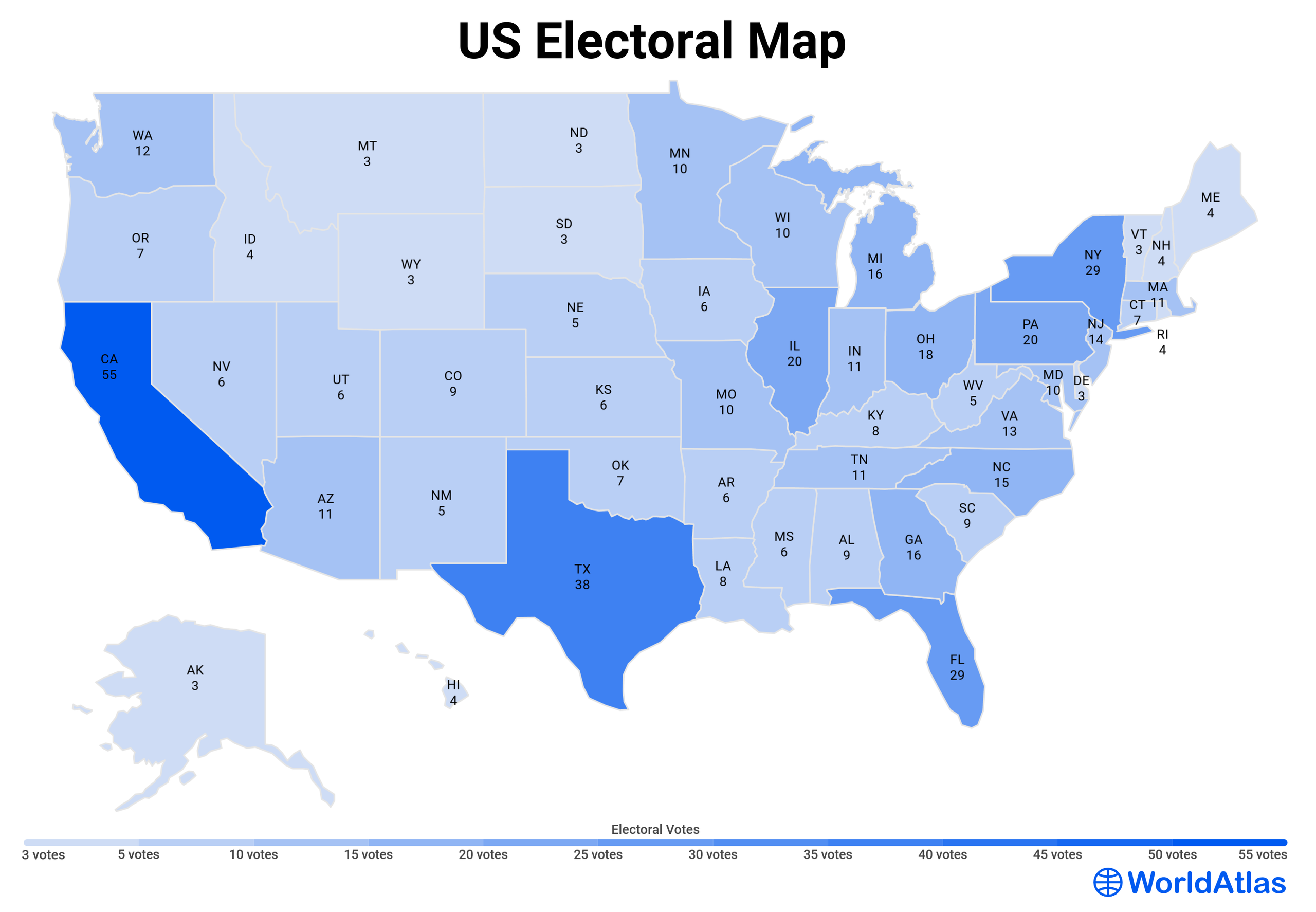
The more clearly we understand what the electoral college is and how it works, the farther away our votes travel from the candidates for whom we voted. The U.S. electoral college is a group of people (electors) who are designated to cast a vote for a certain candidate, dictated by the winner of the popular vote of a certain state. For example, Minnesota has 10 electoral votes and 10 electors. So when I cast my vote for president, I am actually voting for a set of 10 representatives or electors. If my candidate wins the state, those electors will vote for my candidate. If not, the winner’s set of electors will vote. In short, electors get to vote for the candidate, not me. And not you.

Direct democracy demands that every vote cast for a candidate count — and not count only toward a state’s electors. It allows my vote to count directly for the person for whom I voted.

One main argument for needing the electoral college is the protection of small states which otherwise could be ignored in a national campaign. This argument carried more weight in years past. Now, the electoral college does not protect small states. It protects swing states. There are solid blue states and solid red states, and then there are a number of swing states that have been the deciding factor in the past several elections.

Ironically, the elimination of the electoral college may protect the smaller states because candidates from either party would not write off red or blue states and would spend more time in those states because there are voters there. In each state, regardless of how it generally leans — red or blue — there are undecided voters, independent voters and intermittent voters. There also are those who often do not vote, but would if they believed it would make a difference. Blue voters in solid red states, or the reverse, would be more likely to vote if their vote counted directly toward the candidate.

The brilliance of our system, as put forward by the founders of our nation, is in its adaptability — and in our ability as a people to change that which no longer works in government. It’s time for that change to occur regarding the electoral college. It’s time to tear up that section of the Constitution and replace it with the direct popular vote of our highest official.

Matthew Spearman of Duluth is a special education teacher at the North Shore Community School.

Friday, November 14, 2008

ARIZONA: PROP. 105 - THREAT TO DIRECT DEMOCRACY DEFEATED AT BALLOT BOX


A ballot initiative in Arizona that would have severely limited and possibly eliminated the initiative & referendum in that state was soundly defeated at the voting booths on Nov. 4th. The twisted and anti-democratic logic of the inititiative was rejected by an enlightened electorate. A prime example of direct democracy at it's best. - Editor

The Voters of Arizona Defeat Prop 105

November 5, 2008
Source:
http://thevotersofaz.com/?p=127

Arizona’s Voters Reject Prop 105; the So-called ‘Majority Rules’ Amendment
Coalition of more than 125 Organizations Credits Revealing the Truth
and Hard Work as Reason for Defeating Misleading Proposition

The latest ballot count shows that voters have rejected Prop 105 marking a significant victory for Arizonans, all of whom will retain their most precious right – the right to vote. The tally shows Prop 105, the so-called “Majority Rules” amendment, losing by a 66 to 34 percent margin.

“I am proud to have been a part of a coalition that stood up for the voting rights of all Arizonans,” said John Wright, chair The Voters of Arizona-No on prop 105 campaign committee. “It is just plain wrong to count people who don’t vote, and the voters of Arizona agreed that Prop 105 was a misleading initiative that should not be included in the constitution.”

If Prop 105 had passed, more than 80 percent of those voting on a ballot initiative would have had to vote yes for it to pass, effectively killing the initiative process in Arizona, which is the closest thing we have to a direct democracy. If Prop 105 were already in place, a number of initiatives that overwhelmingly passed—including the statewide smoking ban, First Things First, Smarter Growth, almost every initiative since 1974—would not have passed under Prop 105.

A coalition of nearly 125 organizations across the state provided the foundation for a strong grassroots effort. The entire campaign included website development; earned media efforts; statewide direct mail and signage; and creative development, production, and placement of the TV commercial. The campaign took nothing to chance in what was arguably the most deceptive ballot initiative in the state’s history.

“From a campaign strategy perspective, their initiative was a classic ‘bait and switch’ strategy, using a ‘majority rules’ message as a cover,” said Joe Yuhas, partner with RIESTER, the campaigns consultant. “We didn’t allow a misleading message to stand in the way of educating voters about what Prop 105 was really about, counting people who don’t actually vote as automatic no votes. This landslide of Arizonans voting No on prop 105 proves that they want to keep and protect their constitutional right to the initiative process.”

Support for the Voters of Arizona-No on Prop 105 was wide spread including prominent elected officials including Mayors Bob Walkup of Tucson, Karen Fann of Chino Valley, and Mark Nexsem of Lake Havasu City. The business community also joined via support from 10 Chambers of Commerce statewide as well as the Associated General Contractors Arizona Chapter. The Voters of Arizona received a variety of new endorsements weekly, including public safety organizations such as the Professional Firefighters of Arizona, United Phoenix Firefighters and Arizona Conference of Police and Sheriffs; education advocacy groups including Arizona Education Association and Arizona School Boards Association; senior groups including the Arizona Alliance for Retired Americans; and the medical community including Arizona Hospital and Healthcare Association and the American Lung Association. By the end of the campaign, all major news outlets that weighed in on the issue were against Prop 105 including The Arizona Republic, East Valley Tribune, Tucson Citizen, Tucson Weekly, and The Yuma Sun.

Thursday, November 13, 2008

U.S. DIRECT DEMOCRACY: A VIEW FROM THE U.K.


The U.S. elections prompted many observations internationally about the political system and the election process, including the drect democracy at play in the form of ballot initiatives at the state level. The following article presents a view from the U.K. on that subject. - editor

It'll get interesting when the Americans start voting


The undercard for the US elections may be dragging - but the main event will be unmissable, argues Chris Game.

Oct 31 2008 Agenda
Source:
http://www.birminghampost.net/comment/birmingham-columnists/agenda/2008/10/31/it-ll-get-interesting-when-the-americans-start-voting-65233-22157493/

My political boredom threshold is probably higher than most of yours, but I confess: I’m bored with the American election.

True, my boredom is purely temporary. Come the early hours of Wednesday November 5, and I’ll have exchanged my late night Stateside TV viewing from the baseball World Series to the state-by-state exit polls and Presidential predictions.

Can Obama really win big? Or will enough voters, privately in their polling booths, be sufficiently scared of the man’s programme, personality or pigmentation that, despite everything they’ve told opinion pollsters, they’ll go for the other guy?

Whatever the outcome, it will be absorbing, important and historic – but for now the main feature’s a bit of a drag. With US elections, though, there’s always a full supporting programme.

There are thousands of other elective offices at stake, but for me, better than all this representative stuff, is the raw direct democracy on offer. Voters in 36 states will give their views on 153 ballot propositions, initiatives and referrals. They themselves become policy makers on issues great and small, in a way that our governments rarely, if ever, trust us to be.

They will determine how taxes are raised, how major investment projects are funded, and whether their states should have lotteries, casinos, greyhound tracks, same-sex marriage, stem cell research, and liberal or restrictive abortion laws – while we struggle to have a say on the future of our central library.

Just as Sarah Palin’s candidacy has taught us at least where Alaska is and the kinds of things Alaskan rednecks like to do there, so a study of these propositions can inform us about aspects of America that would rarely otherwise attract our attention.

A majority of the 153 measures have been placed on the ballot paper by state legislators themselves. Most are not actually called referendums, but that’s what they are: issues or bills referred to electors for approval or veto before they become law.

There are, though, 61 propositions or initiatives that have forced their way on to the ballot paper following successful citizens’ petitions, in which campaigners seeking to change their state’s law or constitution have collected a specified number of validated signatures.

The biggest categories of propositions, as always, are those on taxes (24) and bond issues (16). But, contrary perhaps to expectation, not all the former are for tax reductions, nor do the tax cutters invariably win – especially if a worthy-sounding cause can be attached.

Thus a proposal to raise Minnesota’s sales tax rate is labelled ‘The Clean Water, Wildlife, Cultural Heritage and Natural Areas Amendment’ in an unsubtle hint of the ecological depredation that could result from voters withholding their tax dollars. Likewise, Colorado has a citizens’ initiative, ‘Sales Tax for the Developmentally Disabled’.

More conventional are the state income tax propositions. The North Dakota chapter of Americans for Prosperity want theirs cut, while the Massachusetts Committee for Small Government want their 5.3 per cent rate abolished completely.

But not even tax cuts are necessarily self-seeking. An Oklahoma constitutional amendment, for example, seeks a property tax exemption for disabled veterans and their surviving spouses.

Municipal bonds are a fund-raising device many of our local government leaders ogle with undisguised envy, constrained as they are by our shackling Treasury Rules. If their US counterparts need capital for schools, highways, hospitals, airports or whatever, one option is to get voters to approve a bond issue – reminding them that, if they themselves invest, their interest income will be exempt from federal income tax.

Californian voters alone have three bond issues to consider: $10 billion towards a high-speed 800-mile rail link between San Francisco and Los Angeles, and nearly $1 billion each for children’s hospitals and a fund assisting veterans to become homeowners.

Lotteries and casinos are other ballot regulars, and again proponents will emphasise the more morally uplifting causes that will gain from, say, extending casino hours to 24/7 and increasing maximum bets.

Thus the real beneficiaries of an Arkansas state lottery will apparently be the student recipients of college scholarships. And, if Colorado citizens agree to loosen gambling restrictions, the true winners will be everything from highway improvements and health care programmes to alternative fuels and the state minimum wage. Then there are the social issues, particularly interesting where they relate to UK practice. Perhaps most topical of all – given the recent cases of multiple sclerosis sufferer, Debby Purdy, and 23-year old rugby player, Dan James – is Washington state’s ‘Aid in Dying’ initiative.

Modelled on the now well-established practice in neighbouring Oregon, the proposal would allow mentally competent, terminally ill adults to request and administer a lethal overdose of medication.

Oregonians over the years have voted on more ballot propositions (350) than any other Americans. Among this year’s 12 measures is a proposed ‘Kids First Act’, under which teachers’ pay rises and job security would be based not on seniority, but on their classroom performance. Controversial certainly, but not remotely on the scale of abortion. In the US a woman has since 1974 had the constitutional right to have an abortion, but her state’s provision, or lack of it, will effectively determine her access to a clinic. Nowadays, most ballot propositions aim at further restricting availability. In California an emotively entitled ‘Sarah’s Law’ – after a 15-year old who died following a mishandled abortion – would prohibit abortion for minors until 48 hours after the physician has notified a parent or legal guardian.

More inventive and potentially far-reaching is a Colorado initiative attempting in effect to criminalise all abortion, through an Equal Rights constitutional amendment re-defining a ‘person’ as any human being from the moment of fertilisation. The implications seem massive – including for emergency contraception, IUD forms of contraception, and stem cell research – and it will surely be the most carefully watched of all this year’s proposition votes.

Finally, no examination of US direct democracy would be complete without mention of animal welfare, of which Americans are in some respects significantly more protective than we are.

A Massachusetts initiative thus proposes closing down the state’s two greyhound tracks and banning all dog racing for money. And a California proposition calls for an end to battery chicken farming and the crate-rearing of calves and sows.

Alaskans, though, as we have learned, view things differently: ‘wildlife is for us, and blasting things indiscriminately is the Alaskan way of life’. In an early statewide ballot just three days before Governor Sarah Palin was unveiled as John McCain’s running mate, Alaskans voted decisively to reject the Wolf and Bear Protection Act and continue the aerial hunting and shooting of free-ranging wolves, wolverines and grizzly bears.

You can guess which way the Governor campaigned and voted. But then, as my mother used to say, it would be a dull world indeed if we were all alike.

* Chris Game is lecturer at the Institute of Local Government Studies, University of Birmingham.

Tuesday, November 11, 2008

NEW YORK CITY: CITY COUNCIL TRUMPS DIRECT DEMOCRACY OVER TERM LIMITS

Council Votes, 29 to 22, to Extend Term Limits

By Sewell Chan AND Jonathan P. Hicks
October 23, 2008, 2:10 pm

Source: http://cityroom.blogs.nytimes.com/2008/10/23/council-to-debate-term-limits-change/?apage=1

Updated, 7:30 p.m. After a spirited, emotional and at times raucous debate, the New York City Council voted, 29 to 22, on Thursday afternoon to extend term limits, allowing Mayor Michael R. Bloomberg to seek re-election next year and undoing the result of two voter referendums that had imposed a limit of two four-year terms.

The vote was a major victory for Mayor Bloomberg — a billionaire and lifelong Democrat who was elected mayor as a Republican in 2001, won re-election in 2005, became an independent last year, and decided just weeks ago that he wished to seek a third term for himself in 2009 — and for the Council’s speaker, Christine C. Quinn. But the intense acrimony surrounding the decision left a sharply divided Council and could ultimately damage the mayor’s popularity.

The new law, which earlier on Thursday sailed through a committee vote, limits elected officials to three consecutive terms and applies to all of the city’s elected officials. It has already begun to upend municipal politics, reshaping the dynamics of next year’s races.

Of the Council’s 51 members, 35 would have been barred by term limits from seeking re-election next year. On Thursday, 23 of those members voted in favor of extending term limits, and 12 voted against.

The Council has 48 Democrats and three Republicans. All three Republicans — James S. Oddo and Vincent M. Ignizio, of Staten Island, and Anthony Como of Queens — voted no.

Over two days of public hearings lasting 19.5 hours last week, and in the floor debate on Thursday, both sides argued that their position was in the best interests of the people.

Opponents of the bill accused the mayor and his supporters on the Council of flouting the will of the people — as expressed in a 1993 voter initiative that established a limit of two consecutive terms and a 1996 referendum in which voters rejected a Council-led effort to change the limit to three terms. They said that democratic procedure demanded a public vote on the issue, no matter what one thinks of Mr. Bloomberg or term limits.

Supporters of the bill said the dire economic situation confronting the city — and the possibility of multibillion-dollar budget shortfalls — demanded continuity of leadership. They said term limits deprived voters of the opportunity to return dedicated politicians to office. They argued that it would be too costly and difficult to put the matter back before the people by holding a special election early next year.

Most experts agreed that the Council had the legal authority to amend the City Charter and override a law created by a referendum, but opponents said lawmakers had no moral right to do so. Two council members had gone to court, arguing that it was a conflict of interest for lawmakers to extend their own terms, but a judge refused to block the vote.

After Public Advocate Betsy Gotbaum, who presides over the Council, announced the final result at 4:35 p.m., the balcony erupted in shouts of “The city’s for sale!” and “Shame on you!”


Monday, November 10, 2008

OBAMA'S ARMY: PARTICIPATION BEGINS, NOT ENDS, ON ELECTION DAY

Keeping Obama's Campaign "Army" Mobilized as a Force for Change in Peacetime

Gara LaMarche
Posted November 7, 2008 07:32 AM (EST)
Source:
http://www.huffingtonpost.com/gara-lamarche/keeping-obamas-campaign-a_b_142027.html

Speaking to tens of thousands of his supporters in Chicago's Grant Park, President-elect Barack Obama said his smashing victory was not about him but about "you." In his effort to unify, he meant all of America, but he also was crediting a very special group of people -- his "peacetime army" of millions of volunteers and contributors who grew the electorate and upended the electoral map in the name of change.

The key question now for Obama and all who support the change he called for is, "What happens to this peacetime army?" This powerful force was galvanized by Obama and his campaign. His Web site allowed any supporter to act immediately, and it reached millions with a flood of targeted e-mails and text messages. The campaign organized tens of thousands of events through which Americans reached out to other Americans. Many thousands of paid and volunteer organizers worked for months to register voters, identify supporters and get them to the polls. They travelled to battleground states to knock on doors and make their case for change in person. In many states, Obama's on-the-ground presence dwarfed that not only of the McCain campaign, but of the Democratic Party and virtually every other contemporary political institution and social movement in American society.

Ordinarily when a presidential campaign ends, organizers disperse and some of them join the administration, if the campaign has been successful. The list of donors and volunteers is often treated as a precious, proprietary political resource to be sold or loaned to allies. Obama's was no ordinary campaign, and that business-as-usual approach would be a mistake in this extraordinary year when so many want change.

While Governor Sarah Palin taunted Obama for being a "community organizer, whatever that is," Obama understands better than anyone who has been elected to the presidency that true political power and progress depend not only on presidential leadership, but on an engaged citizenry, and that elections are a crucial but only passing moment in the life of our democracy. To govern effectively and promote his agenda on economic security, energy, expanded health coverage, education, the restoration of civil liberties and other matters, Obama will need to keep his army mobilized. Doing this is as important as drafting legislation and picking cabinet secretaries.

Obama and all those who want to seize the moment for progressive change need these talented and passionate organizers who helped deliver the presidency to stay in the field and work with state and local organizations to deliver the change that Obama promised and they labored for. They would offer a huge boost to local coalitions and organizations, many of which are far less powerful and sophisticated than the Obama campaign.

These organizers are essential to sustaining the passion and engagement of millions of donors and online activists, who can take action in support of the agenda they share with Obama.

Progressives understand that this army needs to be a force for keeping the new administration true to its promises - supporting Obama when it agrees with him, pushing him when he needs to be bolder, and opposing him when they disagree. They did that this summer when thousands of Obama supporters used the campaign Web site to convey their dismay with his support for a Congressional compromise on government surveillance of U.S. citizens under the Foreign Intelligence Services Act. In the tough challenges ahead, this peacetime army can press Obama to stay true to his promises and his supporters.

Obama understands better than any other politician that the success of his agenda depends on his supporters being mobilized and engaged. What we have seen in the last year is a rebirth of participatory democracy, infused by the energy of millions. Imagine what this energy can do if it channeled into ongoing action.

THE NOVEMBER 5TH COALITION


We the editors have been saying for a long time now that the struggle for a more participatory and direct democracy must begin in earnest on election day 2008. The historic election of Barack Obama to the presidency of the United States does not signal the end of that struggle, but rather that our voices must be raised louder than ever, and our activism and participation in politics must be raised to the highest level possible. This is because with this election, the doors to the corridors of power in Washington appear to be opened ever so slightly, perhaps enough that for the first time in decades 'we the people' have a real chance of getting our foot in the door enough to bully our way in. This will of course require maintaining and increasing the levels of popular political activism we have experienced during this campaign. If we do not, we run the risk of missing an historic opportunity for change. Real change will come from the people, not from Obama alone. - Editor


New Civic Politics


Source:
http://www.novemberfifth.org/

Enough is enough.

America's politics should be driven by the priorities of the people, not sound bites, special interest money, partisan gridlock, and polarizing rhetoric.

It is time for a change.

We believe that politics cannot and should not be a spectator sport. No politician, party or ideology will solve America's mounting problems alone. Only by providing authentic opportunities for the people to be part of the solution can we rebuild trust in our political institutions and create mandates for meaningful action on the critical issues facing our nation.

We challenge candidates and each other to recognize lessons from communities across the nation and around the world where citizens have played vital roles in addressing difficult problems that range from health care to education reform, from keeping communities safe to climate change. We need an outpouring of ideas about how Americans can build on this history, developing skills of working together across divisions of party, faith, race, income, and geography to address common issues. Such work is difficult. But it is crucial.

The November 5th Coalition is an all-partisan alliance committed to civic partnerships that address our biggest challenges. The Coalition is named for the day after the election in 2008 when a new chapter of America's civic history begins. Wherever the people gather they should be able to ask candidates “November 5th questions” about how they plan to tap the talents of the whole society, instead of posing as superheroes who will solve our problems for us. We will also develop leadership networks and civic policies that can serve as resources for a new administration. We encourage our fellow citizens to join with us in calling on candidates to rise above excessively divisive partisanship and to promote the common good.

We invite all Americans to help us shape a new civic politics that can galvanize the energies of the nation, drawing us from the shopping mall back into the public square. We must renew Abraham Lincoln's “government of the people, by the people, for the people,” to achieve a rebirth of liberty and justice for all in the 21st century.

Goals

We will intervene by:

Creating an environment in which it pays for candidates to engage with other politicians and citizens in more authentic, productive, citizen-centered ways. Modeling better forms of interaction between candidates and voters.

Making it more difficult for candidates to get away with fake versions of civic engagement on the campaign trail (such as town meetings that are scripted and controlled)

Creating an environment in which it pays for candidates to propose serious policies, programs, or ways of governing that will enhance citizen-centered politics. Making visible and strengthening the array of policy options and ideas for citizen-centered politics.

Reconceiving the campaign as about all of us -- and what we will all do after the election, not simply to get someone elected

Using the campaign season to direct attention to citizen-centered activities that are already going on and groups already doing public work

Ensuring that we have a political system and democracy that welcomes the participation of everyone (rather than prohibiting it

Sunday, November 9, 2008

SUMMARY OF ENVIRONMENTAL BALLOT INITIATIVE RESULTS

The following article offers a summary of the results for evironmentally related ballot initiatives on state ballots last Tuesday. - Editor

Mixed Bag for State Environmental Ballot Initiatives

Written by Timothy B. Hurst
Published on November 5th, 2008

Source:
http://redgreenandblue.org/2008/11/05/mixed-bag-for-state-environmental-ballot-initiatives/

[Update: I seemed to have overlooked an important constitutional amendment passed in Minnesota that established a funding mechanism for conservation programs. My apologies to our friends in the North Star State. See comments for more.]For many Americans, participatory democracy means choosing between the people who will choose for you. But for voters in 36 states, electoral democracy exists beyond the parameters of representative government. In the states where the tools of direct democracy like referendums and ballot initiatives are employed, preferences of voters are gauged directly on amendments to state constitutions, specific policy questions, budgeting issues and more. Of the 153 measures at stake across the country in yesterday’s election, about a dozen dealt with energy and the environment. Below are the results and analysis of eight of the more notable measures (in no particular order):

Missouri Proposition C: Yes - Passing with a robust 64% of voters in favor, Proposition C will require investor-owned electric utilities to generate or purchase 2 percent of their electricity from clean, renewable energy sources like wind, solar, landfill gas, biomass, and small hydroelectric projects by 2011, ratcheting to 15% by 2021. Supporters of the renewable portfolio standard (RPS) initiative, Missourians for Cleaner Cheaper Energy, pointed out that 86% of Missouri’s electricity comes from coal-fired power plants. The passage of proposition C made Missouri the 27th state to pass a renewable energy standard.

Colorado Referendum 58: No - Strongly supported by Governor Ritter, the referendum would have repealed the $300-plus million tax credit oil and gas companies get for extracting mineral resources from the state. The revenue would have funded college scholarships and renewable energy programs.

Colorado Referendum 52: No - Referendum was competed with and would have superceded 58 had they both passed. constitutional proposal that would have funneled millions of dollars from severance taxes into transportation projects — suggested they might return it to the ballot as a statutory amendment, which would erase a major stumbling block. 52 and 58 faced some very well-funded opposition in the form of $12 million worth of industry attack ads that portrayed the measures as “a tax on us.” The oil and gas industry was able to overwhelm counterclaims that it would be very hard for the industry to simply pass on the tax when oil and natural gas are sold in global markets based on supply and demand.

Florida Amendment 4: Yes - Approved by a margin of 68%-32%, the amendment provides a property tax exemption for perpetual conservation easements or other perpetual conservation protections. Conservation easements allow the development rights of a parcel of land to be separated from the title and put into permanent conservation and provide a tax benefit for it. The conservation mechanism has been successful throughout the U.S., though there have been cases where the tax benefit has been abused.

Washington Proposition 1: Still undecided - A regional transit proposal that would extend light rail service from downtown Seattle into the surrounding suburbs was headed for passage behind solid support in Seattle’s King County.

Ohio Issue 2: Yes - With 69% voting in favor and 31% voting against, Ohio’s Issue 2 was a clear favorite. The measure authorizes the state to borrow $400 million for environmental conservation, preservation and revitalization purposes. The amendment is identical to the bond issue passed by the voters in 2000 and will add funding for The Clean Ohio Program.

California Proposition 1A: Yes - Voters on Tuesday approved the Safe, Reliable High-Speed Passenger Train Bond Act by a margin of 52 percent to 47 percent. The proposition permits the selling of about $10 billion in state bonds to fund the planning for a system of high-speed rail linking San Diego, Los Angeles, San Francisco and Sacramento.

California Proposition 2: Yes - Proposition 2 creates a new state statute that prohibits the confinement of farm animals in a manner that does not allow them to turn around freely, lie down, stand up, and fully extend their limbs. The proposition passed by a robust 63%-37% majority despite strong opposition was from industry groups (’big ag’ if you will) that argued the measure would drive up the cost of food, specifically eggs.

California Proposition 7: No - The Clean and Solar Energy Act of 2008 would have increased the renewable energy portfolio standard for utilities including government-owned utilities to 20% by 2010. It also would have ratcheted up that standard for all utilities to 40% by 2020 and to 50% by 2025. Leading the opposition were two utility companies, PG&E and California Edison that argued the proposal was poorly written and so complicated that it could hurt the cause of renewable energy in the state. The Sierra Club, the Natural Resources Defense Council, the Union of Concerned Scientists and the state’s Republican, Democratic and Green parties said the measure would actually hurt the growth of renewables in the state.

California Proposition 10: No - Called for the state to raise $5 billion in bonds to fund rebates for the purchase and retrofitting of vehicles to run on alternative fuels including natural gas. 60% of Californians voted against the measure despite the more than $17 million spent to promote the measure. Texas oil billionaire T. Boone Pickens was a chief supporter of the proposition and is a board member of Clean Energy Fuels Corp., the company which sells natural gas as transportation fuel.

COLORADO: DIRECT DEMOCRACY SURVIVES REFERENDUM 'O'

A referendum that would have severely crippled direct democracy in the state of Colorado was defeated at the polls last tuesday. Referendum O would have made the process even less accessable to the average citizen, and even more the exclusive domain of individuals or special interests groups with the bankroll to launch expensive signature gathering campaigns. - Editor

Ref O defeat retains way to amend constitution

By Alan Gathright, Rocky Mountain News, David Montero, Rocky Mountain News
Published November 5, 2008 at 12:05 a.m.

Source:
http://www.rockymountainnews.com/news/2008/nov/05/ref-o-defeat-retains-way-to-amend-constitution/

The one referendum on this election's lengthy ballot that surely would've shortened future ballots failed narrowly.

Referendum O would have increased the number of petition signatures needed to place state constitutional amendments on the election ballot.

Opponent Robert J. Corry Jr. said its failure showed Colorado voters are smart enough to reject bad amendments on a ballot and didn't need the referendum to do the filtering for them.

"People voted for their constitutional right to not have their constitutional rights restricted," he said.

He also said it failed because "it's easier to stop something on the ballot instead of getting something through."

Ref O would have given citizens an incentive to create less-sweeping statutory initiatives, by reducing the number of signatures needed to put one of those on the ballot. It would have made it harder for lawmakers to overturn voter-approved statutes by requiring a two- thirds legislative majority to change them within five years of passage.

It now takes the same number of petition signatures to put citizen-sponsored statutes on the ballot as it does to put amendments before the voters. So activists usually go the amendment route.

Rep. Al White, R-Hayden, said he was disappointed it failed and thinks voters suffered ballot fatigue as Referendum O was far down the list.

"People just didn't get it, and they had a plethora of issues to vote on and simply voted 'no' all the way down the ballot," he said.

White said Referendum O was needed because Colorado's easy-to-amend legal cornerstone had become a kitchen sink for everything from bans on trapping to clashing budget spending caps and mandates.

That clutter, he said, had turned the Constitution into a "doormat." He also said he would try again with another ballot measure again.

Wednesday, November 5, 2008

NOV. 4th 2008 BALLOT INITIATIVE RESULTS NATIONWIDE

Results are in for voting on most ballot initiatives nationwide in states where direct democracy is practiced at the state level in the form of initiative & referendum. Click on the Ballotpedia link below for complete results. Some noteworthy results on initiatives we have posted about in the past include the passing of a measure to increase sales tax in Minnesota in order to increase funding for the arts and wildlife preservation, and the defeat of a measure in Connecticut that would have called a constitutional convention which proponents hoped to use to bring initiative and referendum to that state - EDITOR


Friday, October 31, 2008

SOUTH DAKOTA: THE FINE PRINT - INITIATIVES ON THE BALLOT

Reading the fine print


Lorraine Collins
Source: http://www.bhpioneer.com/articles/2008/10/22/opinion/doc48ff58af16094977614025.txt

By now many people around the country are probably wishing they had read the fine print in their mortgage contracts, their credit card agreements, their brokerage accounts, insurance policies, and so forth.

But meanwhile, we in South Dakota are being urged by some television ads to read the fine print of initiated measures on the ballot when we vote Nov. 4.

When the South Dakota Constitution was written, it made provision for citizens to either initiate laws or to refer laws the Legislature passed to a vote of the people. In this respect, we are the proud inheritors of what I'd call Direct Democracy. So two years ago an anti-abortion law passed by the Legislature was referred to the people who voted it down.

This year we don't have a referendum, but we do have an initiated measure dealing with abortion as well as two others that are perhaps more obscure and complex but which also could have serious implications for how business and government will be conducted in South Dakota in the future. So here they are in numerical order.

Initiated Measure 9 calls itself “The South Dakota Small Investor Protection Act” and so far as I can tell it deals with “short selling” securities. This initiative apparently has its origins outside of South Dakota and is promoted by a group that is trying to get the issue on the ballot in several states. I haven't read the entire bill, but the proponents indicate it would “allow our courts to intervene when federal bureaucrats and New York courts don't.”

This is not persuasive to me and I guess I'd go with the opinion of the director of the South Dakota Division of Securities who says we should vote no.

Initiated Measure 10 is one that has generated a lot of TV ads about reading the fine print and it seems to be opposed by a lot of organizations and government entities who claim it is a “gag law” that takes a shotgun approach to what may or may not be a problem requiring something of a more specific and surgical nature. It says it wants to prohibit tax dollars from being used for lobbying and political campaigns. It's hard to argue with that but again, it seems complicated and diffuse and apparently was not generated by any specific problem known to exist in South Dakota.

Initiated Measure 11, which seeks to overturn the vote of 2006 that rejected a strict anti-abortion measure is, so far as I know, generated locally. However, the other day I did get a call from somebody in Virginia supporting this proposed law. Again, those who oppose this measure urge us to read the fine print. I think that's a good idea. Get the whole bill and read it.

Actually, I think a proposed law like this should also lead us to read the fine print or the bold print of the Constitution of the United States. It should lead us to think about why we have government, what we believe is the proper exercise of governmental regulation, and about when government should intervene in our private lives. Personally, I think the discussion about this proposed law should be less about whether it includes enough exceptions and more about what democracy is.

Some of the first colonists who came to America really thought about founding a theocracy and enforcing laws that conformed to their beliefs, but that soon gave way to the idea of freedom of conscience. We can all be grateful for that. I think the problem with Initiated Measure 11 is that seems to require us all to agree with the opinion and beliefs of those who are promoting it. I don't think that's a good idea in a democracy. In that respect, I don't think Initiated Measure 11 belongs on the ballot.

Reading the fine print is a very good thing to do in many areas of our lives and it's especially important when it comes to voting for new laws.

Lorraine Collins is a writer who lives in Spearfish. She can be contacted at collins1@rushmore.com.

Wednesday, October 29, 2008

CALIFORNIA: DISSECTING INITIATIVES, AND THE NEED FOR REFORM

Two articles about the current measures on the ballot in California that illustrate the need for reform of the initiative & referendum process in that state as well as many other states in order to make the process less driven by big money and more accessable to the people. - EDITOR


A long way from the grassroots


John Diaz
Sunday, October 12, 2008


There is no big secret to the formula for manipulating California's initiative process. Find a billionaire benefactor with the ideological motivation or crass self-interest to spend the $1-million plus to get something on the ballot with mercenary signature gatherers. Stretch as far as required to link it to the issue of the ages (this is for the children, Prop. 3) or the cause of the day (this is about energy independence and renewable resources, Props. 7 and 10). If it's a tough sell on the facts, give it a sympathetic face and name such as "Marsy's Law" (Prop. 9, victims' rights and parole) or "Sarah's Law" (Prop. 4, parental notification on abortion). Prepare to spend a bundle on soft-focus television advertising and hope voters don't notice the fine print or the independent analyses of good-government groups or newspaper editorial boards.

Ten of the 12 statewide measures on the Nov. 4 ballot came through the initiative process, which was created nearly a century ago to offset the grip of Southern Pacific Railroad on the California Legislature. Today, the initiative process is no longer the antidote to special interests and the moneyed class; it is their vehicle of choice to attempt to get their way without having to endure the scrutiny and compromise of the legislative process.

Five initiatives have been buoyed by a single wealthy contributor. Most audaciously, T. Boone Pickens, the Texas oilman, bankrolled Prop. 10, which asks Californians to borrow billions to fuel natural gas vehicles. Pickens happens to be the founder of Clean Energy Fuels Corp., which - you guessed it - supplies natural gas to fleets of vehicles. Other initiative backers appear driven more by philosophy than profit. George Soros, the New York financier and liberal activist, is the bucks behind Prop. 5, which would increase drug treatment as an alternative to prison. Peter Sperling, a devout environmentalist and son of University of Phoenix founder, is supplying the funding for Prop. 7, which would increase the state's commitment to renewable energy. Major environmental groups, however, oppose it as unrealistic and sloppily drafted.

Then there are Props. 6 and 9, the tough on (selected) crime trust-fund babies of Henry T. Nicholas III, an Orange County billionaire tech executive who has been indicted by a federal grand jury in connection with securities fraud and drug-related offenses. But Nicholas, who has funded other anti-crime campaigns in the past, has nothing to fear from his Prop. 6: It's aimed at toughening penalties on gangs, illegal immigrants and criminals trying to get into Section 8 housing - not CEOs gone bad.

It's time to get past the illusion of the initiative process as a grassroots domain. As much attention as Hollywood actor Brad Pitt received for his $100,000 contribution against Proposition 8 - the constitutional ban on same-sex marriage - recent campaign disclosure reports showed that conservative activist Maggie Gallagher donated $1.45 million to Yes on 8.

Having sat through many hours of meetings with the proponents and opponents of these propositions, I say: When in doubt, vote no. Most of these measures - such as Prop. 2, which would require farmers to put chickens in more spacious cages - do not belong on the ballot. They should be resolved in the Legislature, where competing interests can be heard and balanced. Voters should reject all non-capital-investment proposals that commit the state to annual spending without offering a funding source: Prop. 5 (drug treatment, $465 million), Prop. 6 (tougher sentencing, $900-plus million) and Prop. 9 (victims rights and parole, "hundreds of millions," according to the Legislative Analyst).

Only one measure on the Nov. 4 ballot truly fits Gov. Hiram Johnson's early 1900s vision of "direct democracy" as a way to bypass a corrupt and power-mad Legislature: Prop. 11, which would strip lawmakers of the ability to draw their own district boundaries. Trust me: Legislators are not going to voluntarily cede that duty to an independent commission. Ever.

But the question is: Will bleary-eyed voters have the attention spans to get to Prop. 11? In addition to the 12 statewide measures, San Franciscans will be staring at 22 local propositions, on everything from decriminalizing prostitution to allowing the city to take over electricity service from PG&E to naming the sewage treatment plant after George W. Bush.

I'm waiting anxiously for the initiative reforms proposed by the Los Angeles-based Center for Governmental Studies: Limit contributions, increase transparency and offer an opportunity for proposals that gain the required signatures to go to the Legislature for a final shot before going to the ballot for an all-or-nothing decision.

All they need is billionaire benefactor. Unfortunately, good-government initiatives don't do much to feed the ego or line the pocketbook.

John Diaz is The Chronicle's editorial page editor. You can e-mail him atjdiaz@sfchronicle.com.


______________________________________________________________

Most of the ballot propositions should be defeated

Thinking it through, By RICHARD REEB

Source: http://www.desertdispatch.com/opinion/ballot_4478___article.html/california_defeated.html

California’s voters will be inundated in the remaining days of the campaign with flyers, telephone calls and e-mails urging them to vote “yes” or “no” on the 12 ballot propositions to be decided on Nov. 4. Even though some organization claims to have endorsed or rejected a measure, that neither tells us very much about it nor provides very much help with understanding what we’re voting on.

But such communications are perfectly understandable for various reasons. First, there are a dozen measures for our consideration, which range in length from one sentence (Proposition 8: Affirming natural marriage) to 21 pages (Proposition 4: Adolescent abortion waiting period). It took eight pages for the legislative analyst to explain Proposition 5 (Nonviolent Drug Offenses), which is 17 pages long, and six pages to explain Proposition 7 (Renewable Energy Generation), which is seven pages long. That’s a lot to absorb for the millions of us who are not legislators.

Second, besides being numerous and lengthy, these propositions are inherently complicated. This is so not only because they are necessarily written in legalese, with which most voters are unfamiliar; they also include multiple provisions. That’s often the nature of laws but more accurately the nature of the bureaucratic laws that are the curse of the modern administrative state. Plus, these measures are sometimes the product of a process in which various interests obtain provisions to suit them as the price of their support for the entire measure.

Third, we are presented with an all-or-nothing decision that forces us to accept or reject the measure in toto even though there are sections that should be left out or included. We lack the flexibility of legislators who can amend to strike or add provisions that detract from or improve the bill.

But, since 1910, when the Progressive movement brought us direct democracy in this State, voting on these propositions has been part of our electoral responsibilities. The very feature that gave rise to this reform, namely, legislative dereliction, has not been overcome. Indeed, politicians seeking to avoid making hard decisions like it when the matter is thrown to the voters, for that lets them off the hook.

In spite of all these difficulties, direct initiatives (measures initiated by citizens outside the legislature) have often corrected bad public policy. The most famous example, of course, is Proposition 13, the property-tax-cutting measure approved by the voters in 1978. Besides such limits on taxing and spending, strong law-enforcement measures that cannot make it through our Democrat-dominated legislature can be enacted directly by the voters. Propositions 6 (Police and law enforcement funding, 13 pages) and 9 (Victims’ rights, four pages) fall into that category.

All bond measures have to be approved by the voters. These include Proposition 1 (High speed rail), 3 (Children’s hospitals), 10 (Alternative fuel vehicles) and 12 (Veteran housing loans). And all constitutional amendments must also be approved, such as Propositions 1, 4, 8, 9 and (once again) a measure (11) to take the power to draw legislative district lines from the legislature and assign it to a special commission.

There are two energy-related statutes on the ballot. These include the aforementioned Proposition 7, as well as Proposition 10. They are among 10 initiatives, half of which are constitutional amendments and half of which are statutes. Also in the latter group is Proposition 2, Standards for confining farm animals.

The first part of the 143-page booklet includes summaries, analyses and arguments pro and con. Well over half of the remainder contains the full text of the measures, including existing, revised and deleted language. Winston Churchill once said, “The devil is in the details,” and he wasn’t kidding. The reading is truly forbidding, especially when it is in small type, single spaced, double columns. More power to anyone who attempts, much less finishes, that project.

Still, we must decide. I think “yes” votes are in order for Proposition 4, mandating that adolescent girls inform a family member of their impending abortion; 6, guaranteeing funding for local law enforcement; 8, protecting male-female marriages; 9, affirming victims’ rights in the justice system; and 11, opening up legislative elections to real competition.

“No” votes should be cast for all bond measures (1, 3, 12), which undermine California’s currently precarious credit; alternative energy schemes (7, 10), which subsidize uneconomical and unproven technology; and misguided feel-good reforms that comfort animals and drive up the cost of production (2) or coddle drug peddlers in the name of “rehabilitation” (5).

ABOUT THE WRITER:


Richard Reeb taught political science, philosophy and journalism at Barstow College from 1970 to 2003. He is the author of “ Taking Journalism Seriously: ‘Objectivity’ as a Partisan Cause” (University Press of America, 1999). He can be contacted at rhreeb@verizon.net.

Tuesday, October 28, 2008

MEDIA: PARTICIPATORY DEMOCRACY RELIES ON TRUST OF MEDIA


Participatory Democracy Relies on Trust of Media

Effects of media distrust on participatory democracy: Media distrust, democratic skepticism, and campaign participations Abstract Serious decline of media trust are thought to represent wide-spread cynicism in American political culture, which results in citizens’ withdrawal from political activities as well as their political inefficacy. However, the linkages between media distrust and decreased political participation might not be self-evident. Rather, citizens’ media distrust may in some part represent healthy skepticism which is related to citizens’ active political participation through their effortful information search and exchange. These ideas are tested with a national survey data on 2004 presidential election. Findings show that media distrust was positively related to citizens’ online information seeking and offline political discussion, which, in turn, affected their diverse campaign participations. These effects of media distrust appear to be channeled through citizens’ communicative participation such as online information search and face-to-face political discussion which then facilitate citizens’ political activities.


Click here for full article.

Friday, October 24, 2008

CONNECTICUT: BATTLE FOR DIRECT DEMOCRACY HEATING UP

A debate is raging in Connecticut, ironically known as "The Constitution State," over a measure on the Nov. 4th ballot that would call for a constitutional assembly to propose amendments to the state's constitution. On one side of the debate are those in favor of the convention, such as the Connecticut Constitutional Convention Campaign whose stated reason for being in favor is solely to bring initiative, referendum, and recall to Connecticut by means of the convention. They are joined by, or opposed by, a flurry of special interest groups who, regardless of their stance on the convention, seem to be missing the essential point: that initiative & referendum would allow the entire electorate to decide on legislation relevant to these interests in a truly direct democratic fashion. Whether they are those who favor the convention because they wish to ban gay marriage through referendum , or public employee unions that are opposed to the convention because an initiative process could potentially threaten the power structure and flow of revenues that sustains their organizations, these special interest groups apparently have no reverence for the only meaningful motive for bringing intitiative, referendum, and recall to the state: to entrust legislative power to the people where it belongs through direct democracy. Instead, the opposition has raised nearly a million dollars to launch a "NO" campaign against the "YES" camp's twelve thousand dollar budget, and the special interests on the "YES" side continue to obscure the core argument for direct democracy that is behind the movement. They should all put their interests aside and take the opportunity to grant the people the power to decide. - Editor

Three articles on the subject follow.

Here also are the main opposing websites: http://www.ctvoteno.org/home http://www.ctconcon.com/index.html

Constitutional Convention: False hope or direct democracy?

by Christine Stuart October 22, 2008 11:19 PM
Posted to General News
Source: http://www.ctnewsjunkie.com/general_news/constitutional_convention_fals.php


Ed Pilkington of Manchester walked into Hartford Public Library Wednesday night not knowing how he would answer November’s ballot question: “Shall there be a Constitutional Convention to amend or revise the Constitution of the State?”

After hearing more than an hour of debate between three panelists against a constitutional convention and two panelists in favor of it, Pilkington walked out of the library thinking he would be voting ‘Yes’ to the question in November.

However, Pilkington didn’t necessarily agree with the motives of constitutional convention proponents.

Proponents of the convention would like to see the constitution amended to include direct initiative or ballot referendum, which would give citizens a way in which to petition public policy issues directly onto a ballot.

Pilkington said he thinks it may be a healthy exercise for the state to open up the constitution every few decades and take a look at it. He said if the question passes he’ll be sure to let his legislators know that’s why he voted in favor of it.

Pilkington said after hearing Matthew Daly, Constitution Convention Campaign chairman, talk about the 1965 convention and how only two of the 259 proposals made it out of the convention, in addition to knowing that the legislature would appoint the delegates to the convention, “made me feel comfortable.”

Frank O’Gorman, of People of Faith, said all you have to do is look at ballot initiatives being proposed in other states, like Colorado where voters will decide this November if a fertilized egg should be given inalienable rights, to see how dangerous voting in favor of a constitutional convention would be. He said proponents of a constitutional convention and direct initiative “are abridging the principles of what makes a constitution, a constitution.”

John Woodcock, Constitution Convention Campaign vice chairman, said the ‘Yes’ campaign is issue neutral. He said thinking its about one issue or another is exactly what the ‘No’ people want and “we refuse.”

Woodcock, a former Democratic state legislator who is credited with authoring the state’s first Lemon Law, said some of the most important laws in this country were passed by direct initiative. He said 13 states gave women suffrage before the 19th Amendment, six states passed public campaign finance laws, eight have approved medical marijuana laws, and six states have used it to increase the minimum wage.

Attorney General Richard Blumenthal, who is not in favor of a convention, said “my main worry about the convention is that it raises false hopes.” He said he thinks the people in favor of the convention are picturing a town hall meeting where everyone will attend and have a vote.

“I think a constitutional convention is like an empty vessel and everybody pours into it their hopes,” Blumenthal said. “And I think those hopes would be dashed. I think the idea raises very false expectations. And I think nothing illustrates that point better than the unresponsiveness of the legislature being a reason for the constitutional convention, and then the emphasis on the leadership of the legislature being the ones to choose the delegates.”

As a former legislator, Woodcock said he knows the General Assembly would never amend the constitution itself. He said there’s “institutional hostility by the legislature to giving people the right to ballot petition.”

“It’s never gonna happen,” Woodcock said. “It has to happen now or 20 years from now.”

The constitution says voters must be asked the question about a convention every 20 years. The last convention the state held was in 1965.

Kim Knox, constitutional scholar and lawyer at Horton, Shields, and Knox, said the constitution is a stable continuous body of law, which is succinct and 10,000 words.

Knox said she thinks people need to differentiate between statutes, which “can bend with the wind,” and the constitution. She said amendments are a way the constitution has some flexibility, but the amendment process wasn’t intended to be easy.

Many in the audience Wednesday expressed frustration with unresponsive elected officials.

If people have issues with an unresponsive legislature then “you all have a say in that. Every election you have a say,” Knox said. “Do we need to take the risk of a convention?”

Blumenthal said the state constitution has been amended by the General Assembly 30 times since 1965.

________________________________________________________________________________

Constitution question creates conflict


By Devon Lash
Staff writer
Article Last Updated: 10/23/2008 11:44:50 PM EDT
Source: http://www.connpost.com/localnews/ci_10800144

STAMFORD -- A simple question on Connecticut's ballot Nov. 4 is polarizing advocacy groups, forcing legislators to choose sides and setting off a debate about the very definition of democracy.

Voters will decide if the state will hold a convention to amend or revise its constitution.

The Connecticut Constitutional Convention Campaign promotes voting yes for a convention to re-examine the constitution and allow appointees to propose amendments.

The group has raised about $12,000, and counts Gov. M. Jodi Rell, the Catholic Conference, the National Taxpayers Union, the Federation of Connecticut Taxpayers and the Green Party among its supporters.

The opposing Vote No Campaign, which raised about $829,350 as of last month, is backed by 45 organizations, 70 clergy members, Attorney General Richard Blumenthal, U.S. Rep. Christopher Shays, R-4, of Bridgeport, and his Democratic challenger Jim Himes, of Greenwich, Bridgeport Mayor Bill Finch and Darien First Selectwoman Evonne Klein.

The Vote No Campaign held a 45-minute news conference Thursday at the Stamford Government Center with Mayor Dannel Malloy and representatives from the state League of Women Voters and the United Auto Workers union to urge the public to vote no.

"There is no compelling need for a convention," Peggy Shorey, the campaign manager for Connecticut Vote No, told the 20 people in attendance. "We already have a process in place to amend our constitution -- the legislative process."

Yet the Connecticut Constitutional Convention Campaign said a convention will raise a very compelling need -- a system of direct initiative, enabling voters to petition to get issues on the ballot.

"We're one of only 19 states that doesn't have direct initiative," said John Woodcock, vice chairman for the Connecticut Constitutional Convention Campaign. "There needs to be a mechanism available so people can have their voice heard."

Other groups, such as the Family Institute of Connecticut, have joined the convention campaign in hopes that enacting direct initiative would eventually allow voters to directly weigh in on the group's pet projects, which for the Family Institute is a constitutional amendment banning same-sex marriage, executive director Peter Wolfgang said.

Earlier this month, the state Supreme Court decided 4-3 to overturn the ban on same-sex marriages.

Malloy said a convention is the "worst way" to amend state law.

"The constitution has been amended some 30 times since 1974 -- without a constitutional convention," he said.

In calling for a convention, Shorey said taxpayers won't get to decide who will attend or what will be proposed.

"None of these people will be elected," she said. "The politicians in Hartford will appoint lobbyists, special interest groups and party operatives. Any part of the state constitution is on the table for change."

Woodcock said there is little danger the process won't be responsible because the public votes on all the proposals suggested by convention delegates.

For example, at the last constitutional convention in 1965, 259 proposals were submitted and two were approved, he said.

"This is a rare opportunity for the public to directly say, 'Let's take a look at our constitution,' " said House Minority Leader Lawrence Cafero Jr., R-Norwalk.

Bob Madore, regional director of the UAW, said his concern is for the burden such a convention would place on taxpayers.

"Folks can't afford gas, oil and food," he said. "The public is going to be burdened with the cost."

Shorey estimated hearings, staff and meetings would result in a cost of "hundreds of thousands" of dollars.

Both groups said they plan to advocate for their cause through debates and advertisements for the next 12 days.
_____________________________________________________________________________


Scare tactics used to avert convention

By Chris Powell
Published: Thursday, October 23, 2008 10:23 AM EDT
Source: http://www.journalinquirer.com/articles/2008/10/23/chris_powell/doc4900878ec9dc0687500633.txt


More political hysteria has come from the campaign against Connecticut's referendum on calling a state constitutional convention than from all the other campaigns in the state this year combined.

It is said that a constitutional convention would be dominated by special interests; that it would destroy civil liberties; that it would bankrupt the state by allowing too much government spending or choke the state by preventing spending; and that it would create chaos by establishing initiative and referendum, by which the public could make law directly.

So what could have been going through the heads of the supposed crackpots who wrote the state Constitution at the last convention, in 1965, when they included the requirement for asking the people at referendum every 20 years whether they wanted to call another convention? And what could have been going through the heads of the supposed crackpots who then inhabited the state when they voted overwhelmingly for that Constitution? If a convention is so dangerous, why regularly ask the people if they want to call one?

The supposed crackpots at the 1965 convention were actually the foremost members of Connecticut's political establishment, drawn equally from the two major political parties. And the supposed crackpots who enacted the convention's work, the new state Constitution, included the parents and grandparents of many of the people who inhabit the state now. Were they all really that nutty? Or did they just recognize the possibility that government occasionally might get so sclerotic as to need outside prompting for reform?

In fact, by itself a constitutional convention can do none of the scary stuff cited by the propaganda against it. A convention can only propose amendments to the Constitution. The people themselves then would determine at referendum whether to accept such amendments. And while some people are advocating a convention for reasons of specific policy -- like establishing initiative and referendum; changing Connecticut's binding arbitration system for public employee union contracts; and overthrowing same-sex marriage, recently elevated to a constitutional right by the state Supreme Court -- there is little telling what a convention would do.

For it is a long way from calling a convention to getting it even to discuss any particular issue.

Calling a convention is only the first step. Selecting the delegates would be the next, and the manner of selecting delegates would be left to the governor and General Assembly to decide by legislation. For the 1965 convention, summoned mainly to bring legislative districting into compliance with the new federal "one man, one vote" standard, delegates were elected by the people, chosen from statewide slates nominated by the major political parties. But the governor and legislature could legislate for delegates to be chosen in other ways -- even by appointment rather than by election.

And then any constitutional amendments proposed by the convention would be sent to the people for decision at referendum.

The loudest argument being made against calling a convention is also the most bogus: that a convention would be dominated by special interests. Since the method of choosing delegates is not yet known, there is no evidence for such a claim. Meanwhile the main argument in favor of calling a convention is that Connecticut's regular legislative process -- that is, the General Assembly -- is already so dominated by special interests that public-interest legislation has little chance.

The proof of this is in the groups on opposing sides of the convention issue. The supporters of calling a convention are mainly the Federation of Connecticut Taxpayer Organizations and the Family Institute of Connecticut, the latter lately joined by the state's Catholic bishops. These groups have raised only a few thousand dollars for their campaign. Opposed to calling a convention are mainly a bunch of public employee unions, led by the Connecticut Education Association, the state teachers union, which have raised close to a million dollars and thus are sponsoring television commercials.

That is, the public employee unions are happy with state government; taxpayer groups are not. Who is the "special interest"?

Besides, even if a constitutional convention was called, it would be very unlikely for anything to come of it. Dominated by the public-employee unions, the legislature probably would rig the delegate-selection process in favor of them. No, votes to call a convention will be little more than idle protests. And yet these protests will be justified by the hysterical resentment they already have aroused.

-----

Chris Powell is managing editor of the Journal Inquirer.

Thursday, October 23, 2008

TIME FOR AN ARTICLE V CONVENTION?

The founding fathers included in our nation's constitution many safeguards against abuses of power, one of which we may not all be familiar with, perhaps because it has never been invoked. The following article discusses Article V of the U.S. Constitution which provides for the calling of a constitutional convention of delegates from each state that has the function of amending the constitution. It is triggered when the legislatures of two thirds of the states formally request it. The founding fathers saw this as a way for the states to correct imbalances of power in the federal government. In our nation's history the requirement for calling the convention has been met, but the congress has never recognized it by convening the Article V convention. Similar conventions have been held at the state level however, and the historical results have been more direct democracy in many states through the introduction of initiative & referendum. See the following website to learn more about why many are advocating an Article V convention at this time to acheive similar reforms at the federal level: www.foavc.org

When the Federal Government Fails the People

by Joel S. Hirschhorn
Source: http://www.opednews.com/articles/When-the-Federal-Governmen-by-Joel-S-Hirschhorn-081014-415.html

The hardest thing for Americans to do right now in this presidential election season is to fight distraction and, instead, focus on the failure of all three branches of the federal government. And also to resist the propaganda masquerading as patriotic obligation that voting will fundamentally fix the federal government. The real lesson of American history is that things have turned so ugly that electing a new president and many new members of Congress will at best provide band-aids when what is needed is nothing less than what Thomas Jefferson wisely said our nation would need periodically: a political revolution.

The basis for this view is that the institutions of the three branches have been so corrupted and perverted that they no longer meet the hopes and aspirations embedded in our Constitution.

It is easy to condemn George W. Bush as the worst president in history. The larger truth is that the presidency has accumulated far too much power over the past half century. This has resulted from the weakening of the Congress that no longer, in any way, has the power of an equal branch of government, not that any recent Congress has shown any commitment or capability to execute its constitutional authorities. Concurrently, we have become accepting of a politicized Supreme Court that has not shown the courage to stop the unconstitutional grabbing of power by the presidency and in 2000 showed its own root failure in choosing to select the new president.

Worst of all, modern history has vividly shown Americans that the federal government has usurped the sovereignty of the “we the people” and of the states, and has even sold out national sovereignty to a set of international organizations and the greed of corporate-crazed globalization.

The current economic and financial sector meltdown is just another symptom of deep seated, cancerous disease of government that has sold out the public because of the moneyed influence of the corporate and wealthy classes of special interests. The serious disease is a long festering unraveling of the constitutional design of our government. Each of the three branches of the federal government is totally unequal to each other and completely incapable of ensuring the constitutional functioning of each other. Checks and balances have become a fiction.

These sad historic realities have been produced because of an all too powerful and corrupt two-party political machine that has prevented true political competition and real choices for voters. This two-party system has thrived because of corruption from money provided for Democrats and Republicans to maintain the status quo that is the ruination of our constitutional Republic.

Yet the hidden genius of the Founders and Framers was to anticipate how the Republic would most likely unravel under the pressures of money and corruption. Unknown to nearly all Americans is a part of the Constitution that all established political forces have worked hard to denigrate over our entire history. They fear using what is provided as a kind of escape clause in the Constitution, something to use when the three branches of the federal government fail their constitutional responsibilities. What is this ultimate solution that those who love and respect our Constitution should be clamoring for?

It is the provision in Article V to create a temporary fourth branch of the government – in the form of a convention of state delegates – that operates outside the control of Congress, the President and the Supreme Court, and that has only one single function: to consider proposals for constitutional amendments, just like Congress has done over our history, but that must also be ratified by three-quarters of the states. One of the most perplexing questions in American history that has received too little attention is simple: Why have we never had an Article V convention?

One possible answer might be that what the Constitution requires to launch a convention has never been satisfied. But this is not the case. The one and only requirement is that two-thirds of state legislatures apply to Congress for a convention. With over 600 such state applications from all 50 states that single requirement has long been satisfied. So why no convention?

Because Congress has refused to honor the exact constitutional mandate that it “shall” call a convention when that requirement has been met. Simply put, Congress has long broken the supreme law of the land by not calling a convention, and virtually every political force on the left and right likes it that way. Why? Because they have learned to corrupt the government and fear an independent convention of state delegates that could propose serious constitutional amendments that would truly reform our government and political system to remove the power of special interests and compel all three branches to follow the letter and spirit of the Constitution.

With great irony, the public has been brainwashed to fear an Article V convention despite many hundreds of state constitutional conventions that have never wrecked state governments, and that in countless cases have provided much needed forms of direct democracy that have empowered citizens and limited powers of state governments.

There is only one national, nonpartisan organization with the single mission of educating the public about the Article V convention option and building demand for Congress to convene a convention. It is the Friends of the Article V Convention group that has done something that neither the government nor any other group has ever done; it has been collecting all the hundreds of state applications for a convention and making them available to the public at www.foavc.org.

With a new president and many new members of Congress, now is the ideal time for Americans that see the need for obeying the Constitution and seek root reforms to rally behind this mission of obtaining the nation’s first Article V convention. The new Congress in 2009 should give the public what the Constitution says we have a right to have and what Congress has a legal obligation to provide. Always remember that the convention cannot by itself change the Constitution, but operating in the public limelight it could revitalize what has become our delusional and fake democracy. The main thing to fear is not a convention, but continuation of the two-party plutocracy status quo. Sadly, no presidential candidate, not even third-party ones, has spoken out in support of Congress obeying the Constitution and giving us the first Article V convention.

Tuesday, October 21, 2008

BLOCKING THE PUBLIC'S WILL

The following editorial piece reflects the continuous struggle to preserve, expand and reform initiative & referendum at the state level in the U.S. in order to make it more accessable to the general voting public as a means of self-legislating the public will. - Editor


EDITORIAL: Blocking the public's will


Source:
http://www.lvrj.com/opinion/30934194.html
The ruling political class hates the referendum and initiative process -- a provision that allows citizens to vote directly on changes to the law or state constitution, bypassing Legislatures often beholden to well-heeled special interests.

The main complaint is that the process allows the enactment of measures by voters who haven't taken the time to weigh the often complex testimony that explains why some ideas aren't as good as they sound.

There's some truth to that. On the other hand, the dangerous slide toward state meddling in our lives could easily be reversed if the powers that be weren't so adept at foiling the voters' will.

There's a role for the courts in blocking proposals that would be blatantly unconstitutional. In the end, though, our system of government is supposed to be "of and by the people"; the best way to block foolish enactments is to "better educate the public's discretion." Instead, the political class grows ever more creative in their attempts to stymie direct democracy. Here in Nevada, the Legislature responded to an effort by the trial bar and others to create Trojan horse questions with provisions of their liking buried in the fine print.

In the end, voters saw through those ruses. But the Legislature nonetheless enacted a measure barring ballot questions on more than one topic.

Nevada's courts have gleefully seized on that provision to knock perfectly proper questions off the ballot -- actually going so far as to rule that a measure calling for a tax hike to fund the schools violates the two-subject rule. Apparently, the only way petitioners could obey this rule (in the judges' view) is to enact one measure to raise taxes -- "but we can't tell you what we're going to do with the money" -- and a second, spending measure -- "but we can't tell you where the money's coming from."

Now comes word of a ballot measure down in Arizona stipulating that no provision raising taxes or requiring new spending could take effect unless approved by a majority of the state's registered voters. Not merely a majority of those casting ballots in that election, mind you -- a majority of all those registered, a barrier that legislative analysts say no Arizona initiative in the past decade would have cleared.

The goal is admirable: Higher taxes and mandates for "someone else" to spend more money are almost always bad ideas. Since tax hikes often sock it to a minority to benefit the majority, a supermajority requirement is not irrational.

But the misguided strategy of most of these measures is to remove citizens' direct voice from governance entirely, based on the theory that "We in the government are smarter than you guys; we're the experts."

As Ben Bernanke of the Fed and Treasury Secretary Henry Paulson run around in circles these days, cackling that their next "fix" will surely get the economy back on track, the bankruptcy of such smug assumptions has rarely been more clear.

Sunday, October 19, 2008

PERPETUAL INCUMBENCY AND THE CORRUPTION OF REPRESENTATIVE DEMOCRACY

The solution to an unpopular, corrupted and inefficient congress: MORE DIRECT DEMOCRACY - Editor

Inside Politics: No Surprise, but Congress Not Popular

By Rebecca Boyle
rboyle@fortcollinsnow.com
Source: http://www.fortcollinsnow.com/article/20081008/NEWS/810089991/1062&ParentProfile=1054&title=Inside%20Politics:%20No%20Surprise,%20but%20Congress%20Not%20Popular

After passing a hugely unpopular financial rescue package, Congress is getting very little love from the American people.

So little, in fact, that only half of Americans, 49 percent, think the legislative body would do a better job than people chosen at random from the phone book.

But 33 percent of people think a group of their fellow citizens, chosen completely at random, would do a better job. In fact, more than half of Americans would like to toss the entire Congress and start over.

A new poll released Oct. 5 shows Americans have an abysmal opinion of their elected representatives. Along with the numbers noted above, only 24 percent, according to the poll by Rasmussen Reports, believe members of Congress understand legislation before they vote on it. Just 23 percent of people have even a little confidence in the ability of Congress to deal with the country’s economic woes, Rasmussen said.

Those numbers could be bad news for any incumbents this fall, no matter their party—change is definitely in the air.

But the phone book statistic gave me pause—it sounds funny, but it’s actually more in line with what the Founders intended, and not unique in history.

When the Constitution was adopted, state legislatures experienced vast turnover each election cycle, and the architects of the document likely expected things to be the same way on the federal level. Americans in the 1790s were not exactly fans of perpetual incumbency—our first executive limited himself to just two terms, more than 150 years before those limits were formally imposed.

And, as Rasmussen points out, turnover was the name of the game for more than a century. It all started changing in the 20th century, especially, as Rasmussen pollsters say, after “power and prestige flowed to Washington” during and after the New Deal.


Well before our Constitution was written, history’s first practitioners of democracy already employed their own phone book strategy, of sorts. The Athenians practiced a form of direct democracy, wherein citizens voted directly on legislation.

Given that background, I decided to conduct an experiment: I called random numbers out of the phone book.

The first name my eyes landed upon was that of Frank Bayless, a Fort Collins resident. It was completely random, but I must admit that I guessed someone named Franklin might be older, hence retired, and therefore home at 11:30 on a Monday morning.

I dialed his number and when he answered, I explained my odd request: “I’m calling you randomly out of the phone book because of a poll that said a third of Americans think people randomly chosen from the phone book would do a better job in Congress. So, what do you think of Congress?”

Bayless, as it turns out, might be pretty well qualified to run.

He’s writing a book about dueling philosophies through history and how they’ve shaped our culture—mercantilism versus socialism, conservatism versus liberalism, etc.—and he is a retired lawyer.

Bayless said members of Congress have abandoned their constituents in favor of special interests.

“Basically, the will of the people has been ignored,” he said. “It’s because of, primarily, special interest groups, and you’ve got the influence of the political parties and you’ve got of course, the conscience of the representative, whoever he is, if he has one. And all of that impacts these guys to the point that they’ve forgotten what the people want.”
He said spin and propaganda have clouded the truth.

“A Congress, a republic, can’t survive without truth. And so what I think of the Congress? I would have to say, I’m very disappointed, but I’m not disappointed in all of them. I am in some of them who really aren’t willing to cooperate and aren’t willing to reconcile their differences, and who follow the party line to the point that government doesn’t work anymore.”

He said he’s voting this fall for Sen. Barack Obama for president and Rep. Mark Udall for Senate.

After talking with Bayless for a few minutes, I flipped forward in the phone book to the letter J. No one was home under several listings for the name Jamison, so I flipped forward a couple of letters and landed on the Limbecks of Loveland.

Adam Limbeck, 10, who is home-schooled, answered the phone. Citing his youth, he said he wasn’t sure about the people in Congress, and passed the phone to his mom, Janet, who said she has some concerns about the current Congress and its partisanship.

“I definitely feel like with major issues, we don’t always get the whole story,” she said, adding that some issues are more complicated than they seem. “When the president is making his decisions, I feel like there are a lot more people in the trenches who don’t come on the news. I try to have faith that they are doing the right things.”

Limbeck said her family has been hit by the tough economy.

“In the last few years, the belief was that the economy was going to trickle down,” she said. “We owned a restaurant that failed. And it was for a multitude of reasons, but I never felt the trickle-down. I didn’t think any of the things that were in play benefited us.”

She worries about the Iraq War, too, and veterans coming home who will need access to mental-health treatment. She said she doesn’t think Congress has done enough to address any of those issues. She, too, is voting for Obama on Nov. 4.

As of this writing, several people in the S section in Greeley’s phone book were not home, at least not during the day. But I’ll keep trying, especially hoping to find some supporters of Sen. John McCain.

Because you never know—maybe they’ll be qualified to run for Congress. Odds are they might be more popular, at least.

Friday, October 17, 2008

OREGON: CITIZENS' INITIATIVE REVIEW


Healthy Democracy Oregon's Citizens' Initiative Review is aiding the Initiative & Referendum process in that state by giving citizens accurate information and unbiased analysis of measures on the ballot. Read the following from their website for mre information. - Editor

The Citizens' Initiative Review

For reference and review.
Source:
http://healthydemocracyoregon.org/about_CIR

The Citizens' Initiative Review is a citizen-based review process for statewide ballot measures. Each Citizens' Initiative Review panel would hear arguments from the campaigns for and against the measure, along with background information and testimony from policy professionals and affected parties. Following this careful multi-day review, the panel would deliberate on the merits of the measure. The Citizens Initiative Review panel would determine if:

• the ballot measure will really do what its supporters claim it will; and

• if the ballot measure provides a good solution to a statewide problem.

The panel would then report their findings directly to every voter in Oregon through the statewide Voters’ Pamphlet. These findings would be highlighted next to the summary information about the ballot measure. By providing a trustworthy, balanced, and citizen-based source of information in the hands of every voter across Oregon, the Citizens Initiative Review has the potential to decrease the influence of political spin in our initiative process.

What happens?

Citizens panels are convened by the Citizens' Initiative Review Commission to review citizens' initiatives that qualify for the general election ballot.
These citizens panels, comprised of 18 - 24 registered voters selected at random, are each tasked with deliberating for 3 - 5 days on one ballot measure. During the deliberation process, panelists hear from pro, con and background witnesses.
Panelists draft a report on the ballot measure outlining their findings and conclusions. The Citizens' Initiative Review report is summarized to one page and published in the Voters Pamphlet, providing the citizens of Oregon with a trustworthy, balanced, and investigative report on each ballot measure.

Who are the panelists?

The 18 - 24 citizen panelists are selected at random through a statewide survey.

They are stratified to be a microcosm of Oregon in terms such as age, education, partisan affiliation, and residence.

They will be paid a fair day’s wage for their participation.

How will this be run?

The CIR will be conducted as an independent state commission.

Overseen by an independent board composed of citizens.
There will be yearly evaluation by citizen panelists and moderators.
Why should I trust this?

  • Allows the viewpoints of a microcosm of the state to be heard.
  • Comes from ordinary citizens, not the proponents and opponents who each have their own agendas.
  • No interest group has control.
  • Process is designed to maintain neutrality and fairness.
  • Based on tested methods.
Details:

The Citizens Initiative Review is intended to allow a microcosm of the people of Oregon, meeting in citizens panels, to take a close look at at ballot initiatives. They will spend three to five days doing this and then issue a report with their findings. A one-page summary of this report will be placed in the Voters Pamphlet, with the full report being available online, as well as in libraries around the state.

Each citizens panel consists of 18 to 24 Oregon citizens, 18 years of age or older, who reflect fairly the population of the state as a whole with regard to age, education, political attitude and geographic location. These people are contacted at random according to high standards of scientific random sampling. Several hundred names will be gathered in this way and placed in a “jury pool." Then a final selection of 18 to 24 for each citizens panel will be done to meet the demographic targets to create a microcosm of the state. This can be done in public to enhance trust of the process.

Each panel will review one initiative or referendum that has qualified for the statewide ballot. The review will be conducted over three to five days, during which time proponents and opponents of the initiative will testify about the reasons for and against passing the initiative. The citizen panelists will have an opportunity to question these witnesses, as well as to hear testimony from independent witnesses. On the final day, the panelists will divide up into those who favor the initiative and those who oppose it. They will list the main reasons why they favor or oppose the initiative and indicate information that helped them to make up their minds. They will also indicate how many of them favored and how many opposed the initiative.

The CIR is designed to help Oregon citizens make sound voting decisions and to strengthen the voice of average citizens in the initiative process. The CIR report in the Voters Pamphlet will be brief and clear, yet will provide evaluation and analysis that reflects in-depth consideration from different points of view. The mix of citizens from around the state will help the panelists focus on what is good for Oregon as a whole.

If voters want more information about the panelists' review of an initiative, they will be able to review the testimony and proceedings of the panel through a new CIR Web site established by the board of commissioners. This Web site will bring together, in one place, the summaries of the positions of the opposing sides, independent information such as economic analysis, and the discussions of the panelists. Without having to spend excessive time and money on gathering relevant information and reviewing each initiative in depth, the general public will be able to access easily the reliable information they need to make their evaluations.

Each Oregon voter most likely will continue to use his or her own sources of information in making voting decisions; however, the CIR panel report will alert them to facts and perspectives that they would not have been given otherwise. The pro and con witnesses at the hearings will be forced to go beyond sound bites and to answer the panelists' questions in an honest and clear manner. This is an opportunity which citizens almost never get. The results of this analysis will be presented in a clear and simple way easily accessible to the voters of Oregon.

Wednesday, October 15, 2008

ARIZONA: BIG MONEY, NOT CITIZENS, IS DRIVING INITIATIVES

Again, another article illustrating how in Arizona, as in many states where intitative & referendum occurs at the state level, reform is needed to allow more grassroots access to the process and prevent direct democracy from being hijacked by and limited to special and corporate interests with the funds to push initiatives through. - Editor


Big money, not citizens, is driving initiatives

by Matthew Benson - Jul. 30, 2008 12:00 AM
The Arizona Republic

Source:
http://www.azcentral.com/arizonarepublic/news/articles/2008/07/30/20080730initiatives0730.html

So much for the "citizens" with this year's batch of citizens initiatives.

For most of the nine initiatives planned for the November ballot, financial backing from individual donors has been scarce. The money has flowed almost exclusively from corporations, political committees and a relative handful of wealthy individuals.

Grass-roots? Nope. Not yet anyway.


Take the transportation campaign in favor of a 1 cent-per-dollar hike in the state sales tax.

Of the nearly $1 million received by the ballot effort, just $100 has thus far been donated by individuals. Campaign-finance reports filed with the Secretary of State's Office show that the vast majority of contributions have come from businesses with a financial stake in roadwork and other transportation projects: construction companies, contractors and engineering firms.

Likewise, nearly every cent of the $8.7 million dumped into a ballot effort benefiting the payday-loan industry has been donated by - guess who? - a trade group representing payday lenders: the Arizona Community Financial Services Association.

Initiative representatives counter that the disparity in campaign donations among business interests, political committees and regular Arizonans is nothing new.

But the divide is so pronounced this election cycle that it raises the question of whether Arizona's direct democracy has become little more than a legislative vehicle for wealthy special interests.

Voting via pocketbook

Some past initiative campaigns have demonstrated better success at gathering money from a broad base of donors.

In 2004, the Protect Arizona Now campaign reported that individuals accounted for more than one-fifth of its $550,000 campaign haul.

The initiative, approved as Proposition 200, set restrictions on government benefits for undocumented immigrants and established regulations for identification at the polls.

Two years later, an initiative to ban gay marriage in Arizona garnered thousands of individual donors. Despite raising more than $1 million, Protect Marriage Arizona was rejected at the polls. Supporters have returned to the ballot this year but chose to save their money and energy by opting instead for it to be referred to the ballot by the Legislature.

Although no guarantee of success, small-dollar donations are important when it comes to measuring a campaign's base of support, said Pat Graham, campaign chairman this year for the latest effort to reform the state's trust-land system.

Said Graham, "Somebody who feels strongly enough to vote with their pocketbook is going to get out and carry the message for you."

What if your campaign is short on cash?

Bonita Burks had hoped to qualify for the ballot new state restrictions on motorists' use of mobile phones while driving. But despite a series of high-profile accidents that focused public awareness on the issue, her petition drive stalled long before it collected the 153,000 valid signatures it needed. Some of that she attributes to a lack of campaign funding that forced her to rely on volunteer, rather than paid, signature gatherers.

"It made it difficult," said Burks, whose Safer Road Arizona campaign reported just $1,050 in total donations. "Although it is a very important issue and I'm very passionate about it, we just didn't have the dollars to make it happen this year."

Even with a throng of volunteer signature gatherers, border-security activist Don Goldwater, too, failed to make the ballot with either of his immigration proposals.

"In the history of the state of Arizona, no citizens initiative has ever been done without paid signature gatherers," Goldwater said. "If you've got the bucks, you can get the initiative on the ballot."

Measuring support

Luckily for supporters of Graham's trust-land reform initiative, that campaign has a handful of big-dollar donors.

The Our Land, Our Schools campaign has garnered more than $820,000 in donations so far this cycle, most of which have come from the Nature Conservancy and a development firm owned by Democratic benefactor and former state-party boss Jim Pederson. Individuals have contributed $50,250, all but $250 of which was given by John W. Graham, chairman of the board for the state chapter of the Nature Conservancy.

Campaign Chairman Pat Graham said he expects small-donor contributions to pick up once the initiative is certified for the ballot.

"People don't want to give money to gather signatures," the Nature Conservancy's John Graham said. "The broader base of fundraising is going to pick up now through the rest of the campaign."

Stan Barnes isn't too worried about where the money comes from for his Payday Loan Reform Act. The key is that it's there. And it's big.

"We're not even trying to collect money from Arizonans who are not connected in some way to the payday-lending industry," said Barnes, a lobbyist representing the campaign.

The key, he said, is using the money in a fashion that educates voters about the proposal.

The initiative includes consumer-interest reforms, such as a cap on annual interest rates that branches can charge, and eliminates a planned 2010 sunset date. That change would allow the industry to continue in the state.

Barnes noted that campaign donations aren't the only measure of public support. There are the petition signatures, for one. The payday-lending campaign gathered about 265,000 from across Arizona, he said.

And there's another, most important measure of support. It will come on the first Tuesday in November.

BETTER EDUCATION NEEDED FOR PARTICIPATORY DEMOCRACY

Educating the Revolution

Asset B21970 Posted By Szamko
Source: http://www.gnn.tv/threads/23773/Educating_the_Revolution

Democracy is supposed to be a central goal for radical movements, from anarchism – which seeks to work towards a democracy free of hierarchy and evolving from the bottom up, with no role for the state – to mainstream conservatism – which seeks a regulated democracy and a strong state which can ensure social and economic stability. Even the Peoples’ Republics of the Eastern Bloc maintained a constant democratic facade, even as in practice, they developed systems of control which we tend to reject as authoritarian. In his own world view too, Hitler was a democrat, ruling with the people, for the people (or the Volk) as a conduit for the general will.

So Democracy is a contested idea. Despite its centrality to the rhetoric of state systems across the political spectrum, however, the practice of democracy is usually shallow when it is not an illusion. Democracy restricted to periodic representative elections is much less than the rule of the people, which the concept presupposes.

So how can we move towards ruling ourselves, as the most radical democrats demand, while still allowing for the pooling of our sovereignty within larger social units, as practicality requires?

One of the most crucal aspects of building a democratic society is also one of the most overlooked. Few people have argued in favor of the radical democratization of education, but there can be no adult democracy without the development of self rule and the confidence to participate in democratic structures at an early age. We emerge from school, all too often, adults in the economy, but children in democracy. It’s not surprising that public participation in policy formulation and implementation, along with social movements and anti-war activism are so far from the mainstream.

But we require popular participation in order to effect social change. So democratic schooling is an essential element of future democracy. Well directed public policy intended to create the conditions of democracy at a high-school (or secondary school) level could act as a “non-reformist reform” – a reform intended to help generate the conditions for revolutionary change. It is so palatable to the professed ideals of many societies that a slightly left of center government could put it into place.

What do I mean by the democratization of education? Obviously it is a massive subject, and because it is a little studied one, we have to proceed somewhat in the dark, but some outlines might be drawn to begin.

Firstly, the strengthening of student bodies, school parliaments, debating societies, even to the extent of creating participatory budgeting for sections of school life are options to bring young people into the process. That process I would suggest, is not the process of entering the “political system” but gaining the confidence and skills to rework that system, while encouraging self rule.

Secondly, and perhaps more radically, I propose the introduction of “pupil shares” – in which each member of the school (teachers included) receives a share of the funding set aside for the school by government. The level of this funding would then be linked to factors like academic performance, participation in political events, cultural production, level of participation in sport.

It could even be linked into efforts to reduce the carbon footprint of the school. Schools which work to install solar panels or grow food on permaculture plots within school grounds, or institute recycling programs, would receive credits for doing so.

So each pupil would benefit from the collective actions of the school. At the end of the education of each pupil, they could qualify to withdraw a set amount from the annual funding (say, five percent of their share) and this amount could be negotiated within the school through democratic means. Naturally bright high-fliers would still have the strong incentive to perform well in the form of good grades and university admission. Everybody would have an incentive to help with tutoring in order to raise the general “share price” of the school.

The ownership of “one share” in the school itself, if formulated on a basis of equality between staff and pupils (the share could amount to quite a large amount of money) would give pupils far more bargaining power with staff and even with the school board and wider community. Class presidents would become meaningful positions, able to lead their electorate into strike action, go slows, or into more positive actions like organizing political debates.

If teachers depend upon the share price (to an extent) for bonuses, and the pupils for future gain (or maybe some sort of social credit system to help them access university or employment) then a system of trade offs would operate. At times, the pupils would consider taking collective action to influence school policy. At other times, they would reject it as counter-productive. Teachers would have an incentive to work with students, rather than “above” them.

At the moment, pupils are taught down to by necessity. Education is almost uniformly an experience of being given facts and tasks in which the pupil has little negotiating power or creative input. It’s a poor schooling for the give and take, group bargaining and collective action needed to generate democratic change outside the school.

There are some obvious objections to be made from a radical perspective (and many for conservatives). The linking of democracy to monetary gain, even if this gain is related to socially beneficial production and sustainability, might be seen as a schooling in speculative capitalism and personal accumulation rather than in solidarity and mutual aid. I would agree, but suggest that in any pathway towards genuine social change there are trade-offs and stepping stones. The benefits from promoting collective action and responsibility outweigh the potentially insidious effects of “monetarising democracy.”

Secondly, you might argue that linking individual political development into the collective fate of the school, promotes the kind of allegiance to nation and state that non-reformist reforms would seek to weaken. Having a nation of democratic schools competing against each other for prestige, would change little from the local patriotism shown by many schools right now. But if student democracy develops as I believe it might, then it will overflow the boundaries of the school and enter the wider community. Beyond that even, delegates could be elected to regional student bodies to coordinate cultural or political events.

There is no telling precisely what the effect of creating such a virtuous cycle would be. However, any move towards brining participatory democracy into the mainstream is welcome and, increasingly, essential.

Monday, October 13, 2008

A DEBATE ABOUT PARECON

Decentralization, Communism, & Model-Building

Wednesday October 08, 2008 00:08
by Wayne Price
Source: http://www.anarkismo.net/article/10116

From my Parecon Debate with Michael Albert

Further selections from my literary debate on Znet with Michael Albert, co-founder of Parecon. The full debate can be found on

http://www.zcommunications.org/znet/zdebatealbertvspric...e.htm

Decentralism

In Kropotkin’s famous essay on “Anarchism” for the Encyclopedia Britannica, he wrote that, under socialist anarchism, “True progress lies in the direction of decentralization, both territorial and functional, in the development of the spirit of local and personal initiative, and of free federation from the simple to the compound….”

Parecon has decentralist aspects, in its roots in workplace and consumer councils. But economically, it proposes a series of back-and-forth responses among the councils of the U.S., guided by facilitators, to result in a single plan which will be accepted for a period. This single, overriding, plan covers the whole country, which in our case includes most of a continent. Not surprisingly, in your Parecon: Life After Capitalism, you have a section rejecting “Green Bioregionalism” (hc, p. 80f). Similarly, Robin Hahnel, has a section in his book, Economic Justice and Democracy, which rejects “Community-Based Economics” (trade pb, p. 181f). So, if Parecon is not centralist, as such, neither is it decentralist.

This limits direct democracy. Instead of a local council having a significant say in the economic (and other) factors that directly affect its people, the council has only a tiny voice, being one out of a zillion councils in the whole country, making a tiny impact on the whole plan. Most of those deciding on the plan (the 330 million other people) are not you or your workmates or neighbors. Once the overall plan is decided on, the local workplace may decide how to carry it out, and the local community may make local decisions, but only within the framework of the overall national plan.

I do not insist that everything be decentralized, but I do have a bias in favor of decentralization. Social institutions should be as decentralized as possible, as much in human scale as possible, with only as much centralization and big institutions and buildings as absolutely necessary. This makes it possible for people to directly control their lives and to make decisions whose outcomes they can foresee, without power being in the hands of distant authorities. But if some industries can only function with big factories in a few central places, so be it. Big universities might need to be supported by several regions. “Representation” may be needed, but it can only be democratic if people experience self-rule locally in day-to-day decision-making. Regions encourage social, economic, and political experimentation, different ways of handling similar problems

Libertarian Communism


You seem to think that I advocate (small-c) communism (not statism, as you know, but as a method of motivating workers and sharing society’s wealth). First, I am open to several possibilities being tried out in different regions (Parecon, full communism, Takis Fotopoulis’ model, etc.). However, I have a personal preference, which is not to go immediately into full communism, where income is completely disconnected from work. Instead there needs to be some form of reward for work, as in the Parecon program or otherwise. But, I believe, the long term goal should be full communism (what Marx called the higher phase of communism): “From each according to their ability to each according to their needs.” Anything short of this still has some necessary inequalities, left over from capitalism. You write, “In parecon I get income for working longer and harder.” But some people are able to work longer and harder than others. And people have unequal and different needs and desires.

Already, our technology is potentially so productive that it could (eventually) provide plenty for all with hardly any labor. Unpleasant tasks could be rotated, with everyone expected to do their share. We could become so productive that there would be more people wanting work than there would be needed jobs (as foretold in William Morris’ News from Nowhere). People would combine necessary labor, what little is left, with creative crafts. I propose that a socialist-anarchist society (or Parecon) begin with a basic communist sector (according to what it can afford), such as health, and minimal food, clothing and shelter. Over decades or generations, as productivity (and social consciousness) rise, this sector can be expanded until it covers everything.

In Realizing Hope, you yourself conclude that at some time after Parecon has been in place, “…Maybe a new aim will be removing the whole idea of measure regarding human traits, or even the whole idea of warranting rewards at all” (pb, p. 188). You refer to the wonderful anarchist-communist utopian novel, Ursula LeGuin’s The Dispossessed.


Concluding Statement: Model-Building and Electoralism

Much of our difference is that Michael Albert is a model-builder and I am not. This causes us to talk past each other, despite the wide range of things on which we do agree. Michael and other Pareconers keep on trying to interpret my comments as though I am proposing an alternate model of post-capitalist society. So they ask how a decentralized socialist society would work, how goods would be exchanged among regions, how libertarian communism would value goods, and so on? Frankly, I do not know the answers and am not worried about that.

It is important to have a vision, a utopian set of values, of a different, more human, unalienated, way for people to live and work and to relate to each other. This is opposed to the Marxist tendency to let the Goddess of the Historical Process take care of everything. That is a dangerous approach because it leads to accepting whatever the historical process turns up, such as totalitarianism, and calling it socialism. A workers’ revolution must be conscious, with a true analysis of how society works and with a deliberate goal. This is different from the capitalist revolutions, whose main task was to remove barriers to the market and then let it automatically perform; therefore it was possible to have all sorts of illusions and false consciousness. However this does not mean that a revolution of the workers and oppressed must have a worked-out model, as opposed to a set of values. The working people can deliberately set about to develop a new society, consciously trying out various approaches.

It can be useful for someone to develop a more-or-less detailed model of how a vision could be concretized, how it might actually work. Besides Parecon, I can think of Bookchin’s Libertarian Municipalism, Takis Fotopoulis’ Inclusive Democracy, Paul Goodman’s Scheme II in Communitas, Pat Devine’s ideas, Kirkpatrick Sale’s bioregionalism, Guild Socialism, Castoriadis’
plan factory,and so on. Not to mention the ideas Marx raised in passing in the Critique of the Gotha Program and elsewhere. (There are also models of decentralized market socialisms, which I reject but I would be against other regions invading an area which had adopted such a model, unless exploitation was reintroduced.)

It is important to study all these and other models, but I have no need to endorse any one (aside from rejecting market socialism or state planning). I am willing to be in the same revolutionary organization with people who are committed to any of them. No one knows how a free people would reorganize production and politics after a revolution.

I am an experimentalist. Under socialist anarchism, people will try out different plans at different times in different regions. There will be constant reorganizing. To quote Kropotkin again, from his encyclopedia article on “Anarchism,” “Such a society would represent nothng immutable….Harmony would (…) result from an ever-changing adjustment and readjustment of equilibrium between the multitude of forces and influences, and this adjustment would be easier to obtain as none of the forces would enjoy a special protection from the State.”

Once we agree on a general vision, then what matters most is our program for the here-and-now, what we are going to do, what we say to advanced workers who are listening to us (even if it is mostly propaganda for the future). Which is why I could be in the same organization as Pareconists, anarchist-communists, libertarian Marxists, anarchist-syndicalists, and so on, if we agree on our program for the next period.

This is why I keep on raising the issue of voting for Obama and other Democrats, even though this is a peripheral question for Michael and even though there are other Pareconists who disagree with him. Is there something in the Parecon program which leads Michael as well as Robin Hahnel (the co-founders of Parecon) to be willing to vote for an imperialist war monger? If so, this is a problem. Or is there no connection between the model of Parecon and one’s position on voting in capitalist elections? If so, this may be even worse. What good is Parecon if it gives no guidance to current political action?

(Michael’s comparison of voting for—and working for—Obama with getting a job in the capitalist economy is pretty weak. I have to work in order to feed myself and my family. I can live perfectly well without voting for my class enemy. I work because I have to; it does not imply support for capitalism. Voting for Obama, and urging others to do so, means giving political support to a politician and his capitalist program. Also, respecting other people’s motives does not require that we agree with them.)

Tom Wetzel has associated Parecon with the idea that mass movements of opposition should be participatory and directly democratic. I agree with this. And I agree with Michael’s belief that movements should be militant and threatening to the ruling class, so that it will make concessions. This approach would seem to contradict support for the Democrats and the passivity of reliance on capitalist elections. However, it is not necessarily connected to the specific program of Parecon as distinct from a general revolutionary libertarian socialism.

I believe that a revolutionary anarchist organization should not be primarily formed around a specific model of post-capitalist society. Instead it should be in general agreement on a vision, open to specific ways that vision may be eventually embodied, and in general agreement on a program for the coming period.

Right now we are at a major turning political turning point. A large part of the U.S. population is moving to the left, and many are losing their faith in capitalism. Right now, both Parecon and revolutionary class struggle anarchism are extremely marginal but this will change. We are parts of the same libertarian socialist movement and should work together where we can.

Saturday, October 11, 2008

THE VOTERS OF ARIZONA: DEFENDING DIRECT DEMOCRACY

'The Voters of Arizona' is a committee organized to oppose proposition 105 which will roll back initiative & referendum and direct democracy in Arizona. The organization seeks to defend Arizona's direct democractic institutions. Read the following press release and visit their website for more information. CLICK HERE: http://thevotersofaz.com/ - Editor

Press Release: Newspapers Endorse No on Prop 105


October 9, 2008


Source: http://thevotersofaz.com/

Four out of four newspapers statewide agree: Vote NO on Prop 105

Unanimously, newspapers statewide agree that come this Election Day voters should vote NO on Prop 105. The Arizona Republic, East Valley Tribune, Yuma Sun, and Tucson Weekly have all come to the conclusion that Prop 105 is a misleading measure that should not be passed by Arizona voters.

If passed, Prop 105 will amend our constitution and require a majority of all people registered to vote to vote YES in order to pass any future initiatives in Arizona, taking away a fundamental right of our citizens, the right to a fair election process.

If Prop 105 passes, 80 percent of those voting on a ballot initiative would need to vote yes for it to pass. Under these rules no initiative since 1974 that was passed by voters and enacted in to law would have passed—including the statewide smoking ban in 2006. Prop 105 effectively kills the initiative process in Arizona, which is the closest thing we have to a direct democracy.

Prop 105 is misleading and encourages voter apathy, and would make elections unfair. It would amend the Arizona Constitution to, in essence, automatically cast a no vote for those who don’t bother to vote, for those who have moved, or for those who are recently deceased.

About The Voters of Arizona

The Voters of Arizona is a political campaign committee composed of individuals and organizations. Visit www.thevotersofaz.com for more information.

No on Prop 105 has been endorsed by newspapers statewide including The Arizona Republic, East Valley Tribune, Yuma Sun, and Tucson Weekly.

Paid for by The Voters of Arizona – No On Prop 105. Major funding by Arizona Hospital and Healthcare Association, Professional Fire Fighters of Arizona, Arizona School Board Association, and the National Education Association (an out-of-state contributor with 34,227 members in Arizona).

Thursday, October 9, 2008

OREGON: A HIGHLY ACTIVE DIRECT DEMOCRACY

Is Direct Democracy in Oregon Too Much of a Good Thing?


Voters in Oregon's 1st Congressional District are taking the law into their own hands. In fact, so are voters throughout the state, and they have been doing it for years.

Oregon is one of 24 states that give voters the right to place proposed laws and constitutional amendments on the state ballot via petition.

Since 1902, Oregon voters have used the petition to change the state's political landscape. In 1908 they instituted the recall election, allowing citizens to remove elected officials from office before the expiration of their terms. Another early initiative authorized one of the nation's first open primaries, giving voters the power to choose their party's nominees for office.

In recent years, Oregon voters have placed on the ballot and passed several important measures, including limits on property taxes, increased rights for crime victims, term limits for legislators, and a controversial measure on physician-assisted suicide.

But many Oregonians are wondering if this long-respected institution has become too much of a good thing.

BALLOT INITIATIVES MUSHROOMED IN RECENT YEARS

The initiative process was used sparingly for its first 85 years, averaging about one measure per year. Since the 1990s, it has mushroomed, with 20 initiatives on the ballot in 2000. In 1996, more than 200 ballot measure petitions were circulated in the state, with only a small minority gaining enough support to appear on the ballot. The use of initiatives has dropped a bit since 2000, but there were still, on average, about eight initiatives each in 2002, 2004 and 2006.

Some recent citizen initiatives were judged unconstitutional and overturned by the courts. On other occasions, approved ballot measures contradicted each other or were worded so vaguely as to be unworkable.

A cloud over the process has been cast by the activities of a man named Bill Sizemore, who has sponsored more initiatives than anyone else in the state's history, including one with the greatest impact of any Oregon ballot initiative in decades: His 1996 ballot measure drastically restricted property tax increases. More recently, a court found he had used forged signatures and filed false financial reports during his initiative efforts. It ordered his organization to pay more than $3 million in damages. Although portions of that ruling were set aside by an appeals court, the litigation damaged Sizemore's credibility with some voters.

Despite these problems, most Oregonians know some recent ballot measures have proven successful and remain an important check on government officials. Voters are seeking reform, rather than abolition, of the initiative process. Reforms already enacted include a ban on paying petition circulators for each signature gathered. Perhaps ironically, this reform was achieved through a ballot initiative.

In 2007, the Oregon Legislature created further restrictions, including a requirement for registering and training petition circulators. Supporters of the reforms say they will give new relevance and life to a cherished example of direct democracy. Opponents call them unjustified restrictions on free speech.

The 2008 ballot will be the last before the new measures take effect.

MEASURES ON THE 2008 BALLOT

Eight measures - five sponsored by Sizemore - are on the upcoming ballot. One would limit bilingual classes in public schools. Others would reduce state revenues by increasing tax deductions, require teachers' pay increases to be based on student achievement rather than teacher seniority, require harsher sentences for criminals (two initiatives), dedicate more money to public safety, and harmonize voting eligibility for school board elections with eligibility requirements for other state and local elections.

The most far-reaching measure might be a proposal to eliminate the traditional party primaries, which were established by one of the first successful initiatives a century ago. Instead of holding a separate primary election for each party, Oregon would hold only one joint primary, with the top two nominees going forward to the November general election, regardless of party affiliation. Proponents say it would encourage more moderate candidates. Critics counter that one of the major parties could end up with no candidate on the November ballot.

Whatever the fate of this year's ballot initiatives, 2008 could be the last year that Oregon voters face such a range of petitions and ballot measures. Whether that is good or bad is still a subject of debate.

This article is part of America.gov's continuing coverage of seven of the 435 U.S. congressional districts during the 2008 campaign. Each offers a different prism from which to view U.S. politics. For more information, see U.S Elections - State and Local ( http://uspolitics.america.gov/uspolitics/elections/stateandlocal.html ).

Source: U.S. Department of State

Wednesday, October 8, 2008

CRAIGSLIST FOUNDER ON DIRECT DEMOCRACY THROUGH e-DEMOCRACY

Craigslist founder Craig Newmark in the following piece presents his thoughts on the possibilites for more direct democracy facilitated by the internet. He discusses both how the internet is already aiding participatory democracy at the grassroots level by providing more access to information through the alternative media of independent bloggers and news media, and how more transparency and accountability in government is acheived through this freer flow of information. He also discusses the future possibilities for e-Democracy, truly direct democracy achieved by every citizen casting their vote on legislation via the internet. - Editor

New technology brings us to old idea

By CRAIG NEWMARK 10/2/08 4:56 AM EDT
Source:
http://www.politico.com/news/stories/1008/14183.html

Americans this election season are using the Internet to vastly expand their ability to participate directly in our democracy, but it’s just a beginning. Over the next 20 years, our governments will adopt a form of direct democracy envisioned by the Founding Fathers that previously was impossible to carry out.

Two hundred years ago, Thomas Paine, Ben Franklin and the other forefathers of today’s bloggers embraced the notion that government should function with the consent of the governed. Key to the success of the idea was exploiting communications technology, including the printing press and the postal service.

Based on similar efforts in the ancient Roman republic and Britain, the Founders designed a government based on a small number of elected representatives, with a separate judiciary. Checks and balances were provided so that one group couldn’t seize power. A free press served as a further check against tyranny.

In recent years, the balances have seriously eroded, but at the same time, a new communication technology, the Internet, has flourished.

People use the Net as their own printing press, giving them a voice and a reach they’ve never had before, for better or for worse. They are networking at the grass-roots level more effectively than ever before.

In politics, Democrat Howard Dean pioneered use of the Net for organizing and fundraising in his 2004 presidential bid. He was ahead of his time, though, because broadband technology had not yet reached critical mass, with the resulting spike in traffic.

Given the low cost of Net advertising of any sort, it appears the 2008 election starts the transition from very expensive, top-down campaigns to less expensive, network-driven ones.

Following Dean’s example, many candidates this year are using the Net for fundraising and organizing with extraordinary effect. Barack Obama’s campaign is based largely on grass-roots networking and community organizing, with an eye toward boosting grass-roots participation in government. John McCain’s campaign has not tapped into the Net as systematically or effectively, but many McCain supporters are using it among themselves.

People also are using the Net to strengthen or debunk political claims, engaging in levels of fact-checking that the traditional press was unable or unwilling to do.

Currently, even sitting politicians with the best of intentions find it necessary to spend an inordinate amount of time fundraising rather than governing. This election accelerates the trend to something else: People are using the Net for governance in ways that have barely been noticed.

New York and San Francisco are experimenting with telephone customer service systems that soon will be complemented by Net-based systems. Using the Internet, people will be able to navigate through local government to get things done — the ultimate in pothole politics.

Another emerging area of grass-roots, networked democracy involves transparency and accountability. The idea is that if we all see how the sausage is made, it will facilitate reform throughout the country.

A lot of accountability data are already available to the public — but in forms that limit their use and accessibility. For instance, there are loads of information about lobbyist contributions to congressmen and what they presumably get in return, such as sweetheart contracts.

The Sunlight Foundation is harnessing a network of organizations to build online tools so anyone can examine the data. For example, MAPLight.org focuses on the connection between money and politics, and the Center for Media and Democracy runs Congresspedia.org, which is basically a Wikipedia-like site for the U.S. Congress. (Full disclosure: I’m on the board of Sunlight.)

It’s still a struggle sometimes getting the sun to shine in on Capitol Hill. Online access to Senate election data is being obstructed by Sens. Mitch McConnell (R-Ky.) and John Ensign (R-Nev.), but their efforts are being countered online by Pass223.com.

In the fullest expression of direct democracy, every citizen would vote on every piece of legislation; representative democracy was, until now, the best compromise. The new challenge is how to give many millions of citizens a voice in government without overwhelming the system.

There are two approaches, both of which rely on technology that is available but not yet fully exploited. In online democracy, people need verifiable identities, the online equivalent of a driver’s license. Today, one example is the “digital certificate,” which, if widely disseminated, could help positively identify people on the Net and minimize fraud.

Congressmen and Hill staffers tell me that messages from verified people in their districts carry far more weight than blind e-mails that possibly are mass-produced. In other words, communications from known constituents are read, but form e-mails may not be. That’s one step closer to networked democracy.

Another approach involves large-scale discussion boards where citizens with verified identities can discuss issues online. The challenge is sorting the wheat from the chaff, but a solution is to let citizens do the work by filtering up the best ideas. Pioneers in this sort of scheme include Slashdot.org, Digg.com, and even Amazon.com.

Such systems, in theory, need hundreds of millions of citizens. In practice, they would number far fewer. Most people, including myself, would rather not be bothered with politics. From my day job, I’d guess that the number of interested citizens would range from 1 percent to 10 percent of the population.

Universal access to such systems must overcome the “digital divide,” but I believe that could be solved by using mobile phones to almost universally plug citizens into the process.

However it is done, we’re on the verge of realizing the vision of democracy upon which America was formed, from the grass roots up. It’s time to recognize what’s happening and get serious about nurturing it.

Craig Newmark is the founder of and chief of customer service for Craigslist.

Monday, October 6, 2008

SUGGESTIONS FOR A NEW CALIFORNIAN CONSTITUTION

The following article calls for a constitutional convention to update the constitution of the state of California. This would be a worthwhile effort if the objective is to strengthen and reform the direct democratic institutions enshrined in the constitution rather than an opportunity for opponents to weaken them and try to trun back the clock on California's tradition of Initiative & Referendum. - Editor

It's time to rethink California's defective constitution

By Larry N. Gerston

Article Launched: 08/15/2008 01:31:57 AM PDT

The latest California state budget flap reminds us that our constitution no longer works. The governing process in California is broken - not temporarily disabled or momentarily off track, but broken - and the only way to fix it is with a constitutional convention.
For some time, people have sensed a system gone awry, and they've tinkered to make things function.

The Progressives brought "direct democracy" a century ago to take power away from interest groups, yet interest groups have come to dominate the initiative and referendum processes. The electorate made the Legislature a full-time body in 1966, so instead of avoiding big decisions for 90 days every other year, it avoids big decisions year-round.

Some people thought we could improve the quality of legislators by creating term limits in 1988, which has only given more power to bureaucrats and lobbyists. We've passed more than 500 adjustments since our constitution's adoption in 1879 (compared with 27 changes in the U.S. Constitution), but these piecemeal efforts have failed to make California more governable.

When you think of how California has changed, it's understandable. Massive transportation corridors have replaced wagon trails, huge water conduits have taken the place of individual wells, and towns have blended into urban behemoths sometimes more than 100 miles long. Education, once a privilege for the few, is required for all.

We need a constitutional convention to look at California with 21st century eyes. In attendance should be a large group of people, perhaps 200 or 300, who should create a comprehensive document for state governance, and then present it to the voters.

The stakeholders should include representatives from businesses, organized labor, farmers and environmentalists, taxpayer groups, civil libertarians, some elected officials, and yes, a few (not too many!) academics. The constitutional convention should hold hearings across the state for ideas.

Here are a few ideas that should be on the table:

• State finance. What kinds of taxes should be collected and for what purposes? Which interests should get tax breaks and why? How easy or hard should it be for citizens to determine their own taxation?

• Checks and balances. What's the appropriate threshold for passing legislation and responding to a governor's veto? (Hint: No governor has had a veto overturned in more than 30 years.)

• Organization. Now that legislative districts are organized by population, is it wiser to move to a unicameral or one-house Legislature with smaller districts?

• State/local relationships. What public policy areas should be assumed by the state, and which should be assumed by local governments? And how can we help the two levels work together?

• Direct democracy. What's a reasonable threshold for qualifying an initiative for the ballot? And should the Legislature consider the topic before it goes to voters?

There are many more issues to consider. The point is simply this: California's patchwork quilt of reforms has frayed beyond repair. Our elected officials may come to office with noble ideas, but the system discourages them from governing. The public suffers from their political impotence.

Organizing a constitutional convention will be costly and time-consuming. There will be conflict and finger wagging. But if we bring enough thoughtful people to the table, we should be able to create a vast improvement over the present product. Let the debates begin.


LARRY N. GERSTON teaches political science at San Jose State University. His "California Politics and Government: A Practical Approach" (with Terry Christensen) will be published in its 10th edition in January.

Saturday, October 4, 2008

COLORADO: 18 ISSUES ON THE BALLOT - REFORM THE INITIATIVE PROCESS?

The following editorial points out that it can be confusing for voters if too many initiatives appear on the ballot and if the initiatives themselves are in fact proposed and implemented by corporate interests with ulterior motives. Unfortunately this causes some to believe that ballot initiatives are not an effective way to find consensus on political issues, especially when voters prefer not to wait in lines while each considers various issues or voters do not know enough about the issues to make educated decisions. In this case it does not mean that ballot initiatives are not an efficient way to interpret public opinion on important issues and that direct democracy should be discarded, but it does mean that the process and the requirements should be reformed and modified in order to decrease the influence of corporate interests, special interests, and those with sufficient funds to push an initiative through to the ballot. The system must be opened up to make it more accessable to the average citizen and allow grasssroots input into the initiative process by making the requirements less prohibitive to that sector, Since the system is currently plagued by individuals with special interests, the immediate cure should be more educational campaigns regarding the issues and more opportunities for public input and oversight. - Editor

Maybe We Need a Ballot Bailout


By Susan Greene
Denver Post Columnist
Source:
http://www.denverpost.com/news/ci_10572760

Ballots start arriving this week, and Colorado's are the longest in the country.

This year's 18 ballot issues raise questions about not only the policies they push but also the overuse of direct democracy itself. Initiatives are piling on as a way for special interests to confuse voters, Gov. Bill Ritter to tiptoe around lawmakers and political opponents to bleed each other dry.

Probably not what reformists had in mind when they launched citizen law-making in 1912 so Coloradans could have a voice when not being served by politicians.

Curious, then, that it's Ritter who's pushing this year's most contentious initiative — to end tax credits for oil and gas producers. The governor launched Amendment 58 without taking up the issue with the legislature controlled by his own party.

Many on both sides of the severance debate agree that something's missing in bypassing lawmakers.

"It's called leadership," says Rick Reiter, the consultant running the bid to defeat 58.

Reiter's own record is far from pure. He is the Donald Trump of Colorado's ballot-issue industry, managing at least $22 million in campaigns related to six of this year's measures.

He raised ire when, after helping education and environmental groups push the severance-tax proposal last year, he bailed out to pimp for the gas companies trying to defeat it.

Reiter sees "no contradiction" in his switch, nor in the fact that he helped unions pass state budget reforms in 2005 yet this year is paid to fight four union-backed measures. He goes so far as to insist he's "not opposing labor" and that his bid against Amendment 58 "has nothing to do with oil and gas" — the folks bankrolling the effort.

"Rick Reiter has either lost his moral compass or he never had one," says education activist Tony Lewis.

This year's biggest ballot bombast came after trust- funder union-buster Jonathan Coors floated three anti-labor ballot measures. Unions in turn qualified four of their own initiatives, including a timely one to prosecute fraudulent CEOs.

The result would be mutually assured destruction that would drain business and unions of money and manpower. So, despite opposition in their ranks, business groups unable to convince Coors to drop his right-to-work Amendment 47 are seeking to raise millions to defeat it in exchange for labor nixing its four initiatives.

That, plainly put, is called ransom — with no regard for the meat of the measures.

"The initiative process is being used as a tool for political purposes rather than policy purposes," says Jennifer Drage Bowser of the National Conference of State Legislatures.

Why care that this year's ballot approaches lengths rivaling "War and Peace"?

Because it could mean record lines on Election Day.

Because we as voters are being played as pawns.

And because the clutter is prompting some to argue that ballot initiatives — the very tools used to win suffrage in this country — are no longer a realistic way to make policy.

Perhaps the lowest profile of this year's issues is Referendum O, a plan to make it tougher to float ballot initiatives that mess with the state constitution. Ironically, the measure was referred by House speaker Andrew Romanoff and other lawmakers who themselves are pushing Amendment 59, asking voters to change the constitution by removing language injected by two other voter-approved initiatives.

Eyes wide open, Colorado. We'll need to read the fine print carefully.

Susan Greene writes Sundays, Tuesdays and Thursdays. Reach her at 303-954-1989 or greene@denverpost.com.

_____________________________________________________________________

Editor's note: We received the following insightful comments from a Colorado citizen in response to this post:

Evan Ravitz has left a new comment on your post "COLORADO: 18 ISSUES ON THE BALLOT - REFORM THE INI...":

Colorado's Referendum O should fail, because it allows the legislature to overturn a statutory (not an amendment) initiative with a 2/3 vote or, after 5 years, a majority vote of the legislature. Since a non-representative legislature is the whole reason for ballot initiatives, why allow this?

Here are some reforms that are really needed:

Voters on ballot initiatives need what legislators get: public hearings, expert testimony, amendments, reports, etc. The best project for such deliberative process is the National Initiative for Democracy, led by former Sen. Mike Gravel: http://vote.org/. Also http://healthydemocracyoregon.org/ and http://cirwa.org/

In Switzerland, petitions are left at government offices and stores for people to read and sign at leisure, so there are less aggressive petitioners and you can save your Mace. ;) The Swiss vote on initiatives 4-6 times a year so there's never too many on one ballot.

Legislators have never tried to improve the ballot initiative process, but often try to make it even harder. They'd rather have absolute power!

In Switzerland, representatives are humbler, after centuries of local and cantonal (state) ballot initiatives, and national initiatives since 1891. They call their system "co-determination." This works well for couples, too!

Friday, October 3, 2008

ARIZONA: INITIATIVE AND REFERENDUM UNDER THREAT?

Prop. 105: Tax relief or end of initiatives?

by Matthew Benson - Sept. 21, 2008 12:00 AM

The Arizona Republic
Source: http://www.azcentral.com/arizonarepublic/news/articles/2008/09/21/20080921majorityrule0921.html

Proposition 105 is just one sentence. Seventy-one words about Arizona's ballot-initiative process.

But uncertainty abounds within the relatively few words of the seemingly simple initiative. Would it effectively kill all citizens initiatives or just make it more difficult to pass a few dealing with tax increases?

Prop. 105's hazy implications have sparked a war of words between those who see it as a common-sense way to limit tax increases and critics who say it represents no less than an assault on Arizona's initiative process and tradition of direct democracy. The claims and counter-claims flying on both sides could hardly be more charged leading up to the Nov. 4 general election.


Essentially, Prop. 105 would amend the Arizona Constitution by specifying that a simple majority vote at the polls would no longer be sufficient for any future citizens initiative to raise taxes and fees or mandate government or other spending. Such measures would require approval by a majority of all registered voters, including those not participating in the election at all.

Arizona Education Association President John Wright said Prop. 105 "initiates an attack on the very act of voting."

Leading Prop. 105 backer Jason LeVecke said opponents' real fear is the loss of a ballot process often used to skirt a tax-averse Arizona Legislature. Without initiative reform, he warned, it's only a matter of time before special interests come to voters with a proposal to increase taxes.

"We will be bankrupt if we continue to tax and spend," said LeVecke, who owns a series of Carl's Jr. and Pizza Patron fast-food franchises. "This is a dangerous scenario for the future of Arizona."


Majority rules

Also known as the Majority Rule - Let the People Decide Act, Prop. 105 would redefine what constitutes victory at the polls. That much is clear.

If approved by voters, the measure would require that any future initiative that "raises a tax, fee or other revenue, or mandates a spending obligation" receive for passage the approval of not just a majority of ballots cast but a majority of all registered voters. Non-voters essentially would be counted as "no" votes under this scenario, significantly raising the bar for victory.

Roughly one in three registered voters sits out Election Day in Arizona. Since 1978, voter turnout has exceeded 70 percent five times and reached 80 percent just once.

Even in a year with exceptional voter turnout, say 75 percent, an initiative affected by Prop. 105 would have to claim support from 68 percent of the ballots cast to be approved. If turnout were lower, which is more typical, the percentage of votes needed for approval could climb to 80 or higher.

For evidence, look no further than 2006. That year, Arizona voters agreed to hike the state's tobacco tax and devote the revenue to early-childhood health and other programs.

The measure, Prop. 203, passed with a margin of victory of nearly 6.5 percentage points, a cushion of more than 95,000 votes cast statewide. But it would have come up nearly 500,000 votes short had it been proposed under the stricter rules envisioned by Prop. 105.

"The initiative process is dead if this goes through," said John Spears, a Mesa Republican and retiree who told The Arizona Republic he sees initiatives as "a very strong check and balance against our Legislature - Republicans and Democrats."

But LeVecke is mindful of the impact that even an innocuous-sounding citizens initiative can have on private business. He argues that tax increases should have to pass a higher threshold at the polls - similar to the supermajority, two-thirds vote they must receive for passage at the Arizona Legislature.

"We must right this course and be certain these special interests don't hijack our state," LeVecke said.

Mystery surrounds much of the rest of Prop. 105.


'Ambiguous' language

Opponents wonder whether the measure would apply not only to statewide initiatives but also to local citizen-led initiatives.

The No on Prop. 105 Committee, led by Wright, of the Arizona Education Association, has been stoking those fears, while LeVecke and his representatives insist they have no interest in regulating local initiatives.

The nonpartisan Arizona Legislative Council, a research wing of the Legislature, has issued a preliminary opinion that Prop. 105 applies only to statewide initiatives, though Executive Director Mike Braun concedes that its ballot language "is ambiguous."

A second major dispute centers on how broadly Prop. 105 would be interpreted. Supporters say it would do just what it says: hold to a higher standard of voter approval any initiative that would raise taxes or fees or mandate state spending. Ballot measures that require state funding for a specified program are blamed by critics for tying legislators' hands even as the state faces growing budget shortfalls.

Over the past decade, Arizona voters have approved a handful of initiatives increasing taxes or mandating spending, including three measures in 2006. Kevin McCarthy sees Prop. 105 as a means to help slow that tide.

"Our Constitution never contemplated this level of citizen initiatives with regard to public finance," said McCarthy, executive director of the Arizona Tax Research Association, which has endorsed Prop. 105. "Does it mean (Prop. 105) would stop all initiatives? I can't fathom it would do that."

Opponents aren't so sure.

They note that nearly every initiative has a state cost associated with its implementation, especially those that require resources for enforcement. Would Prop. 105 apply to an initiative toughening regulations against illegal immigration? Or banning the use of cellular phones behind the wheel?

While Prop. 105 supporters call the issue little more than a red herring employed by opponents to scare voters, the question remains in dispute. Braun said the Legislative Council hasn't researched it and likely won't unless Prop. 105 is approved in November.

Most likely, he said, the full extent of the initiative won't be known until there are lawsuits that throw the issue into the courts.

Said Braun: "Really, it'll come down to what five live (Arizona) Supreme Court justices decide." And that won't come until after the election.


______________________________________________________________

Editors note: We received the following insightful comment from an Arizona citizen in response to this post:

Goldwater has left a new comment on your post "ARIZONA: INITIATIVE AND REFERENDUM UNDER THREAT?":

Prop 105 is simple--it counts people who don't vote and that is just wrong. Vote No on 105. Join the campaign against this unAmerican proposal by going to http://thevotersofaz.com/

Thursday, October 2, 2008

THEORETICAL MUSINGS ON PARTICIPATORY DEMOCRACY

(What could there possibly be) Beyond Democracy?

text courtesy of special agent Rolf Nadir
Source:
http://www.gnn.tv/threads/480/_What_could_there_possibly_be_Beyond_Democracy

Nowadays, “democracy” rules the world. Communism has fallen, elections are happening more and more in those poor underdeveloped third world nations you see on television, and world leaders are meeting to plan the “global community” that we hear so much about. So why isn’t everybody happy, finally? For that matter—why do less than half of the eligible voters in the United States, the world’s flagship democracy, even bother to vote at all?

Could it be that “democracy,” long the catch-word of every revolution and resistance, is simply not democratic enough? What could be more democratic?

Every little child can grow up to be President.

No they can’t. Being president means holding a hierarchical position of power, just like being a billionaire: for every one president, there have to be millions of people with less power. And just as it is for billionaires, it is for presidents: it’s not any coincidence that the two types tend to rub shoulders, since they both come from a privileged world off limits to the rest of us. Our economy isn’t democratic, either, you know: resources are distributed in absurdly unequal proportions, and you certainly do have to start with resources to become President, or even to get your hands on more resources.

Even if it was true that anyone could grow up to be President, that wouldn’t help the millions of us who inevitably don’t, who must still live in the shadow of that power. This is an intrinsic structural difficulty in representative democracy, and it occurs on the local level as much as at the top. For example: the town council, consisting of professional politicians, can meet, discuss municipal affairs, and pass ordinances all day, without consulting the citizens of the town, who have to be at work; when one of those ordinances inconveniences or angers some of the citizens, they have to go to great lengths to use their free time to contest it, and then they’re gone again the next time the town council meets. The citizens can elect a different town council from the available pool of politicians and would-be politicians, but the interests and powers of the class of politicians as a whole will still be in conflict with their own—and anyway, party loyalties and similar superstitions usually prevent them from taking even this step.

If there was no President, our “democracy” would still be less than democratic. Corruption, privilege, and hierarchy aside, our system purports to operate by majority rule, with the rights of the minorities protected by a system of checks and balances—and this method of government has inherent flaws of its own.

The tyranny of the majority

If you ever happened to end up in a vastly outnumbered minority group, and the majority voted that you must give up something as necessary to your life as water and air, would you comply? When it comes down to it, does anyone really believe in recognizing the authority of a group simply because they outnumber everyone else? We accept majority rule because we do not believe it will threaten us—and those it does threaten are already silenced before we can hear their misgivings.

No “average citizen” considers himself threatened by majority rule, because each one thinks of himself as having the power and righteous “moral authority” of the majority: if not in fact (by being so-called “normal” or “moderate”), then in theory, because his ideas are “right” (that is, he believes that everyone would be convinced of the truth of his arguments, if only they would listen sincerely). Majority-rule democracy has always rested on the conviction that if all the facts were clear, everyone could be made to see that there is only one right course of action—without this belief, it amounts to nothing more than the dictatorship of the herd. But such is not always the case—even if “the facts” could be made equally clear to everyone, which is obviously impossible, some things simply can’t be agreed upon, for there is more than one truth. We need a democracy that takes these situations into account, in which we are free from the mob rule of the majority as well as the ascendancy of the privileged class. . .

“The Rule of Law”

. . .and the protection afforded by the “checks and balances” of our legal institution is not sufficient to establish it. The “rule of just and equal law,” as fetishized today by those whose interests it protects (the stockbrokers and landlords, for example), does not protect anyone from chaos or injustice; it simply creates another arena of specialization, in which the power of our communities is ceded to the jurisdiction of expensive lawyers and pompous judges. The rights of the minorities are the very last thing to be protected by these checks and balances, since power is already reserved for those with the privilege to seize it, and then for the lumpen majority after them. Under these conditions, a minority group is only able to use the courts to obtain its rights when it is able to bring sufficient force upon them in the form of financial clout, guileful rhetoric, etc.

There is no way to establish justice in a society through the mere drawing up and enforcement of laws: such laws can only institutionalize what is already the rule in that society. Common sense and compassion are always preferable to adherence to a strict and antiquated table of law, anyway, and where the law is the private province of a curator elite, these inevitably end up in conflict; what we really need is a social system which fosters such qualities in its members, and rewards them in practice. To create such a thing, we must leave representative “democracy” for fully participatory democracy.

It’s no coincidence “freedom” is not on the ballot.

Freedom is not a condition—it is something closer to a sensation. It’s not a concept to pledge allegiance to, a cause to serve, or a standard to march under; it is an experience you must live every day, or else it will escape you. It is not freedom in action when the flags are flying and the bombs are dropping to “make the world safe for democracy,” no matter what color the flags are (even black!); freedom cannot be caught and held in any state system or philosophical doctrine, and it certainly cannot be enforced or “given” to others—the most you can hope is to free others from forces preventing them from finding it themselves. It appears in fragile moments: in the make-believe of young children, the cooperation of friends on a camping trip, the workers who refuse to follow the union’s orders and instead organize their own strike without leaders. If we are to be real freedom fighters, we must begin by pledging ourselves to chase and cherish these moments and seek to expand them, rather than getting caught up in serving some party or ideology.

Real freedom cannot be held on a voting ballot. Freedom doesn’t mean simply being able to choose between options—it means actively participating in shaping the options in the first place, creating and re-creating the environments in which options exist. Without this, we have nothing, for given the same options in the same situations over and over, we’ll always make the same pre-determined decisions. If the context is out of our hands, so is the choice itself. And when it comes to taking power over the circumstances of our lives, no one can “represent” us—it’s something we have to do ourselves.

“Look, a ballot box—democracy!!”

If the freedom so many generations have fought and died for is best exemplified by a man in a voting booth, who checks a box on the ballot before returning to work in an environment no more under his control than it was an hour before, then the heritage our emancipating forefathers and suffragette grandmothers have left us is nothing but a sham substitute for the true liberty they lusted after.

For a better illustration of real freedom in action, look at the musician in the act of improvising with her companions: in joyous, seemingly effortless cooperation, they actively create the sonic and emotional environment in which they exist, participating thus in the transformation of the world which in turn transforms them. Take this model and extend it to every one of our interactions with each other, and you would have something qualitatively different from our present system: a harmony in human relationships and activity, a real democracy. To get there, we have to dispense with voting as the archetypal expression of freedom and participation.

Representative democracy is a contradiction in terms.

No one can represent your power and interests for you—you can only have power by acting, and you can only know what your interests are by being involved. Politicians have made careers out of claiming to represent others, as if freedom and political power could be held by proxy. Now, inevitably, they have become a priest caste that answers only to itself—as politician classes have always been, and will always be.

Voting is an expression of our powerlessness: it is an admission that we can only approach the resources and capabilities of our own society through the mediation of that priest caste. When we let them prefabricate our options for us, we relinquish control of our communities to these politicians in the same way that we leave technology to scientists, health to doctors, living environments to city planners and private real estate developers; we end up living in a world that is alien to us, even though our labor has built it, for we have acted like sleepwalkers hypnotized by the monopoly our leaders and specialists hold on setting the possibilities.

The fact is we don’t have to simply choose between presidential candidates, soft drink brands, competing activist organizations, television shows, news magazines, political ideologies. We can make our own decisions as individuals and communities, we can make our own delicious beverages and action coalitions and magazines and entertainment, we can create our own individual approaches to life that leave our unique perspectives intact. Here’s how.

What are the democratic alternatives to democracy?

Consensus

Radically participatory democracy, also known as consensus democracy, is already well-known and practiced across the globe, from indigenous communities in Latin America to postmodern political action cells (“affinity groups”) in the United States and organic farming cooperatives in Australia. In contrast to representative democracy, consensus democracy is direct democracy: the participants get to share in the decision-making process on a daily basis, and through decentralization of knowledge and authority they are able to exercise real control over their daily lives. Unlike majority-rule democracy, consensus democracy values the needs and concerns of each individual equally; if one person is unhappy with a resolution, then it is everyone’s responsibility to find a new solution that is acceptable to all. Consensus democracy does not demand that any person accept the power of others over her life, though it does require that everybody be willing to consider the needs of everyone else; thus what it loses in efficiency, it gains tenfold in both freedom and goodwill. Consensus democracy does not ask that people follow a leader or standardize themselves under some common cause; rather, its aim is to integrate all into a working whole while allowing each to retain her own goals and ways of doing things.

Click Here to continue reading.

Wednesday, October 1, 2008

CALIFORNIA: CITIZEN'S MANAGED GROWTH INITIATIVE

The example in the following article from Grass Valley, California illustrates how direct democracy can have a huge impact by empowering voters to make their own decisions about the future direction of the communities in which they live. - Editor


Democracy, Managed Growth & You: Taking Responsibility for Grass Valley’s Future

Thursday, August 21, 2008
Source:
http://www.theunion.com/article/20080821/OPINION/2883/1056/SPORTS&parentprofile=-1

The citizens’ “Managed Growth Initiative” requires the City to follow its General Plan’s vision of how Grass Valley should grow. The Initiative and its proposals reflect a deeply democratic process. Abraham Lincoln eloquently propounded the democratic ideal at stake here: We are a “government of the people, by the people, for the people.” Correspondingly, California’s Constitution forthrightly declares: “All political power is inherent in the people.” [1] And: “The people have the right to instruct their representatives.”[2]

Requiring voter approval for changes to fundamental, constitutional guidance is common: amendments to both California’s Constitution and Grass Valley’s Charter must be approved by the electorate.[3] Significantly, California courts consider a general plan a community’s “constitution for future development,”[4] thereby specifying the relationship between a plan and zoning ordinances to implement it.

Similarly, the “Managed Growth Initiative” incorporates the current General Plan’s core – the Land Use Element and Map – into law, and requires the City’s zoning to be consistent with it. This is normal for un-chartered towns.[5] Further, amendments to that core (just six over the last nine years[6]) must be approved by Grass Valley’s voters.

Council-members find this awkward. At a May 27 presentation of the Initiative to the City, Councilman Miller opined: “The reason we have representative government, …is because the people elect representatives who share the same values and visions that they do, and so that’s why we sit up here, that’s why people place trust in us[7] – so you’re, basically, in this arena of City government, you want to make it a pure democracy, and you want it – rather – eliminate the representative government portion of it.”[8]

On the contrary, the American experiment relies on both representative and direct democracy to guide it. For example, in 1911, Republican Progressives introduced a swath of Constitutional Amendments consolidating popular sovereignty in reaction to the Railroads’ powerful and corrosive stranglehold on California’s representative democracy. Results included procedures of initiative, referendum and recall, permitting citizens to, among other things, directly propose and challenge legislative actions.[9] This provides an enduring corrective to concentrations of power, profits, and patronage that would corrupt Lincoln’s democratic ideal.

Why the “Managed Growth Initiative”? The proponents’ attorney replied to the city council, explaining: “An interesting aspect of [unchecked] representative government [permits] a handful of those who have the vast economic resources or political power, [to] influence those who are sitting in the positions where you are…. California expressly reserves the right of the voters to correct those types of abuses of power. That is what this initiative makes sure will happen with regard to the future of this city, that…changes to its general plan reflect the values of the people, not…of five people.”[10]

Importantly, Grass Valley’s Charter recognizes that: “The legislative power of the City of Grass Valley shall be vested in the people through the initiative and referendum and the council.”[11] In keeping with California’s Constitutional requirement, the City’s Charter explicitly states: “There are hereby reserved to the electors of the city the powers of the initiative and referendum and of the recall of municipal elective officers.”[12]

Although citizens can express their displeasure with elected officials by voting them out, four years can be a long wait. Furthermore, while recall is a valuable corrective, it demands huge energy and is very disruptive. Far simpler and more efficient is to craft clear rules that direct elected officials toward the community’s publicly established goals. Fundamental rules intended to express a community’s central values and aspirations are too important to be left to officials’ sole discretion or to their “flexible”[13] interpretation.

Yet, for several years the City has flirted with, even encouraged,[14] huge residential projects in the Special Development Areas that vastly exceed the growth anticipated by the General Plan.[15] Also, the City has consistently resisted wide-spread evidence – from public meetings[16] and polls[17] – showing that its citizens do not want rapid growth and big projects. Perversely, it ignores its -own study’s conclusion that the General Plan’s planned growth is more fiscally sound and sustainable than big developers’ proposals.[18] Self-interestedly, it opposes any attempt – even the Mayor’s developer-supported initiative[19] – to constrain its unfettered discretion to change or reinterpret the General Plan.

Clearly, representative stewardship in Grass Valley needs citizen oversight.[20]

The “Managed Growth Initiative” is simple and transparent. By incorporating the General Plan’s core into law, the City becomes legally bound to follow it. While the City will still develop and propose amendments, a generation of ballot-box scrutiny ensures that Grass Valley’s land-use governance really is of, by, and for the people: its citizens.

Howie Muir
Western Nevada County

Monday, September 29, 2008

NEVADA: FEW CITIZEN INITIATIVES MAKE IT TO BALLOT

Few statewide ballot measures face Nevada voters

By SANDRA CHEREB Associated Press Writer
Article Launched: 09/20/2008 12:03:47 AM PDT

Source:
http://www.mercurynews.com/breakingnews/ci_10516193


RENO, Nev.—Nevada voters will decide only a handful of ballot measures in November after what started out as a dizzying scramble of competing initiatives was reduced by court challenges or behind-the-scenes compromise.

Of the four statewide questions remaining, one deals with eminent domain; two involve tweaking tax law oversight; and a third would remove from the Nevada Constitution a six-month residency rule for voter eligibility—a requirement the U.S. Supreme Court struck down as unconstitutional more than three decades ago.

The bigger, still-simmering issue involves what won't be on the ballot—a dozen or so citizen initiatives that were either withdrawn by their backers or scrapped by the courts for failing to meet tougher new qualifying requirements adopted by the 2005 Legislature.

Legal challenges over Nevada's revamped petition procedures continue and ramifications for this year's ballot remain uncertain. But with time running out before the November election it's unlikely voters will see any of the previously tossed measures on the ballot.

Advocates of the disqualified measures and political observers say they are likely to re-emerge in future elections.

First, a snapshot of what voters will be asked to decide:

— Question 1: Amends the Nevada Constitution to remove an unconstitutional requirement that a person must reside in Nevada for six months before being eligible to vote. The U.S. Supreme Court in 1972 and later years ruled that lengthy residency requirements for voter registration were unconstitutional. State law already imposes a less restrictive, 30-day residency requirement, which has been deemed reasonable by courts.

— Question 2: A constitutional amendment restricting government use of eminent domain to acquire private property for public use. Voters in 2006 passed the measure 63 percent to 37 percent. It needs final voter approval in November to become part of the Nevada Constitution. But after critics feared it would cripple local governments and public works projects, a compromise law that took effect in October, along with another proposed companion constitutional amendment, was passed by the 2007 Legislature. Lawmakers in 2009 must pass the amendment again before it goes to a public vote in 2010 for final action. It would supersede Question 2.

— Question 3: A constitutional amendment approved by lawmakers in 2005 and 2007 setting parameters that must be satisfied before the Legislature can grant property, sales or use tax exemptions. It requires a finding of specific social or economic benefits and mandates that exemptions have an expiration date.

— Question 4: Amends the state Sales and Use Tax Act of 1955 by authorizing the Legislature to amend or repeal provisions to comply with federal law or interstate agreements. Any tax increase still would require voter approval.

Voters in Nevada's two most populous counties, Clark and Washoe, also will vote on an advisory question backed by the Nevada State Education Association and some Las Vegas casino giants to increase hotel room taxes in those counties by up to 3 percent initially to fund public schools. The cooperative effort was forged in a deal that included teachers dropping an earlier initiative that called for a 44 percent increase in casino taxes.

As of this week, voters were not going to be asked to decide other contentious issues, such as various measures taxing casinos, funding education and capping property taxes. The property tax cap pushed by former Assemblywoman Sharron Angle has failed three times to qualify for the ballot. Though Angle is pursuing an appeal to the Nevada Supreme Court, Chief Justice Mark Gibbons questioned whether any legal remedy is available, since Nevada's secretary of state already has told local election officials to remove the measure from November ballots.

Supporters of the failed initiatives point to changes made by the 2005 Legislature that they say effectively hog-ties citizen petitions.

Kermitt Waters, a Las Vegas attorney and supporter of several measures removed from the Nov. 4 ballot, on Thursday filed a lawsuit in U.S. District Court in Las Vegas, arguing the state law that limits initiatives to one subject and requires a 200-word explanation is unconstitutional.
"The fact they knocked them all off (the ballot) makes our case that much more stronger," Waters said.

Political observers are split over whether the initiative requirements are for the better or worse.

Supporters argue the requirements will bring simplicity and clarity to a process prone to "hijacking" by special interests, and point to the 2004 election as an example of why reforms were needed.

In that election, a group tied to the Nevada Trial Lawyers Association backed two measures that purported to roll back insurance rates but instead sought to prohibit limiting damage awards or attorneys fees in malpractice cases. Both failed.

Fred Lokken, political science professor at Truckee Meadows Community College, said while initiative backers are generally "well intended," the process is "really subject to abuse."

The only way to preserve the opportunity for citizens to actively push law changes is to "come up with some logical ways to sort of clean it up ... and tighten the language so that everyone can understand it," he said.

Others worry of unintended consequences.

"It's an effort to restrict this aspect of direct democracy," said Eric Herzik, a political science professor at the University of Nevada, Reno. "I say you tread there at your own peril.

"We're in this odd kind of anti-initiative backlash, but it's coming from within government, which I think is very dangerous.

"I don't disagree that the initiative process has been hijacked by special-interest groups," he added. "But you're still taking away the right of voters to review that hijacking."